
Why would my newsroom want to partner with a creator?
Nearly 4 in 10 adults under 30 get their news from influencers, according to Pew Research, and nearly 1 in 5 of all adults do. As you strive to connect more deeply with community members to build lasting, trusting relationships, partnering with creators and trusted messengers on Instagram, TikTok, YouTube and other platforms can be an effective strategy. With these partnerships, you’re showing up where your community already gathers and authentically meeting them through a person they trust.
How can I get my boss/team/colleague on board with collaborating with an influencer?
Just like with any new strategy, you may have some colleagues who are hesitant to experiment with these collaborations. Ariel Zirulnick, who partnered with creators while at LAist, developed a framework for introducing this type of work and securing buy-in. She suggests holding a newsroom listening tour to introduce the strategy and what you want to accomplish, listen to colleagues’ concerns, address those concerns and adapt your plan accordingly.
In API’s second Influencer Learning Cohort, we also encouraged participants to spend time thinking about the key players in their organization related to a strategy like this, anticipate their concerns and craft messaging that directly addresses those concerns.
If conversion goals are top of mind for leadership in your organization, we also have examples of on- and off-platform conversion successes you could incorporate into your messaging.
How can I ensure our ethical values are upheld if we do a collaboration like this?
We encourage you to view these collaborations as true partnerships — listening to the creator to understand what will resonate best with their audience. But that doesn’t mean you need to compromise your ethics. Be clear about your goals for the collaboration and take time to have conversations that explain your ethics and journalistic standards. It’s likely the creator you’re working with has never collaborated with a newsroom before.
You can give yourself a head start by choosing an influencer who demonstrates strong ethics. Mollie Muchna of Trusting News outlined some great questions to get you started, and some red, yellow and green flags that can help you choose a creator who is aligned with your mission and ethical standards.
There are also safeguards you can build into the process and clearly outline in the contract for the collaboration. Common safeguards we see include reviewing scripts and videos before posting, clearly outlining nonpartisan requirements, including a “kill fee” if you determine a post isn’t to your standards, and allowing your organization to terminate contracts for certain reasons.
API offers two contract templates, both vetted by our legal team. One is for a general creator partnership and the other is for a nonpartisan creator partnership, should you want to have your collaboration be about elections or politics.
What are some examples of successful collaborations?
Here are just a few examples from API’s Influencer Learning Cohorts:
- THE CITY, a nonprofit news organization in New York, collaborated with Gerrie Lim — a comedian and host of the Pigeon Post, which shares news with a comedic delivery — for both the 2024 election and the 2025 mayoral primary. The average reach from this video collab was 28,459 — an increase of 147% compared with THE CITY’s baseline. The average views were 42,033 — a 115% increase compared to their 2024 performance prior to Lim. For average likes, shares and bookmarks, THE CITY saw a 223%, 322%, and 434% increase, respectively, compared to its 2024 baseline. Comments saw a 71% increase.
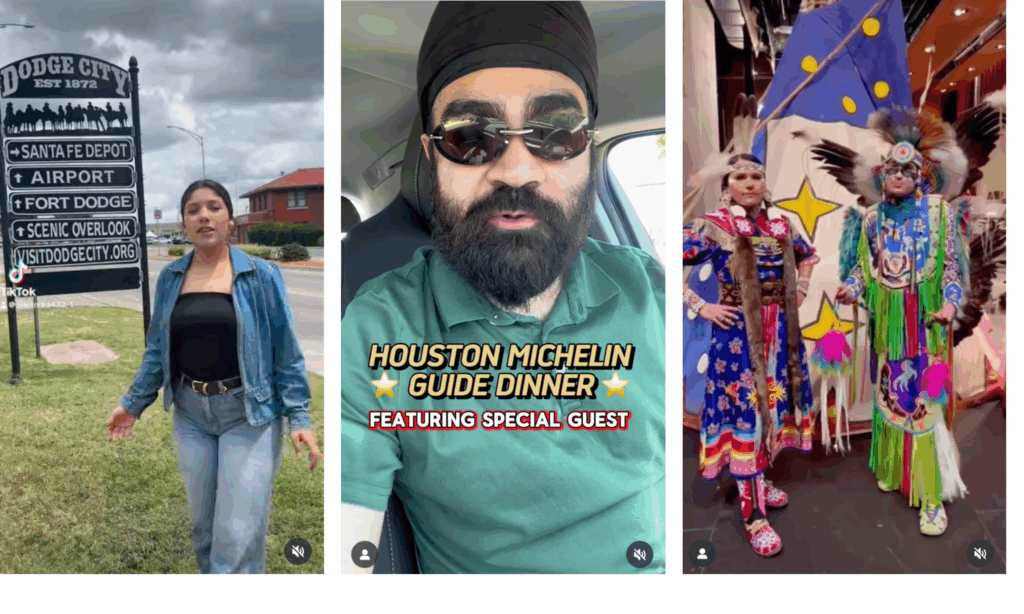
- In Texas, the Houston Chronicle partnered with local food influencer Shawn Singh, who took viewers along to one of the top restaurants in a Houston suburb, gave a peek behind the scenes of a restaurant review with critic Bao Ong and promoted a food tour giveaway. The Instagram Reels got about 137,000 total views (15–30% above average) and garnered 20 food newsletter signups (+150% average weekly signups) and 6 paid subscriptions. The Chronicle also saw a spike in new followers the day the third video was posted. You can read more about how the collaboration came together in this Need to Know series.
- Cuban American newsroom El Toque worked with a variety of partners to promote its Abogados Confiables initiative — a community platform that enables newly arrived Cubans in the U.S. to evaluate and recommend legal services based on their experiences. Creators Joh Wayne7, Chris & Omar and Billy Talento produced Instagram Reels, each in their own comedic styles, that explained the project. El Toque team members appeared on popular live YouTube podcasts and interviews with Spanish-speaking creators, including Ernesto Morales, who spoke with editor in chief José J. Nieves, and Guena Rod, who interviewed El Toque’s legal adviser, Eloy Viera. Through these efforts, which had a total reach of 427,418, El Toque brought 4,086 unique visits to the initiative, far exceeding their goal of 1,000.
How do I find influencers and trusted messengers to partner with?
A good first step is understanding your local influencer landscape. To do that, you’ll need to consider the types of influencers out there. Adriana Lacy of Influencer Journalism wrote for API about four key types of creators:
- Niche content creators: These influencers focus on specific topics such as local food, community events or other hyper-local interests. They often attract followers who share those same passions and interests.
- Community leaders: While they might not have a large social media following, these local figures include activists, nonprofit leaders, or small business owners and are influential within their communities and can help disseminate important news with credibility.
- Micro-influencers: These influencers typically have smaller followings (usually 1,000 to 100,000), but their highly engaged audiences often translate to better content interaction and community trust.
- Macro-influencers: Larger influencers with a broader reach, typically over 100,000 followers, who can amplify your message quickly across larger areas or groups.
Then, start a spreadsheet to track potential collaborators, noting their handle, follower count, audience location, topics, sample links and potential collaboration ideas. (You can make a copy of this mapping spreadsheet from Influencer Journalism.) Treat their social presence as their resume, paying attention to not just their Reels and Stories, but also how they engage in the comments.
Cast a wide net, and ask people across your network about local creators they’re aware of who align with your mission and goals.
On social platforms such as Instagram and TikTok, you can use local hashtags to surface posts by potential collaborators and add them to your spreadsheet.
Once you find potential collaborators, follow them and continue to comb through their content across multiple platforms, not just the one you plan to partner on. If someone looks like a good partner, reach out for an initial conversation.
Most API Influencer Learning Cohort participants who were new to these types of collaborations said that finding influencers was by far the most time-consuming part of the collaboration.
You can get help with this, as Pittsburgh’s Public Source did, by contracting Influencer Journalism or another organization to help map your local creator landscape. There are also creator agencies that can recommend clients based on your needs.
How can I be sure I’ve found the right person to partner with?
Mollie Muchna of Trusting News outlined some great questions to help you get started in evaluating whether a creator would be a good partner to your organization. We also encourage you to look over the red, yellow and green flags she shares as you’re evaluating creators so you can choose a creator who is aligned with your mission and ethical standards.
Organizations that API has worked with have relied on these frameworks and their own networks to find creators who are strong partners.
Ultimately, we encourage you to trust your gut. If something feels off in your initial conversations or you notice posts or comments that feel out of alignment with your values, this is likely not the right partner for you.
How much do these collaborations cost?
The fee paid to a creator will vary depending on their follower size, location, audience, whether they’re represented by an agency and many other factors. Because of these variables, fees are often negotiable.
In our API learning cohorts, fees ranged from $300 to $1,500 per video, with some creators offering a discount from their normal rate to the news organizations because they supported their mission. The cost often included agreeing to co-hosting the reel, additional promotion in Instagram Stories and links in bio.
In some cases, especially when in-person event appearances were part of the deal, the videos were included as a deliverable in a larger contract, so it’s harder to say how much each video might have cost.
In rare cases, the videos were co-created with no fee paid to the collaborator due to perceived ethical concerns. This was the case with WBUR’s successful collaboration with the Massachusetts Department of Conservation & Recreation, because it’s a government agency.
In addition to fees, you also want to factor in how much staff time will be spent on this partnership. This includes the time spent finding the creators, reaching out to them, writing up the contract, planning the videos, processing the invoices, etc. API’s cohort members said that the staff time investment exceeded their expectations for their initial partnerships, as everyone was learning the ropes. Subsequent collaborations with the same creator took less time, because everyone was familiar with the process and one another’s working style.
Once we’ve determined a creator-newsroom collaboration is right for us, what are the typical steps and timeline?
Finding potential strong collaborators who align with your goals and your organization’s mission is the most time-consuming step of this process and usually takes a couple of weeks to a month or even longer, depending on your existing familiarity with the creator landscape in your area. (More on this step above)
Once you’ve identified creator(s) you’re interested in working with, we’d recommend having a runway of at least four to six weeks to:
- Make contact with the creator and have an initial conversation about the project
- Draw up the contract and get it signed (this step took larger organizations longer, as there were often multiple departments that needed to be involved)
- Plan and edit the collaboration, including talking through the goals and initial ideas, reviewing the script, reviewing videos before posting, etc.
- Publish the posts
This checklist can help you identify the smaller tasks along the way and assign clear roles.
What sort of outcomes can I expect from a collaboration like this?
Creator-newsroom collaborations are a great avenue for community engagement, and social platforms feature tools that can help you deepen those connections.
Organizations often use these collaborations to reach audiences new to them, which they measure via reach, views, comments (number and sentiment), shares and new followers. We think these sorts of goals are best suited for creator-newsroom collaborations.
Many newsrooms also want to look deeper into their audience strategies and identify off-platform conversion goals, such as site visits, newsletter sign-ups and even paid subscribers. You can read about examples of those successes here.
Do you have any examples of collaborations that went wrong?
We get this question a lot. When journalists consider experimenting with a new strategy, their minds often go to the worst-case scenario.
Rather than ignore or brush off your fears and concerns and those of your colleagues, we suggest you make plans to mitigate them. Many perceived risks can be lowered by taking time to properly vet potential collaborators. Treat that relationship like a true partnership and discuss your goals and concerns with them. Set up a workflow with guardrails. Create a contract with safeguards. By following these steps, you’re unlikely to face whatever fear you have in mind.