
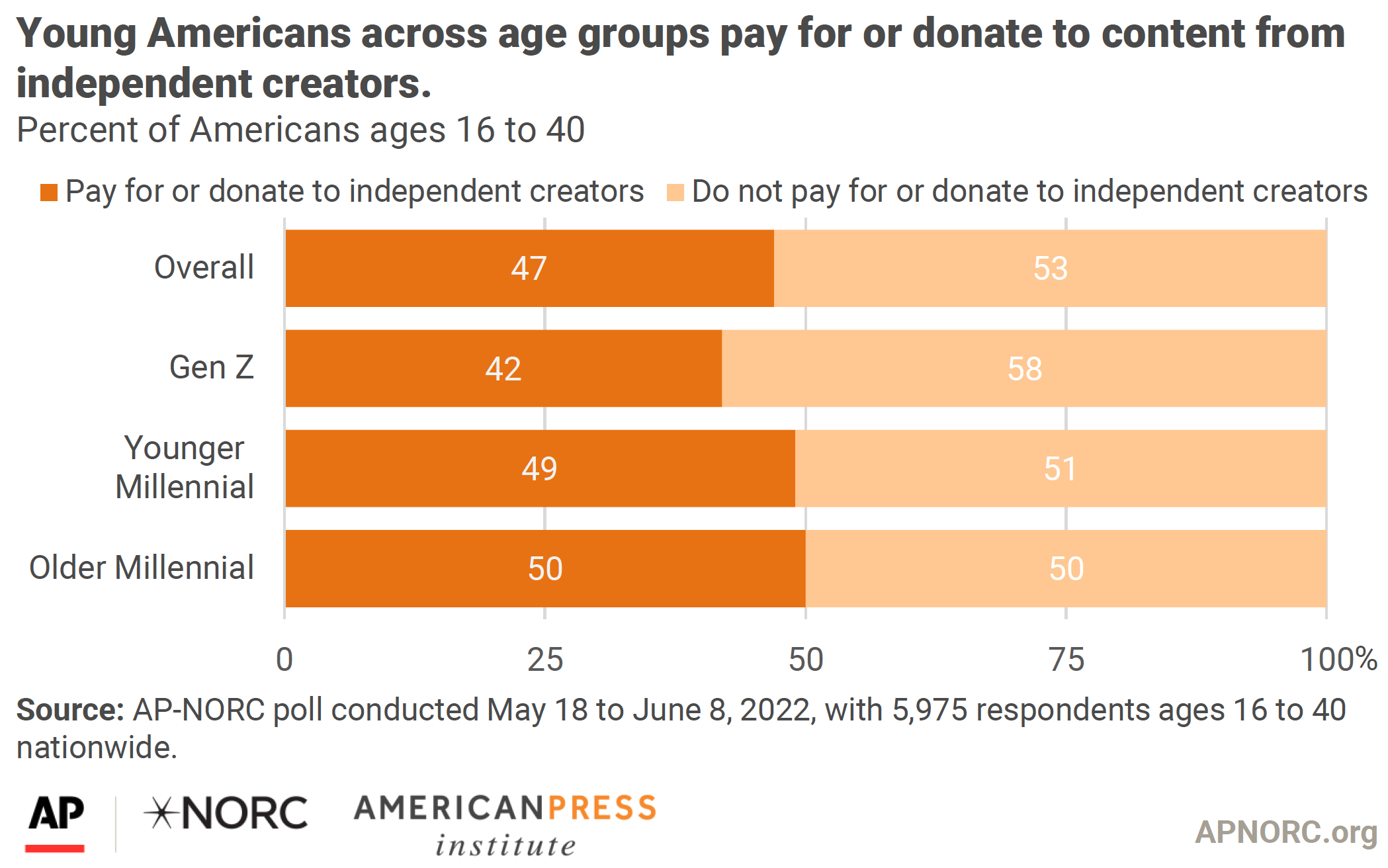
As noted in the previous section, Americans ages 16 to 40 across age groups are more likely to pay for or donate to news content from independent creators than from digital or print newspapers. This notes the growing relevance of these newer sources among younger audiences.
Americans ages 16 to 40 who pay or donate to email, video, or audio content from independent news creators are also more evenly spread across age groups.
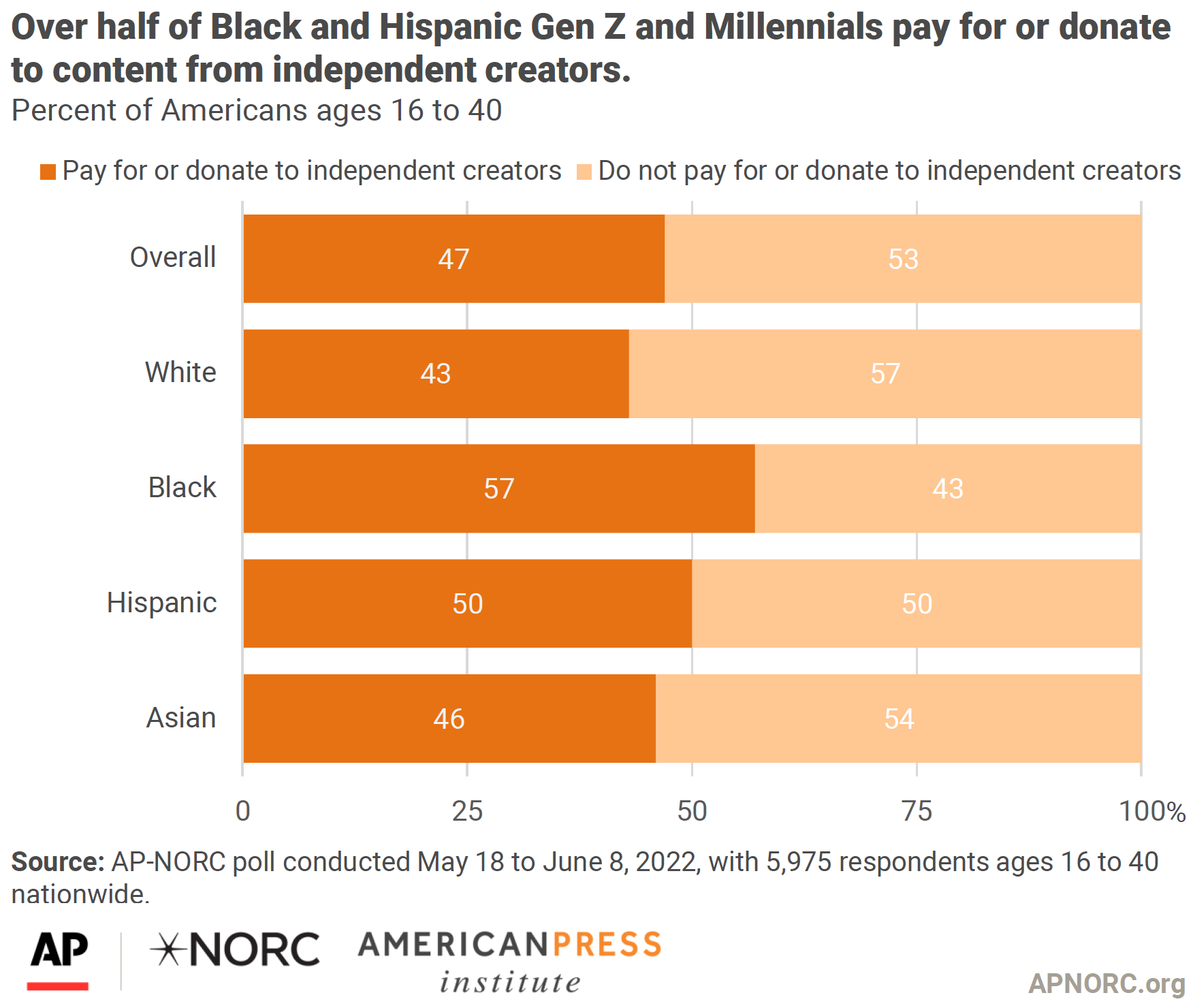
This group also tends to be slightly more racially and ethnically diverse than the Americans ages 16 to 40 overall. Most Black Gen Z and Millennials and about half of Hispanic and Asian Americans in these generations pay for or donate to email newsletters, or video or audio content from independent creators. Forty-three percent of white Americans ages 16 to 40 pay for or donate to email newsletters, or video or audio content from independent creators.
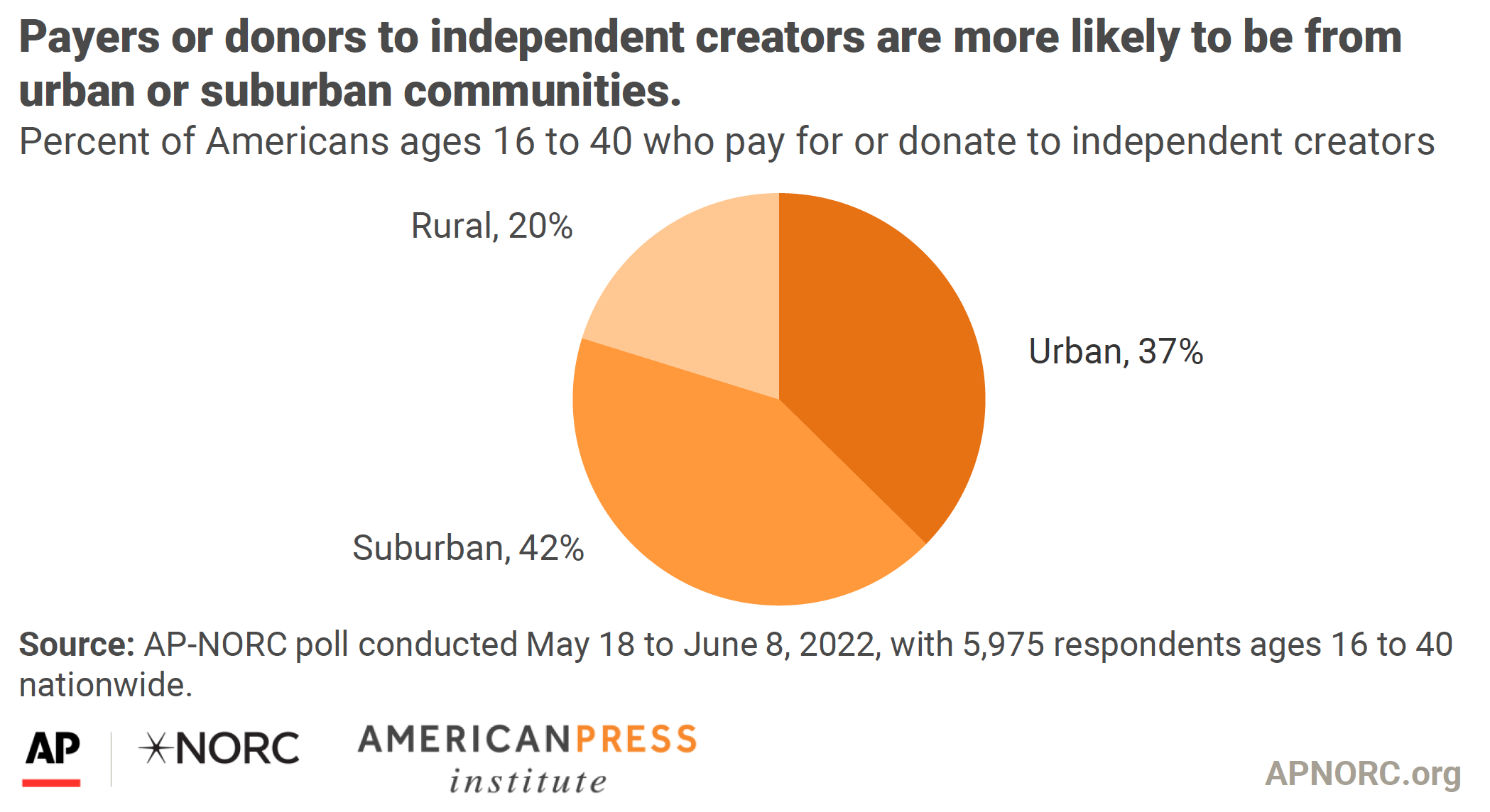
The group is also about twice as likely to be from urban or suburban communities than rural ones.
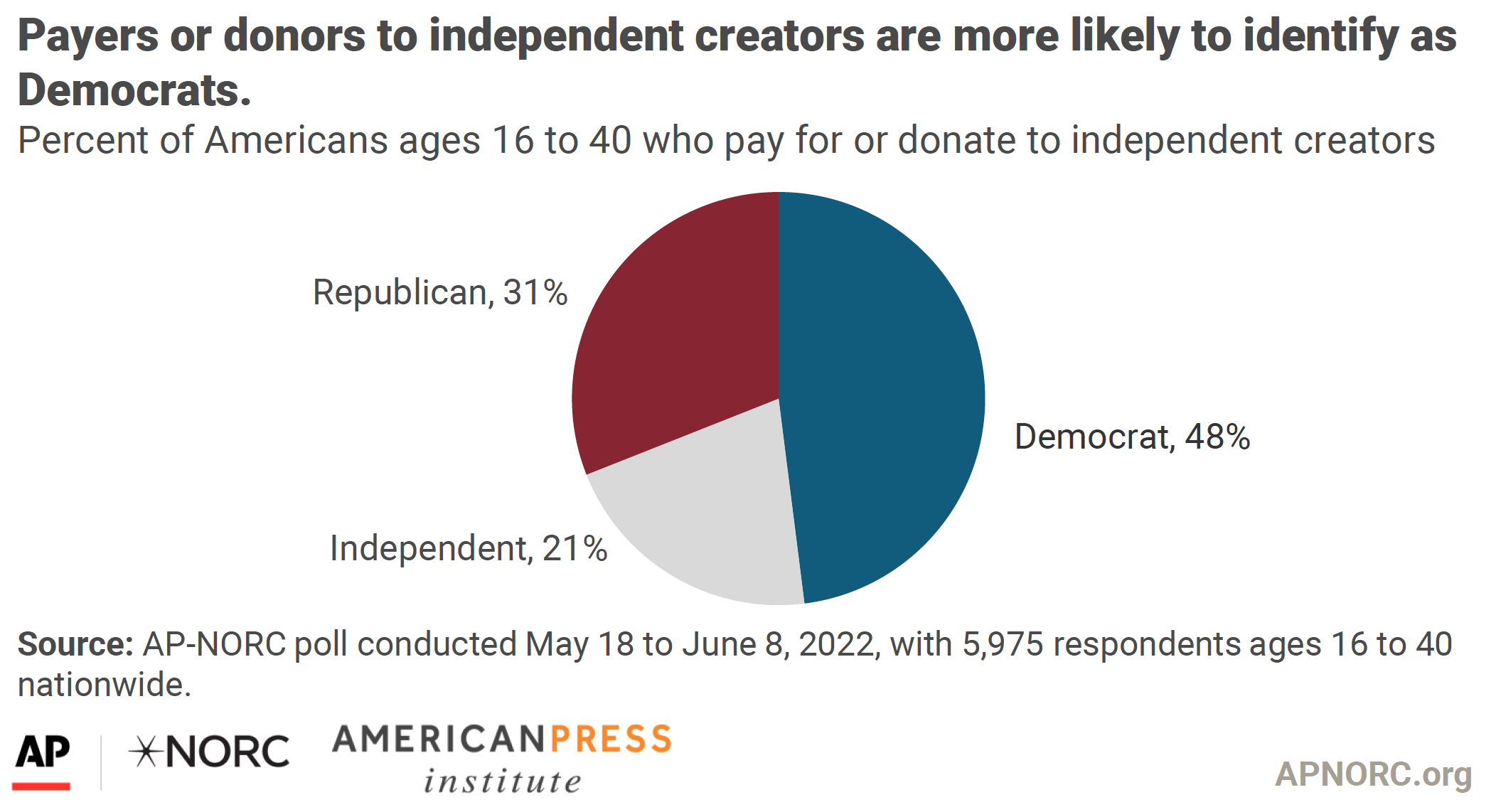
They are also more likely to identify with the Democratic Party, with nearly half identifying as such.
About four in ten Gen Z and Millennials who pay for or donate to email or video content from independent news creators actively seek news and information.
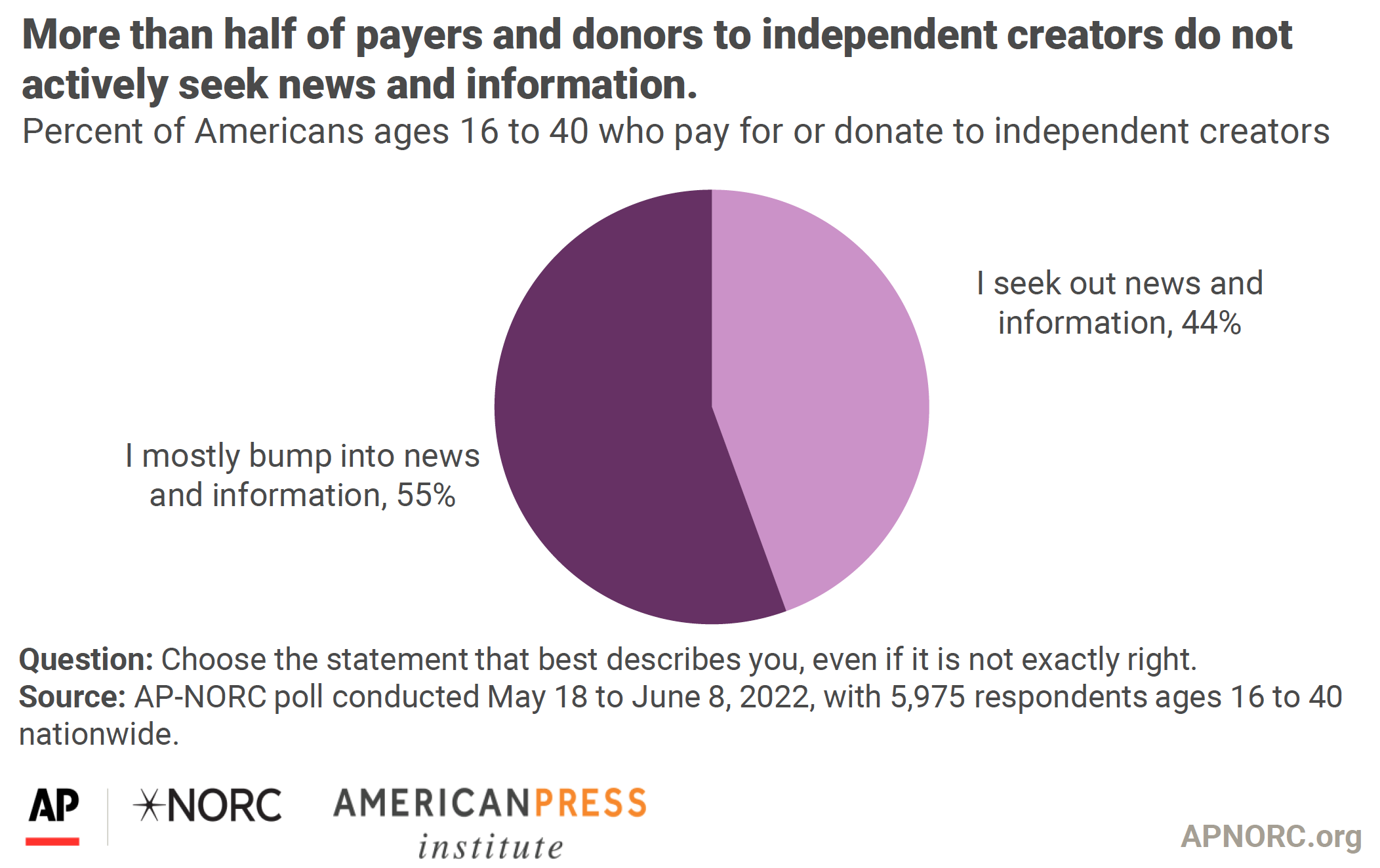
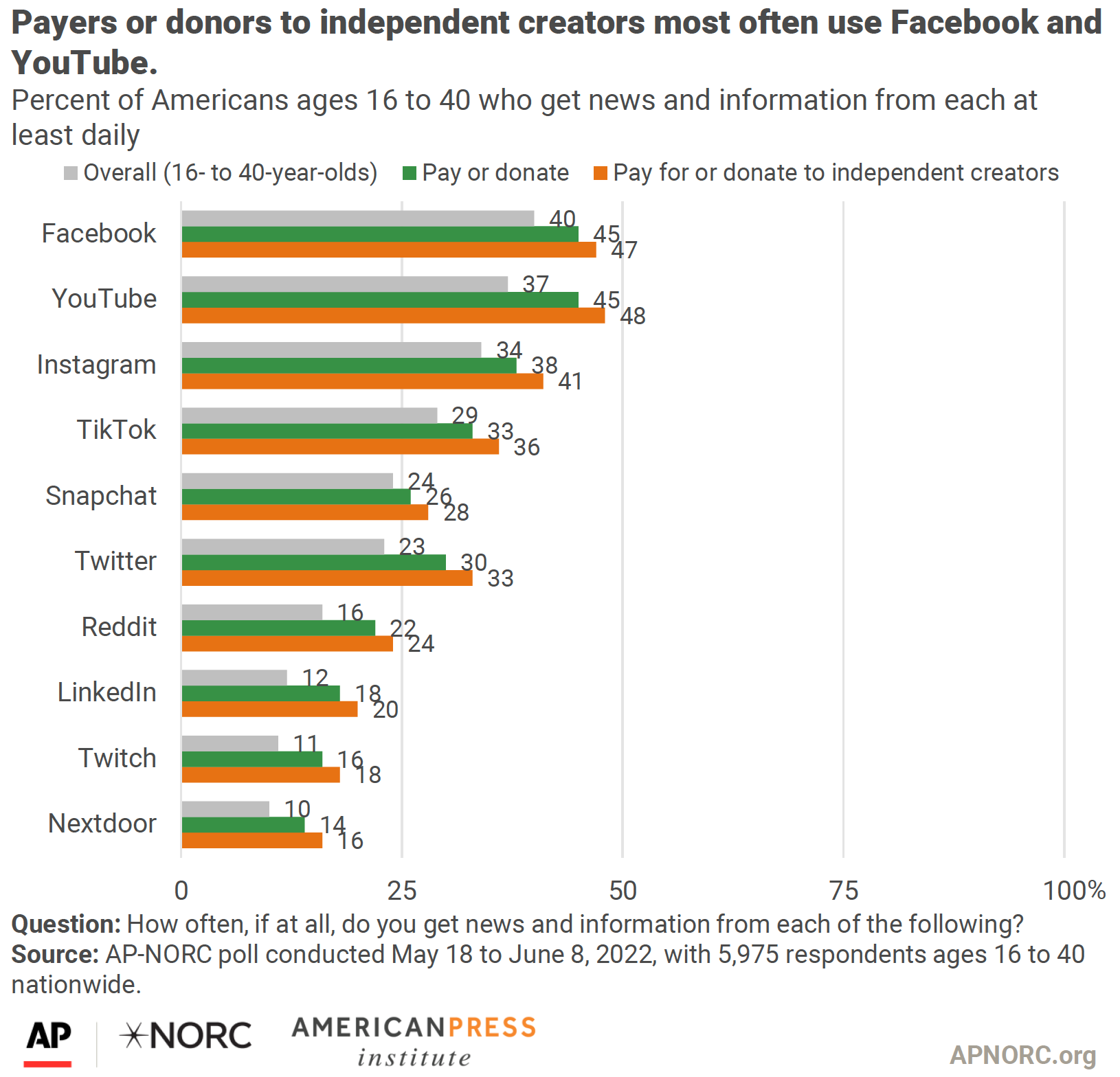
Though they pay for or donate to independent creators, a majority still use traditional news sources at least daily (56%). Like the rest of their generations, social media is dominant: 8 in 10 use social media platforms as news sources once a day or more often.
Facebook, Instagram, and YouTube are the social media platforms they most often use to get news information. Twitter and TikTok are a close second.
Like those who pay for or donate to newspapers, those who pay for or donate to content from independent creators also follow a variety of news topics such as news about celebrities, sports, information about COVID-19, national politics or government, and social issues.
Continue reading: Study methodology
Share with your network
Funding news: How Gen Z and millenials pay for or donate to news


You also might be interested in:
How do we bridge that gap between the standard KPIs and those mushier signals of your work’s impact — how can you identify and quantify what’s changing in the lives and perceptions of the communities you serve?
We asked four summit participants to share more about the ways they are defining, measuring and acting on signals of impact.
With careful planning, events and newsroom-created gathering spaces can help local media measure impact and trust.


