The American Press Institute (API) today announced the addition of six news leaders from across the journalism industry who will coach news organizations in this year’s Major Market cohort of Table Stakes. The innovative yearlong program, supported by the Knight-Lenfest Local News Transformation Fund, helps news leaders transform their organizations’ journalism and business through intensive change management training.
Each new coach (listed below) will spend the year working with one of the news organizations in the fifth cohort of the Table Stakes Major Market program, assisting their cross-departmental teams through hands-on challenges. This executive and enterprise coaching is a key part of the program and helps customize the program to its participants’ needs.
We welcome the following professionals as this year’s coaches:
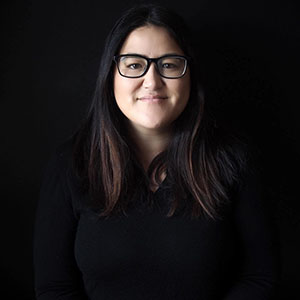 Ashley Alvarado, Southern California Public Radio, who is coaching The Tennessean in Nashville |
 Nation Hahn, EducationNC, who is coaching CalMatters |
 Sara Lomax-Reese, WURD, who is coaching the Times Union in Albany, N.Y. |
 Mizell Stewart III, Gannett/USA Today Network, who is coaching the Akron Beacon Journal in Ohio |
 Eric Ulken, Gannett/USA Today Network, who is coaching the San Diego Union-Tribune |
 Mackenzie Warren, Gannett/USA Today Network, who is coaching The Oklahoman in Oklahoma City |
“Of all the media innovation programs I have seen in the last two decades, none has been more impactful than the rigorous Table Stakes program,” said Tom Rosenstiel, the executive director of API. “For that program to grow and survive, it must have a broad, talented and diverse group of experienced news leaders to carry it forward — a group whose knowledge and background is as richly diverse as the communities journalism must serve to survive. This is an extraordinary group of new leaders, and we are excited to have more join them soon.”
The new coaches are being guided by two senior coaches who have helped to lead the Table Stakes programs for several years: Charlie Baum and Quentin Hope.
Baum is the executive director of the Media Transformation Challenge program, now housed at the Poynter Institute, and leads the University of North Carolina Table Stakes program, where he has also helped train new coaches. Baum also trained new coaches and led programming in the Gannett-McClatchy Table Stakes program.
Hope helped launch the Major Market program in 2015, is also a coach in the Media Transformation Challenge program and co-directs the Poynter Institute’s Table Stakes Local News Innovation Program.
Doug Smith, the primary architect of the Table Stakes Program and the creator of the Performance-Driven Change methodology it applies, continues to consult with API on the design of the program and to advise the participants and coaches.
“Table Stakes has evolved into the leading peer-to-peer learning network for local news,” said Jim Friedlich, executive director and CEO of The Lenfest Institute. “This new group of coaches embody the challenges facing local news and the solutions available to all of us. They are diverse, business-savvy news leaders respected by their peers and by all of us at The Lenfest Institute for Journalism. We are proud to support this work.”
As the Table Stakes program expanded beyond the original Major Market version to other programs, including at UNC, Poynter, Arizona State University and a Gannett-McClatchy corporate-led program, the need to expand and diversify the coaching ranks became more urgent.
“Having a collaborative relationship with the Table Stakes coaches is a great way to help teams understand the need to be more inclusive in coverage and performance challenges,” said Felecia D. Henderson, Table Stakes coordinator for the Maynard Institute, a key Major Market partner that is helping to train and support these coaches.
These new coaches come from diverse backgrounds and communities and bring their industry expertise to the challenges that program participants work to solve.
As director of community engagement at Southern California Public Radio, Alvarado is focused on engagement and source development as a means to diversify the sourcing in news coverage and on shows and grow audience.
Hahn, the head of growth for EdNC.org, founded the Reach NC Voices initiative for EducationNC, a statewide engagement effort.
Lomax-Reese is the president and CEO of WURD Radio, Pennsylvania’s only African-American owned legacy talk radio station, and the program lead for the Facebook Journalism Project’s Sustainability Accelerator for Publishers of Color.
Stewart, a longtime journalist who has led newsrooms in Ohio, Indiana and Florida, is a news executive for Gannett and the USA TODAY Network and an adjunct faculty member at The Poynter Institute.
Ulken, a veteran digital editor and product leader, has helped newsrooms across the United States find audiences on digital platforms. He is product director for newsroom tools at Gannett.
Warren, the senior director of news strategy at USA TODAY Network, directs professional development and news executive recruiting across the network’s newsrooms.
“The Table Stakes program has become a leading resource for forward-thinking newsrooms,” said LaSharah S. Bunting, director for journalism at Knight Foundation. “We’re proud to support these organizations and their work to build strong, sustainable futures that will allow them to thrive in the digital age.”
To learn more about Table Stakes and other API initiatives, please visit the Table Stakes website, the BetterNews.org website (where case studies from Table Stakes partners are shared) and API’s website.
About the Knight-Lenfest Local News Transformation Fund
With a focus on sustainability and equity, The Knight-Lenfest Local News Transformation Fund is designed to strengthen local journalism at scale, by supporting journalistic excellence and serving the information needs of communities. The Knight-Lenfest Fund collaborates with news organizations, leaders and communities to grow capacity and meet journalism’s technology, business, and audience realities of the future. The Fund believes that journalism is at its best when it is of service.
About the John S. and James L. Knight Foundation
Knight Foundation is a national foundation with strong local roots. It invests in journalism, in the arts, and in the success of cities where brothers John S. and James L. Knight once published newspapers. Its goal is to foster informed and engaged communities, which it believes are essential for a healthy democracy. For more, visit knightfoundation.org.
About The Lenfest Institute for Journalism
The Lenfest Institute for Journalism is a non-profit organization whose sole mission is to develop and support sustainable business models for great local journalism. The Institute was founded in 2016 by cable television entrepreneur H.F. (Gerry) Lenfest. The Institute is the parent organization of The Philadelphia Inquirer, a for-profit public benefit corporation dedicated to serving the people of the Philadelphia region.
About the American Press Institute
The American Press Institute advances an innovative and sustainable news industry by helping publishers understand and engage audiences, grow revenue, improve public-service journalism, and succeed at organizational change. It is a national 501(c)3 nonprofit educational organization affiliated with the News Media Alliance. Its funding comes from several sources, including other philanthropic organizations.
You might also be interested in:
We’re almost halfway through the year, and Mental Health Awareness Month is a good time to pause and reflect on our well-being and that of our newsrooms.
New year, same old meetings. Meetings that don’t include the right people or that include too many people. Meetings that could have been an email. But what if it didn’t have to be that way? As we kick off 2026, API wants to help you reset and rethink key meetings in your news organization.
It’s been a busy year for us: we held three API Local News Summits, built out a comprehensive guide to partnering with influencers, encouraged experiments with grants and cohorts, and supported news organizations with our products.


