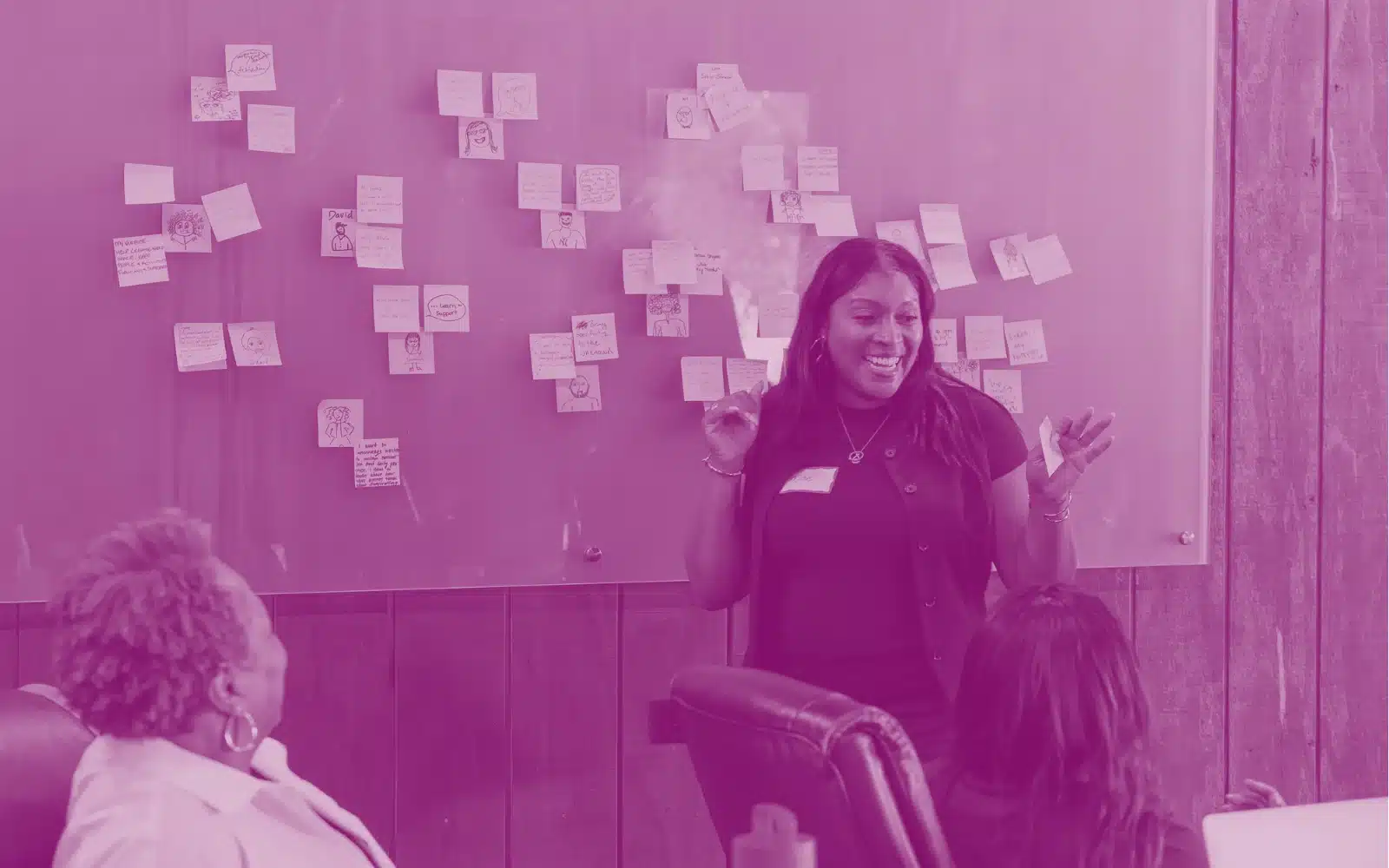
A participant at a recent seminar for Black Veterans held in Justin, Texas (Courtesy of The War Horse/Imani Black Studios)
Since 2017, I’ve led week-long writing seminars for the War Horse, a nonprofit newsroom devoted to reporting on the human impact of military service. Our mission is simple. We help veterans, service members and their families tell their stories in their own words. These are not “assignments.” They are acts of truth-telling and courage. And over time, I’ve come to see that this work is more than just a workshop. It’s a powerful way to bring community expertise into the newsroom in ways that strengthen local reporting, deepen trust and widen who feels seen.
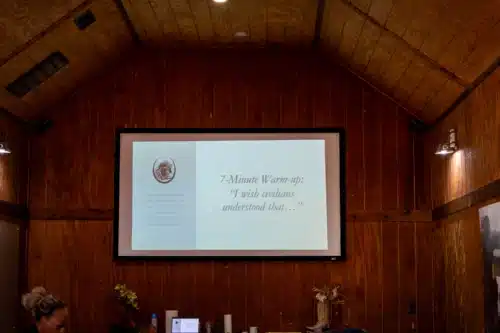
A starting prompt at a recent seminar for Black Veterans held in Justin, Texas (Courtesy of The War Horse/Imani Black Studios)
The people who come to our seminars are not professional writers. Some have written and published before, but most have not. They arrive carrying experiences most newsrooms want to cover but rarely know how to access in a trauma-informed, community-driven way. By partnering with teachers, editors and writing mentors embedded in the communities that newsrooms hope to serve, journalism can build pathways for people with lived experience to join the civic conversation.
What community expertise makes possible
When participants in our seminars write, something essential happens. Expertise shifts. Instead of the newsroom interviewing veterans and their families about war or military policy, we invite them to become authors, not sources. We trust them to be the experts of their own lives.
This changes the nature of the storytelling. The stories are intimate. They challenge assumptions. They cross political lines in ways that traditional reporting often cannot.
A veteran writes about trying to explain PTSD to his children.
A military spouse writes about raising toddlers alone through multiple deployments.
A young Army medic writes about the moment she stopped being able to separate grief from numbness.
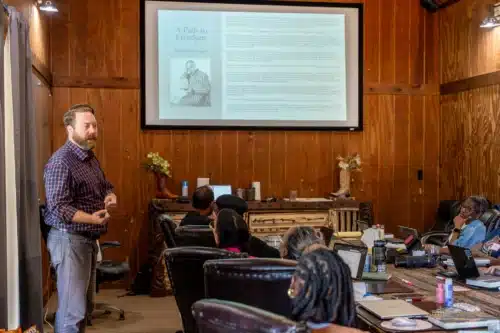
David teaches at a recent seminar. (Courtesy of The War Horse/Imani Black Studios)
The stories that have been written in our seminars have reached readers all over the world. In addition to having their reflections published by the War Horse, our alumni have gone on to publish in the New York Times, Washington Post, The Guardian and beyond. Several have gone on to publish books. Their voices have helped shape national conversations about transition stress, military suicide, sexual assault and the long shadow of war on families.
And the impact goes deeper than the page.
One example stays with me, and I often return to it when explaining what personal narrative can do — not just for journalism, but for the people journalism claims to serve.
Years ago, a young combat medic came to one of our seminars unsure whether he even belonged in the room. He wasn’t sure his story mattered, and even if it did, how was he supposed to write about something that he believed civilians would never be able to understand. But over the course of the week, he wrote about a deployment to Afghanistan — the chaos, the humor, the guilt, the survival instinct that becomes muscle memory. More importantly, he wrote about what happened after: the unraveling, the alcohol, the creeping sense that his life had stalled while everyone else’s moved forward.
When he read that story aloud for the first time, the room changed. You could feel it, like someone had opened a window on a cold winter’s day.
That essay set him on a path that led to national publications, documentaries and training materials for first responders struggling with survivor’s guilt. That one story helped him see himself differently. And to date it has helped untold numbers of readers understand the costs of war in a more human, accessible way.
What newsrooms can gain from this approach
Personal narrative is often treated as supplemental. It’s nice to have, but not central. But in communities where trust in institutions is frayed, and where people don’t see their lives reflected in traditional reporting, personal narrative can be transformational.
The lessons we’ve learned from nearly a decade of this work apply well beyond military communities:
- Deeper access to hard-to-reach communities. People who have lived through trauma or institutional harm are often hesitant to engage with journalists. But with trusted facilitators and clear ethical boundaries, many will share experiences they’ve never said aloud before.
- A more diverse pipeline of voices. Our seminars bring people into journalism who have never seen themselves as writers. This strengthens coverage and expands who newsrooms consider credible narrators.
- Stronger community relationships. When people feel that journalism is with them, not “about” them, they become more willing to participate, collaborate and stay engaged.
- Stories with staying power. Readers return to essays because they feel personal truth. These stories bridge divides — especially between military and civilian communities — because they remind us of what we share, not just what separates us.
For the War Horse, these seminars have become a core engine of engagement, reader trust and philanthropic support.
What this work requires
It would be dishonest not to acknowledge the challenges. This work is slow. It’s emotional. It requires a trauma-informed approach rooted in consent, choice and respect. Many participants arrive with a distrust of media. They fear being misunderstood, flattened or used.
Here are some practices we’ve adopted to address these challenges:
- Build trust long before publication. Our seminars prioritize psychological safety. No one is pressured to share. No one is edited into someone they’re not.
- Honor the storyteller’s authority. Participants maintain creative control. Editors shape the piece, but the voice remains theirs.
- Provide structured mentorship. Alumni receive ongoing editorial coaching, publication support and a community of peers.
- Recognize the emotional labor. We prepare facilitators for the realities of trauma-related writing and encourage boundaries and aftercare.
- Pay people for their work. Compensation signals that their experiences are valued and that journalism benefits from their contribution.
These systems are replicable. They simply require intention, training and a newsroom willing to see community members as partners, not as sources to be extracted from.
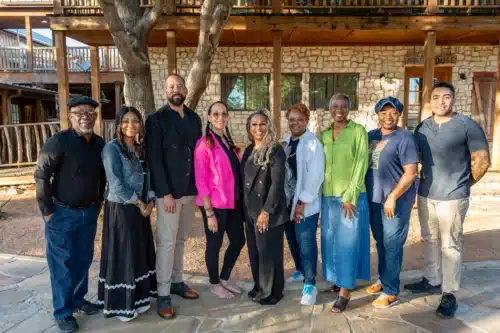
The full cohort of Fellows at a recent seminar for Black Veterans held in Justin, Texas (Courtesy of The War Horse/Imani Black Studios)
Every writing seminar I’ve ever taught has a moment when someone reads their story aloud for the first time. The room goes still. The air shifts. You can feel the weight of what it means for a person to speak their truth and for others to receive it with care.
When people realize their story matters, something fundamental changes. They see themselves differently. Others see them differently. And the public conversation shifts in ways that strengthen communities and journalism.
Personal narratives, in this way, are acts of civic participation. And when newsrooms invest in helping communities tell their own stories, they’re not just improving their coverage — they’re rebuilding trust, widening access and ensuring that the people most affected by the issues we report on can shape the story from the inside. That’s a future, I believe, journalism needs. And it’s one the communities we serve rightfully deserve.
David Chrisinger is the director of writing seminars for the War Horse and leads the Harris Writing Workshop at the University of Chicago, where he teaches trauma-informed narrative and effective public policy communication. He is the author of several books, including The Soldier’s Truth and Stories Are What Save Us.
Share with your network
4 ways to partner with community expertise and talent to strengthen local journalism
You also might be interested in:
We have an opportunity to facilitate civic discourse within our communities in a way that’s mutually beneficial. But if we don’t do this work thoughtfully — if we show up with a rigid agenda and our own goals — it can cause more harm than good.
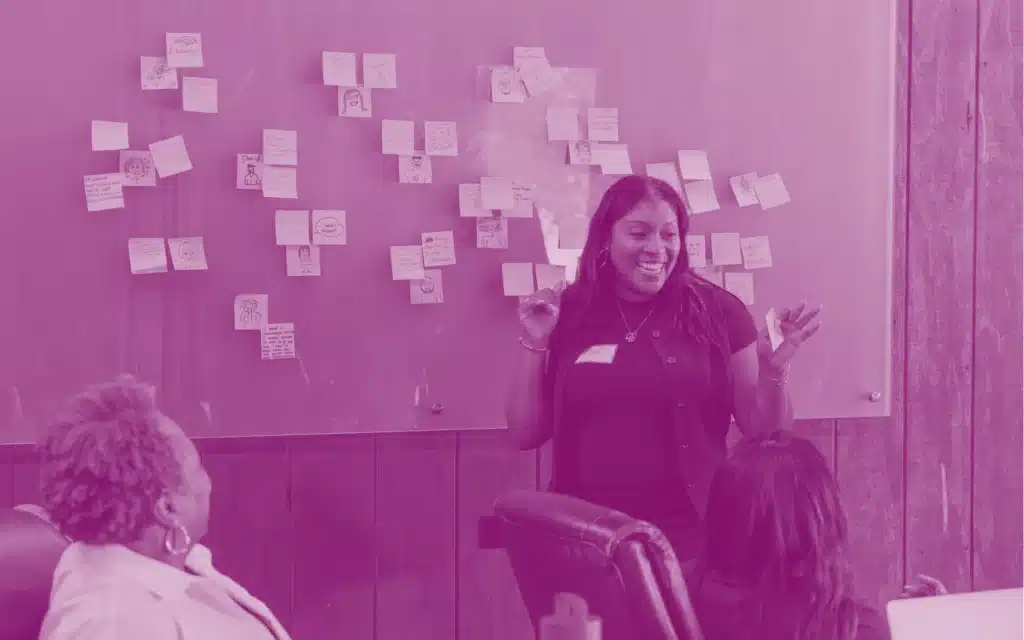
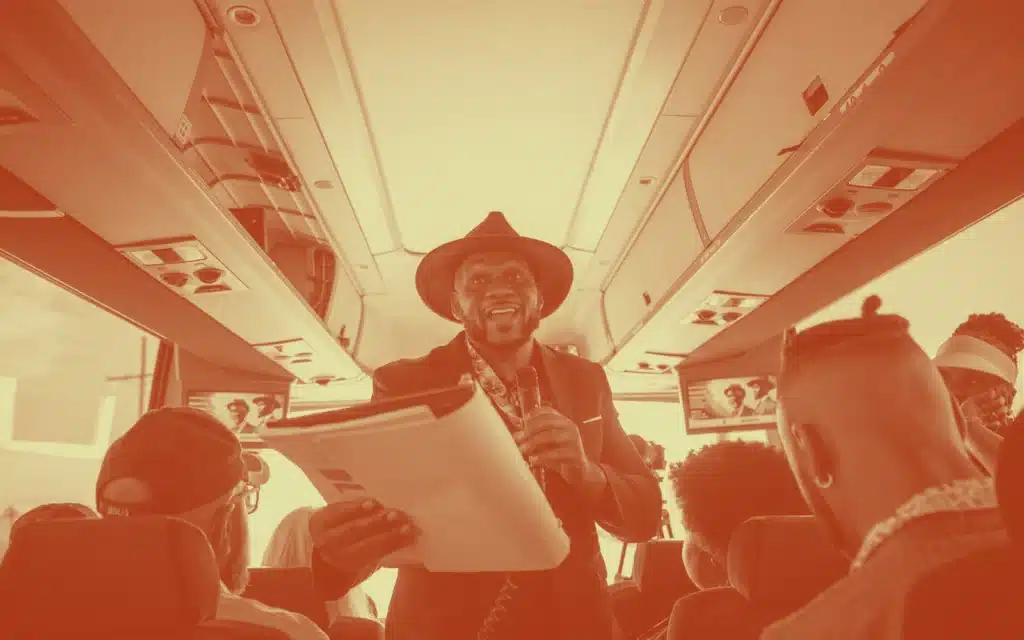
When local newsrooms give people the tools and platforms for creative storytelling, they’re also building trust and supporting the creative and cultural health of their communities. Here's how for news leaders did just that.
We asked five leaders with community engagement experience outside of news about the opportunities they see for local media to build trust or belonging, from using physical spaces like libraries and community gardens to digital platforms that support shared experiences.


