
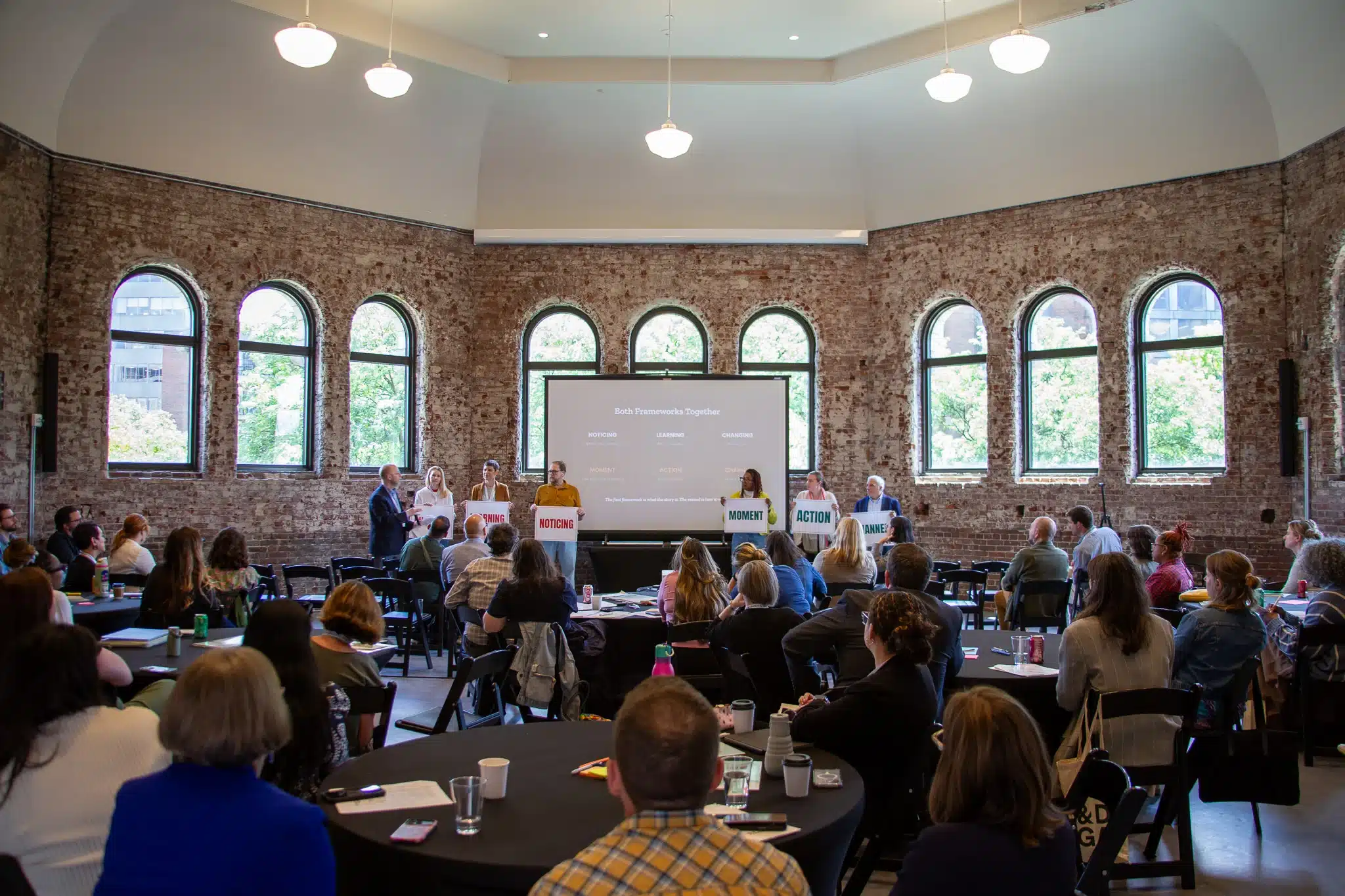
At the American Press Institute’s recent Local News Summit on Measuring Impact for Civic Discourse, I asked a room full of news leaders to stand up.
Then I started naming audiences. Funders. Newsroom staff. Board members. Community members. Subscribers. Local businesses. I asked them to sit down if they felt genuinely confident in how they communicate impact to that group.
When I named community members and local businesses, almost nobody had sat down.
Here’s the part that stuck with me. They didn’t all stay standing for the same groups. Every organization had a different gap. One team communicates beautifully to funders but can’t get traction internally. Another has built deep community trust but struggles to translate that into a board conversation. Some have compelling evidence and can’t figure out why it doesn’t seem to move anyone.
That’s not an evidence problem. That’s a translation problem. And it’s more common, and more fixable, than most of us realize.
Why the same story doesn’t travel
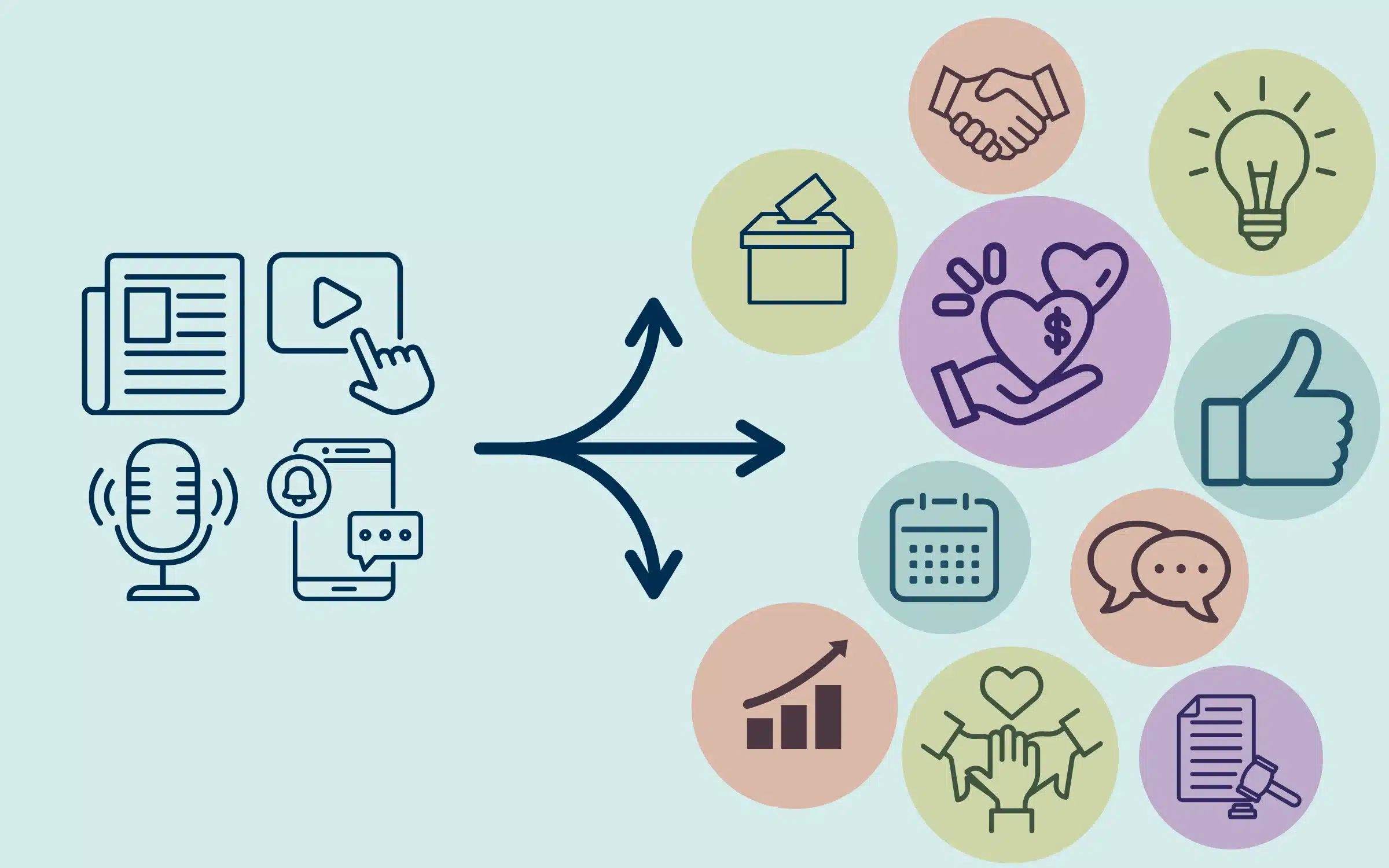
Impact data behaves like a foreign currency. It has real value, but only if it’s exchanged into something the person across the table can actually spend. A funder wants to see systemic change tied to its thesis. A board member wants risk reduced and trust protected. A reporter wants proof the work mattered enough to justify the week they spent on it. A subscriber wants to know their $12 a month did something real. A local business wants relevance, not virtue.
Most newsrooms have one impact story. They tell it the same way to everyone, and then they’re surprised when it lands with some audiences and dies in the room with others. The story wasn’t wrong. It just never got translated.
The framework: Noticing, Learning, Changing
The exercise at our summit in Pittsburgh came out of a framework I’ve been building called Noticing, Learning, Changing.
- Noticing is the raw observation. Something happened because of your work. A policy shifted, a family got help or a system got scrutinized.
- Learning is what the noticing reveals. Not just that something changed, but what it means, who it affects and why it matters beyond the single incident.
- Changing is the behavioral proof. Did someone do something differently because of what you showed them?
Most impact communication stalls at Noticing. That’s the easy part, and it’s also the part that means the least to a board member trying to justify budget allocation, or a funder trying to prove their portfolio theory to their own trustees. The translation work happens when you push a Noticing story all the way to a Changing story, and then decide which piece of that arc actually belongs in front of which audience.
Running your own version of the exercise
You don’t need a room of 70 people to do this. Grab a whiteboard, list your six or seven key audiences, and be honest about which audiences you feel confident in your communication toward and where your messaging needs help. The gaps are the ones worth building a plan around, not the ones where you’re already comfortable.
For each gap, apply MAC: Moment, Action, Channel.
- Moment is identifying when this audience is actually receptive. A board member during a budget cycle is a different animal than a board member at a holiday reception. A subscriber right after an annual renewal email is paying more attention than one three months into the year.
- Action is what you actually want them to do with the story. Renew. Advocate. Fund. Trust you enough to open the next email.
- Channel is the format that the moment and action demand. A funder wants a memo with numbers. A community member wants a face and a story, not a dashboard. A local business wants a conversation, not a newsletter blast.
The uncomfortable part
Here’s what I told the room in Pittsburgh, and it’s worth repeating. The organizations that struggle most with this aren’t the ones with weak impact. The ones that struggle have convinced themselves that if the work is good enough, the translation will take care of itself. It won’t. Good work with no translation strategy is a tree falling in a forest with excellent acoustics and nobody around.
The fix isn’t more evidence. Most newsrooms already have more impact than they know what to do with sitting in old stories, follow-up emails and reader letters nobody archived properly. The fix is treating translation as its own discipline, with its own budget line and its own person accountable for it, instead of something that happens by accident in a well-written annual report.
Where to start
Run the exercise internally this week. Don’t skip the uncomfortable part where you name which audience you’re weakest with. Then pick one gap, apply Moment, Action, Channel to it, and build a single piece of translated impact communication before you touch the rest.
The room in Pittsburgh didn’t run out of impact. They ran out of translators. That’s a staffing and strategy problem, not a storytelling one, and it’s the kind you can actually solve.
You might also be interested in:
When the tools, economics and expectations around AI are all still moving, knowing where you actually stand is a far better place to lead from than false confidence or uncertainty.
There are three tactical ways local newsrooms can be the conveners for their communities: designing for human connection, designing for everyday usefulness and designing for joy, curiosity and surprise.
How do we bridge that gap between the standard KPIs and those mushier signals of your work’s impact — how can you identify and quantify what’s changing in the lives and perceptions of the communities you serve?


