By Robyn Tomlin
There’s a certain irony in celebrating the 80th anniversary of an organization whose job is to help an industry navigate change.
 Longevity, after all, was never the goal. Relevance is.
For the American Press Institute, turning 80 is an opportunity to think less about where we’ve been and more about what local journalism needs at this moment. That feels particularly important at a time when many of the assumptions that have shaped our industry for decades are being rewritten.
I’ve experienced API’s evolution firsthand — first as a young editor learning how to lead, years later as a newsroom executive navigating the shift from print to digital and today with the privilege of leading API as local journalism faces a new and different set of challenges.
API was a different organization at each of those moments because journalism and those who lead it needed different things. That may be the most important lesson from our first 80 years. If your job is helping journalism navigate change, you have to be willing to change along with it.
Over the past year, our team has spent a lot of time asking what the industry needs from API right now. We’ve landed on something that feels both true to our history and right for this moment: API is a solutions lab for local media.
Our industry has no shortage of smart people diagnosing the problems. Local news leaders tell us they need help moving from understanding a challenge to doing something about it — opportunities to experiment, learn from others and turn promising ideas into approaches they can actually use.
Sometimes that means better information or a tool that helps someone make a smarter decision. It can also mean creating space to test an idea or bringing together people with different expertise to tackle a problem that none of them can solve alone.
That’s the role we want API to play.
Our Local News Summits bring news leaders together with people from outside journalism who can help us see familiar problems differently and explore solutions we might not find on our own. Learning cohorts create space for experimentation alongside peers, while tools like Metrics for News and Source Matters give news organizations better information to guide their decisions.
Research matters, too. Through efforts like the Media Insight Project, we work with research partners to better understand the people and communities local news hopes to reach — what they need, what earns their trust and what gets in the way.
Across all of our work, we’ve learned that the best solutions start with the people closest to the problem. We use evidence to inform what we do, create room to experiment and share what we learn so others can build on it.
The problems will keep changing, which means the way we help solve them has to change, too.
I’ve come to believe that the ability to learn and adapt may be just as important as any individual solution we help develop. We can’t predict exactly what the future of local journalism will look like. If the last 30 years have taught me anything, it’s to distrust anyone with a foolproof prediction about the next five.
What we can do is help local news leaders navigate whatever comes next.
I know the value of that kind of support because API gave it to me.
Twenty-five years ago, not long after I moved from reporting into my first editing job, my editor sent me to a weeklong API program for city and metro editors. I remember how helpful it was to step outside my newsroom and spend time with people wrestling with many of the same challenges. I went home with ideas I could use and people I could call when I felt stuck.
About 15 years later, the Table Stakes program gave me something similar when we were trying to make the enormous shift from print to digital. It gave us a structure for experimenting, learning from what worked and what didn’t and a community that held us accountable.
The challenges facing today’s local news leaders are different from the ones I faced. They’ll be different again five or 10 years from now. Our responsibility isn’t to preserve the API that worked for a previous generation. It’s to keep building the API the field needs now — not because we know all the answers, but because we can help people get better at finding them.
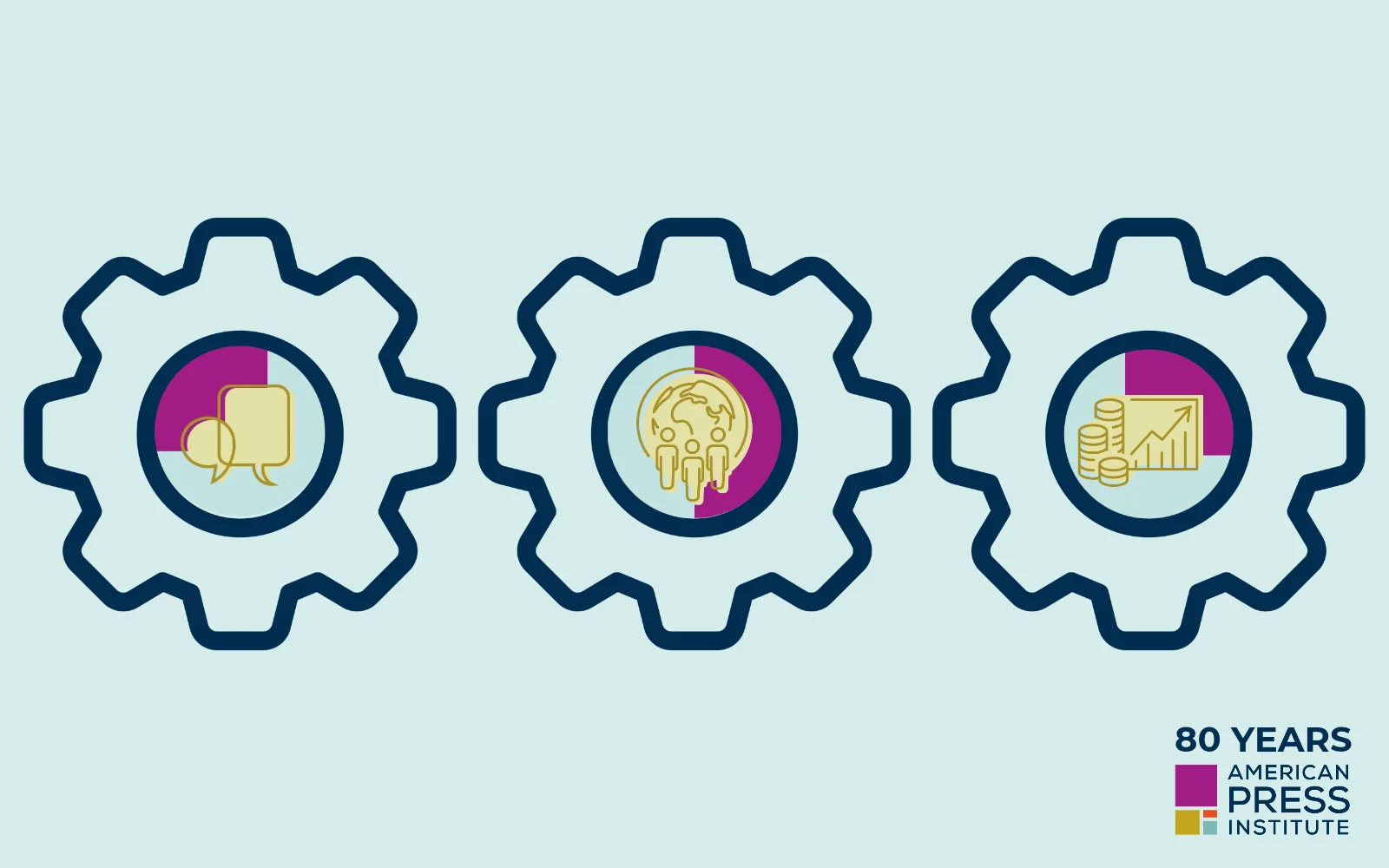
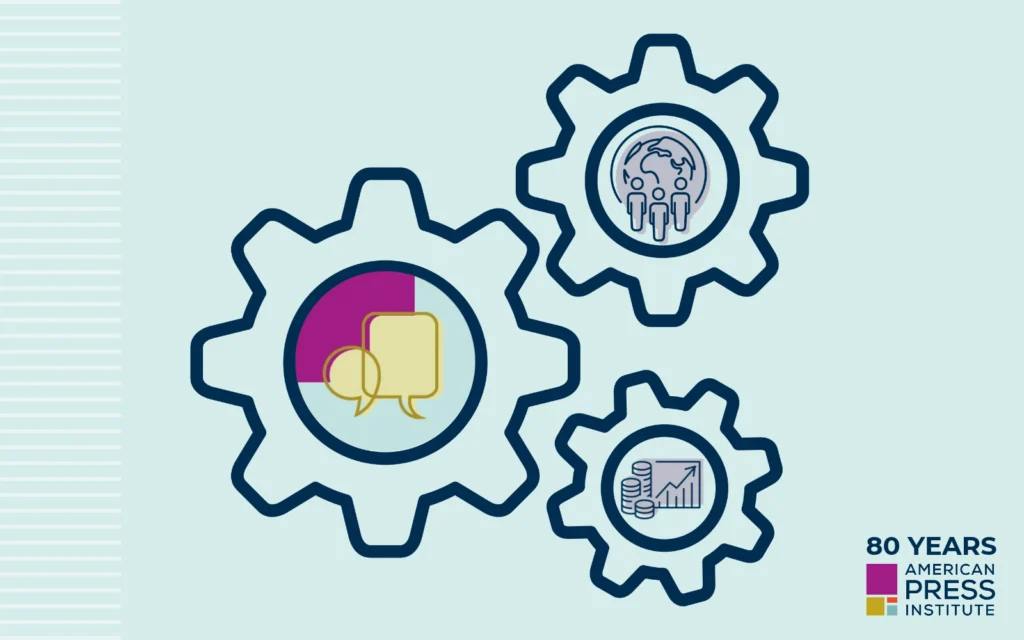
As we look ahead, we’re focusing that work in three areas we believe are especially important to the future of local journalism: civic trust, people and culture, and organizational resilience. Over the coming weeks, my colleagues will use this anniversary series to share more about what we’re learning in each of those areas, the questions we’re asking and where we see opportunities to help.
Eighty years is worth marking. But the point isn’t simply that API has been around for a long time.
It’s that after 80 years, we’re still evolving alongside the local news leaders we serve — and we’ll keep showing up for whatever comes next.
Robyn Tomlin is the executive director of the American Press Institute. She joined API in December 2025 after a 30-year career leading local news organizations. She can be reached at robyn.tomlin@pressinstitute.org.
Share with your network
You also might be interested in:
We’ll dig into three areas that are important to the future of local journalism: civic trust, people and culture and organizational resilience.
Share how the American Press Institute helped change how you lead, think or serve your community — and pay it forward to those shaping local news next.
We asked four summit participants to share more about the ways they are defining, measuring and acting on signals of impact.


