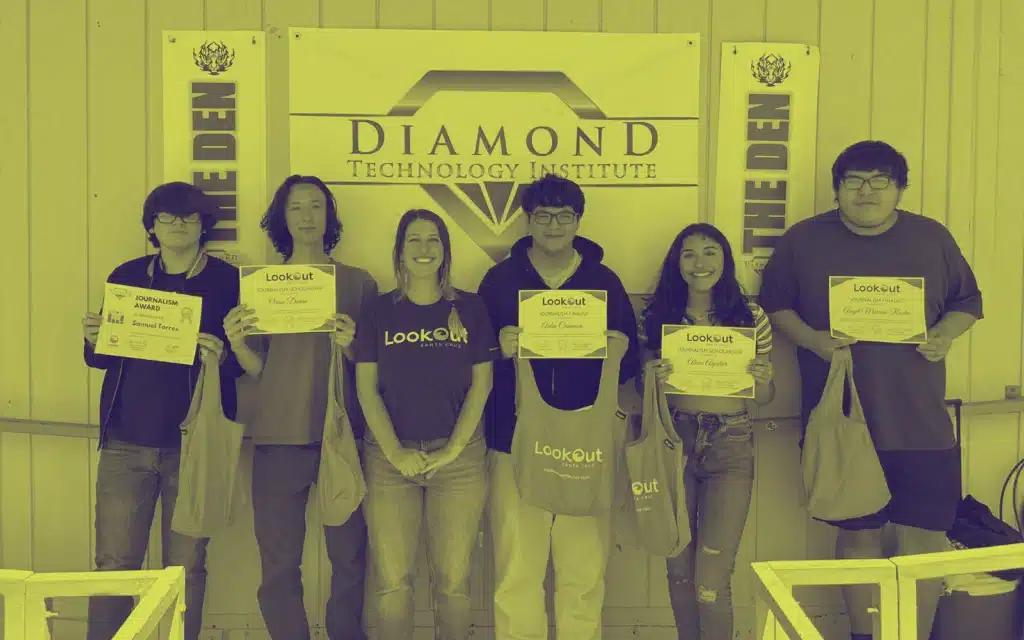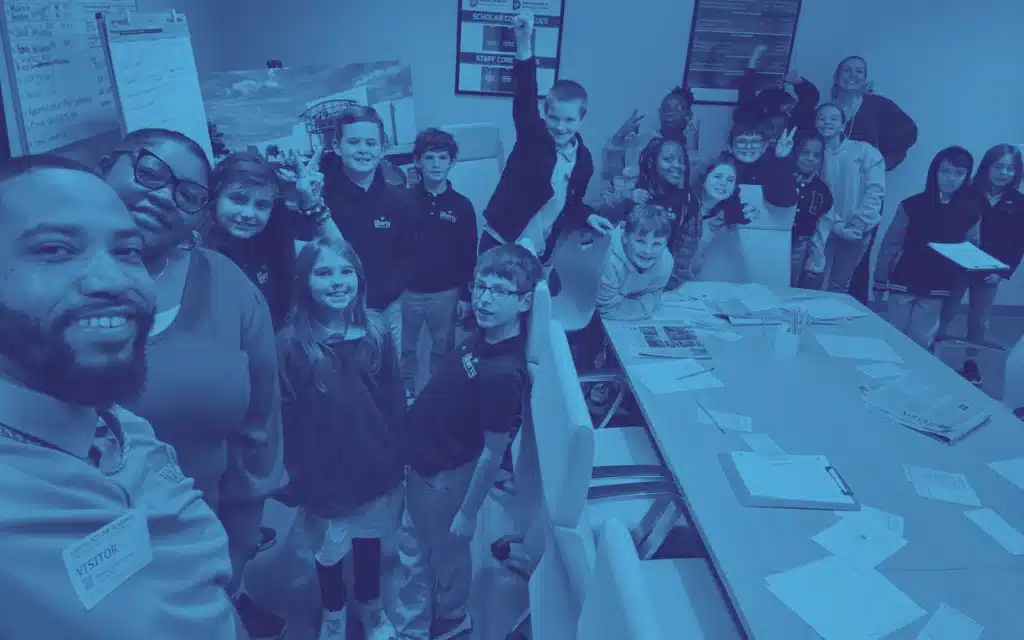
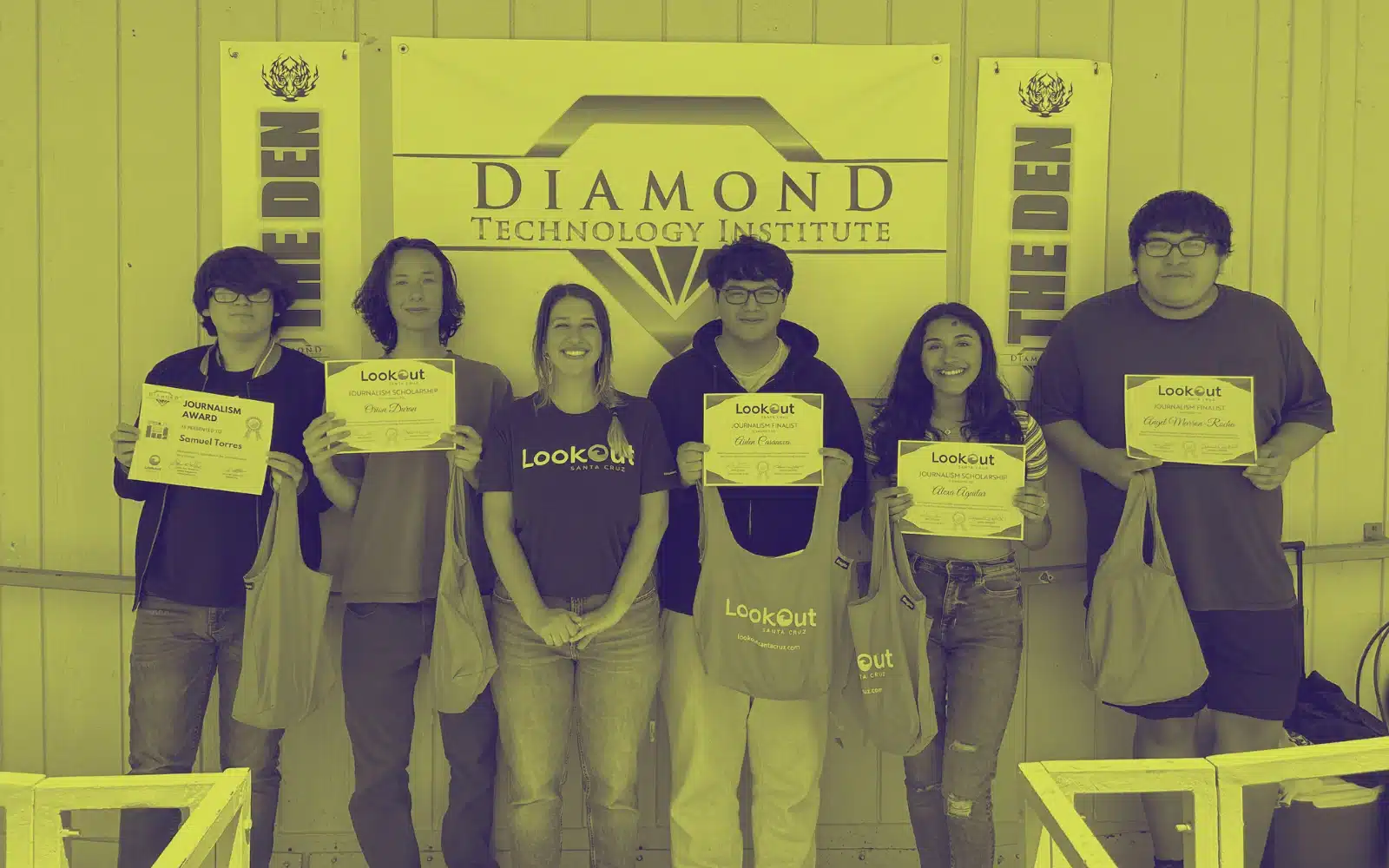
Jamie Garfield celebrates with students from Diamond Technology Institute whose writing was published in Lookout Santa Cruz. (Photo by Kevin Painchaud)
Has it ever been more important for young people to understand the news of their own community — to grow into informed, engaged, voting citizens? We don’t think so. And that urgency is exactly what drove us to build Lookout in the Classroom.
What began four years ago as a conversation with educators has grown into something none of us fully anticipated. Today, more than 10,000 students and 450 teachers across Santa Cruz County engage with local journalism through Lookout in the Classroom. This spring, we expanded it further with the launch of Lookout for Teachers, providing free, unlimited access to all of Lookout’s reporting for local middle and high school educators, paid for by donors.
Lookout Local, now five and a half years in, is a Pulitzer Prize-winning local news organization built on the idea that strong communities need strong, independent journalism. What began in Santa Cruz has grown into a two-site model, with expansion to additional sites underway. Lookout in the Classroom was part of the vision from the beginning. As we expanded into Eugene-Springfield last year, the classroom program launched alongside the newsroom as a core pillar, not an add-on.
The path here was not a straight line. It was a series of small bets, honest failures and hard-won lessons. If you are running a local newsroom and wondering whether a classroom program is worth the investment, here is what we learned, starting with the why.
Why this work matters
We tend to think of civic education as something that happens in a textbook. What we have seen over four years is that it happens most powerfully when students encounter the news of their own streets, their own school boards, their own county supervisors — and when they are given the tools to think critically about what they read.
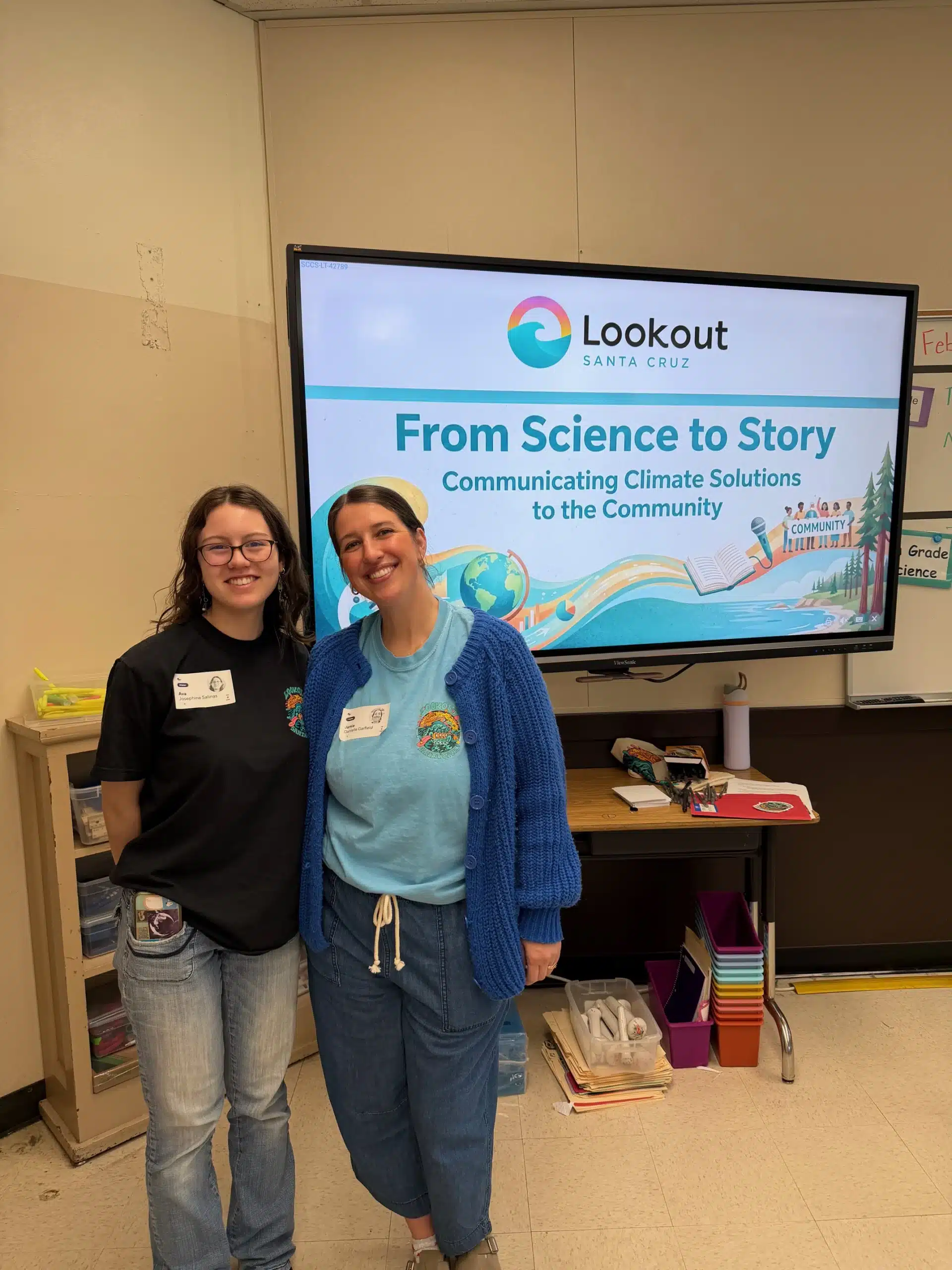
Jamie Garfield and Ava Salinas, education intern, visit a middle school science class to discuss science communication and journalism. (Photo by Christy Peters)
“Your classroom visit tied in so well with what we are teaching,” Matthew Oderman, who teaches government at Harbor High School, told us. “I think a lot of us tend to get lost in national news, and we forget how important it is to have local media paying attention to what’s happening right in our backyard.”
That observation gets at something fundamental. When a student reads about recent flooding in a social studies class exploring how ancient civilizations depended on rivers, the curriculum suddenly has stakes. When a biology class reads Lookout’s coverage of local ocean issues, the science is no longer theoretical.
“It’s fun to read about things and places you recognize,” one high school student told us in a survey. “When they talk about being on Ocean Street, or Bookshop Santa Cruz, it feels so immersive. I haven’t had such personal news available to me before.”
That sense of recognition — of seeing your community reflected back to you in journalism — is not a small thing. It is the beginning of civic identity.
Lesson #1: Go through the adults young people already trust
This was perhaps our most important early lesson. When we tried to reach students directly, engagement was thin. When we went through teachers first, everything changed.
Students trusted Lookout because their teachers did. And teachers trusted Lookout because it was genuinely useful to them and fit naturally into what they were already doing.
The uses have been remarkably varied. A special education teacher at Harbor High uses Lookout articles for supported reading. A biology teacher at Scotts Valley High posts ocean coverage for her marine science classes. A language arts and social studies teacher at Lakeview Middle connected flood coverage to a unit on ancient river civilizations. Ian Licata at Diamond Technology Institute has paired each junior writer in the scholarship program with a sophomore photographer. The program did not prescribe any of these applications — teachers invented them.
Lesson #2: Build a fundraising story, not just a program
Here is our financial journey in plain terms:
- A small grant from a local credit union — our proof of concept
- A modest recurring gift from an early individual donor — proof of emotional resonance
- A major grant from Google News Initiative — proof of scale
- A small crowdfunding campaign — proof of a crowd
- A significant wave of individual donors through our Lookout for Teachers launch — proof that framing around teachers unlocks a whole new donor audience
- And now a major initiative using a one-for-one membership model: each high-value membership funds a free teacher subscription.
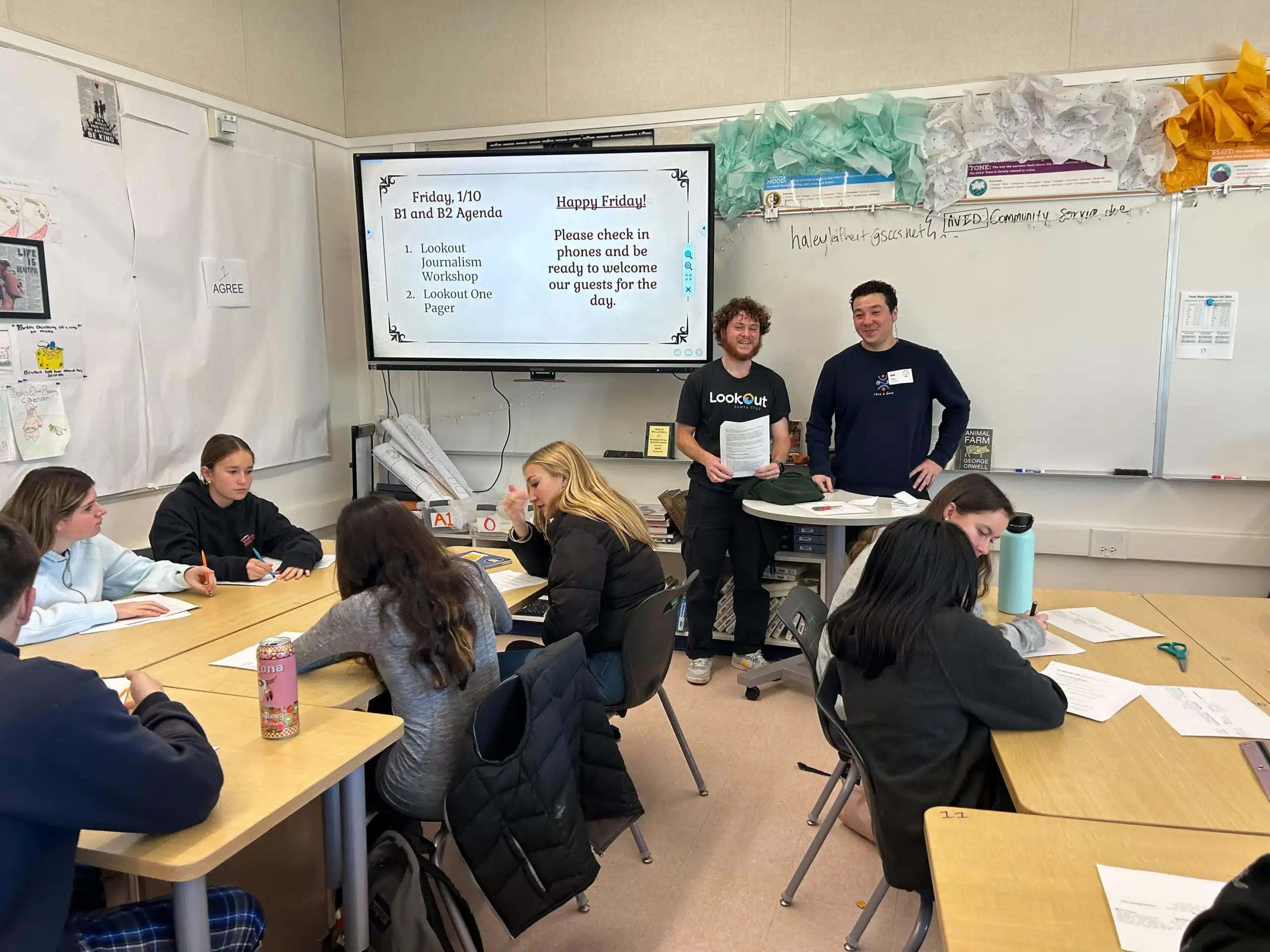
Eetai Shwartz, education intern, and Max Chun, general correspondent, speak with a high school class about the fundamentals of journalism and storytelling. (Photo by Ashley Harmon)
The shift to teacher-centered framing was particularly significant. When we stopped talking about “student access to news” and started talking about “free memberships for teachers,” donations came from people who had never engaged with us before. Donors understood immediately what a single annual teacher membership could do. It is a concrete, affordable gift with a clear beneficiary.
Lesson #3: Streamline ruthlessly, then scale
In our early years, we tried to do everything. We eventually stopped and asked: what is actually working? The answer was clear: the scholarship, the Educator Newsletter and the custom school visits. Everything else was cut or deprioritized.
We also made a structural commitment that mattered: dedicating a staff member’s time specifically to the classroom program. Without a designated person to own relationships with teachers and track what was working, the program would have remained small and scattered.
We learned to plug into existing infrastructure rather than build from scratch. County youth programs, community events, established school partnerships — these were already in place. We just needed to show up and add value.
Documentation became a priority as well. Great things happen in classrooms that funders never see. A student who finally understands how a city council vote affects her neighborhood. A reluctant reader who picks up a story because it is about his street. A Jóvenes Sanos youth participant who, after a Lookout zine-making workshop, wrote about being first-generation — and said it made her feel “relieved and not keeping it to myself.”
We started capturing these moments not just as anecdotes, but as evidence. Better documentation led to better pitches, which led to more funders saying yes.
What we are building next
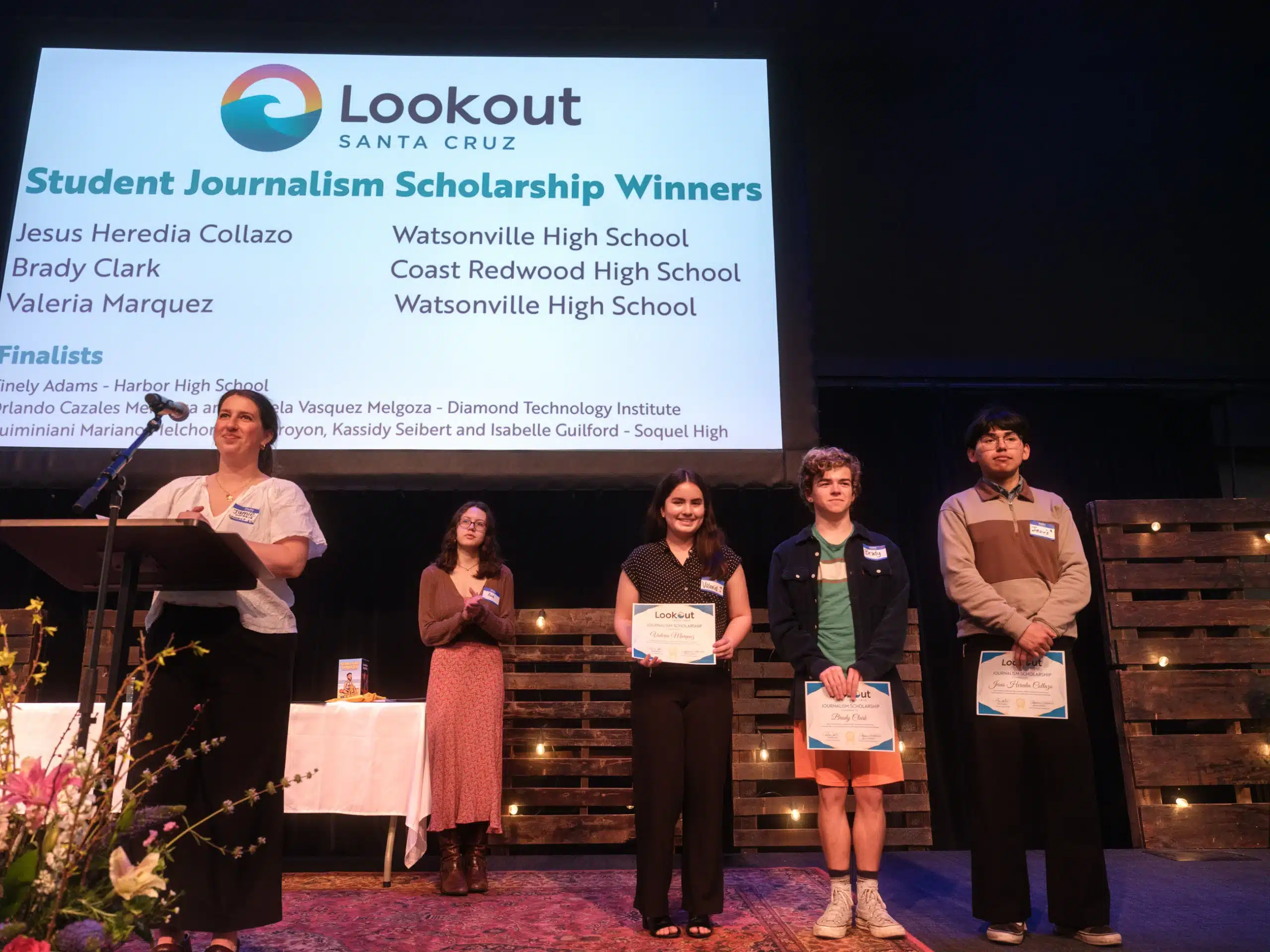
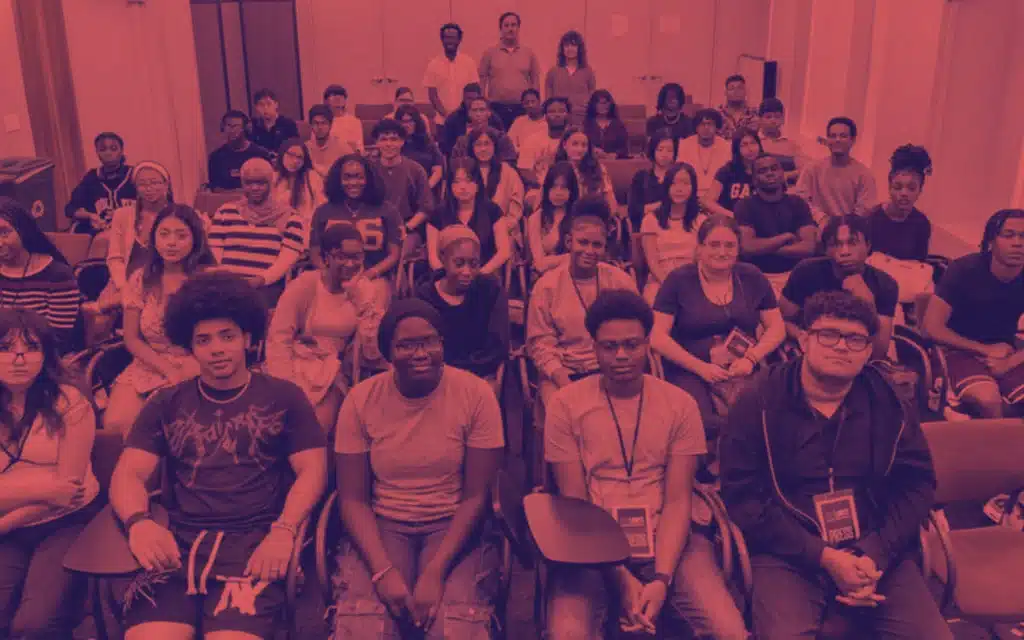
Jamie Garfield presents the recipients of Lookout’s Student Journalism Scholarship at the annual Your Future Is Our Business Luncheon, attended by more than 500 community members. (Photo by Kevin Painchaud)
We see a clear next step: moving from student participation to student partnership.
We are planning a Youth Voices Initiative to bring students more directly into our editorial and engagement processes — from pitching story ideas to participating in newsroom conversations and advising on coverage priorities.
As Lookout expands to new cities, the classroom program comes with us — built to scale, with systems and stories ready to deploy. We have already launched Lookout in the Classroom in Eugene-Springfield, where early response from educators has been strong, reinforcing that this model can translate across communities.
Practical advice for other newsrooms
- Start with one school and one sponsor. A small pilot is not a limitation — it is your first chapter and your first fundraising story.
- Listen to teachers before you launch. Conduct listening sessions. Find the gap they are already experiencing, then fill it.
- Go through adults first. Build trust with educators and they will bring students. The reverse rarely works.
- Frame the ask concretely. A one-for-one model — buy a membership, give one to a teacher — gives donors something tangible to point to. Make the cost of impact easy to understand.
- Dedicate real staff time. Even a part-time commitment signals to teachers, funders and your own team that the program is a priority, not an afterthought.
- Let students create, not just consume. A scholarship or publication platform turns passive readers into invested contributors — and gives you proof of impact that no engagement metric can match.
- Document everything. Photos (with parent permission), quotes, student work, teacher testimonials. The invisible wins in classrooms are your best fundraising assets. And then share it often with your readers, subscribers, donors and advertisers.
- Cut what does not work. Focus on two or three things done well rather than ten done adequately.
- Let early wins compound. Each scholarship submission, teacher testimonial or donor contribution is both an outcome and a pitch for the next stage.
What we are doing through Lookout in the Classroom is old-fashioned civics, built for the digital age. We are giving students and teachers a steady stream of trustworthy local journalism and the tools to navigate information in a world saturated with noise and misinformation.
Jamie Garfield is the director of student and community engagement at Lookout Santa Cruz, an independent local news organization serving Santa Cruz County. She launched Lookout in the Classroom in 2022 and has since expanded it into a nationally recognized model for civic education through local journalism.