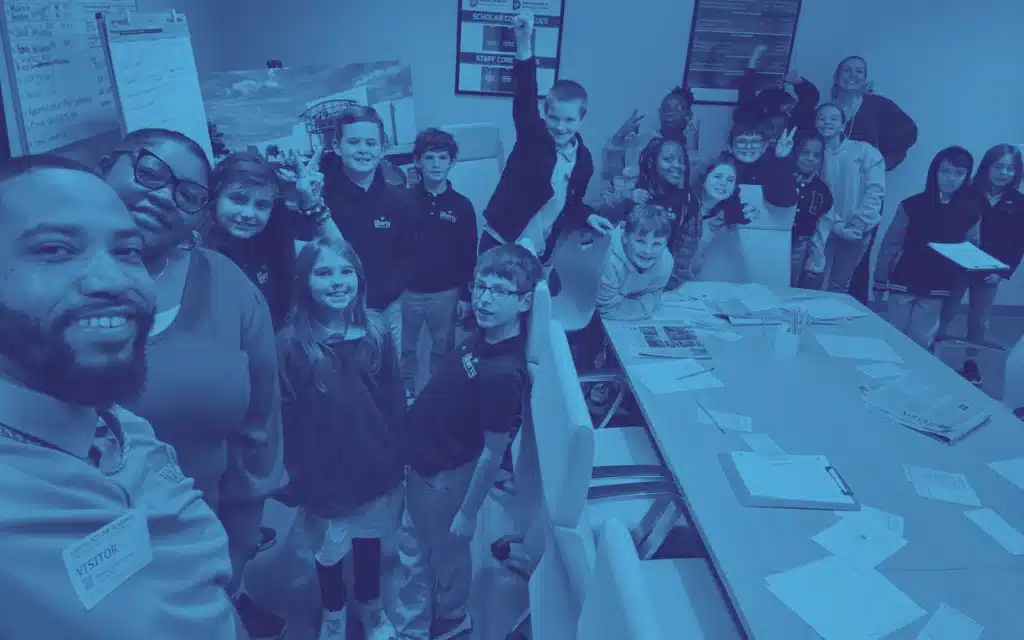
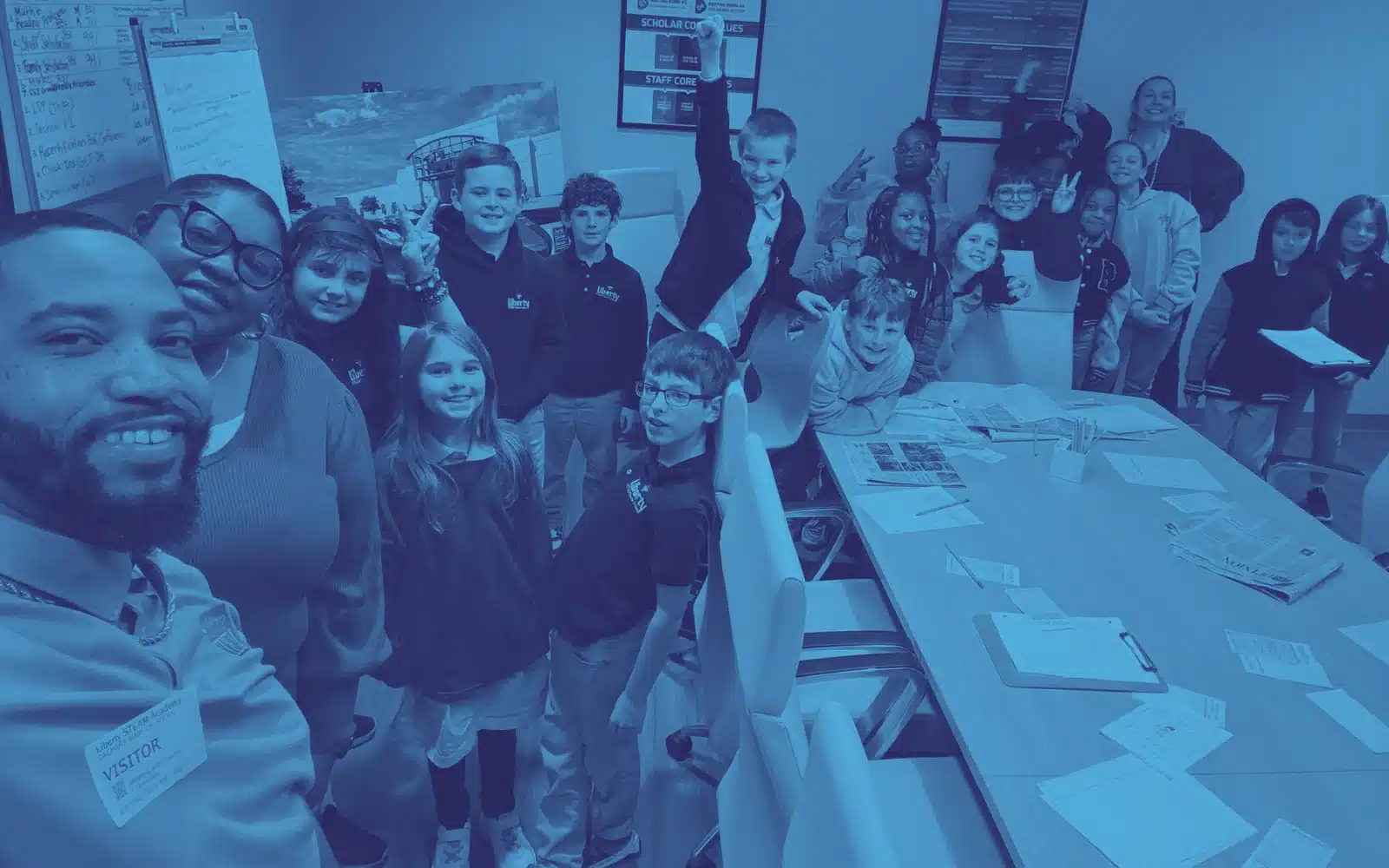
Sumter's Next Generation News editor Alaysha Maple and video and audio producer Zac Hooks with Liberty STEAM Charter School students. (Photo by Jane Hray)
Cybersecurity major. Self-taught pianist. Female welder. Found family drama troupe.
A city’s rare Westpoint acceptance. A $72,500 tally in HBCU band scholarships.
Sumter’s youth are exceptional, and they always have been.
But these stories weren’t always reflected in the news. Their accomplishments passed uncelebrated by their wider community.
It isn’t just democracy and those other all-encompassing values that die in darkness. When, as Arthur Brisbane alluded, a newspaper is a defective mirror reflecting the public by only showing the bad news, what dies is a willingness to even take a look.
The Sumter Item’s youth engagement efforts, manifested in Sumter’s Next Generation and other positive recognition programming, are both our answer to an initial community need and a foundation for sustainable, meaningful journalism that aims to help build a shared sense of hopefulness and redefine young people’s relationship with news consumption.
What we’re doing
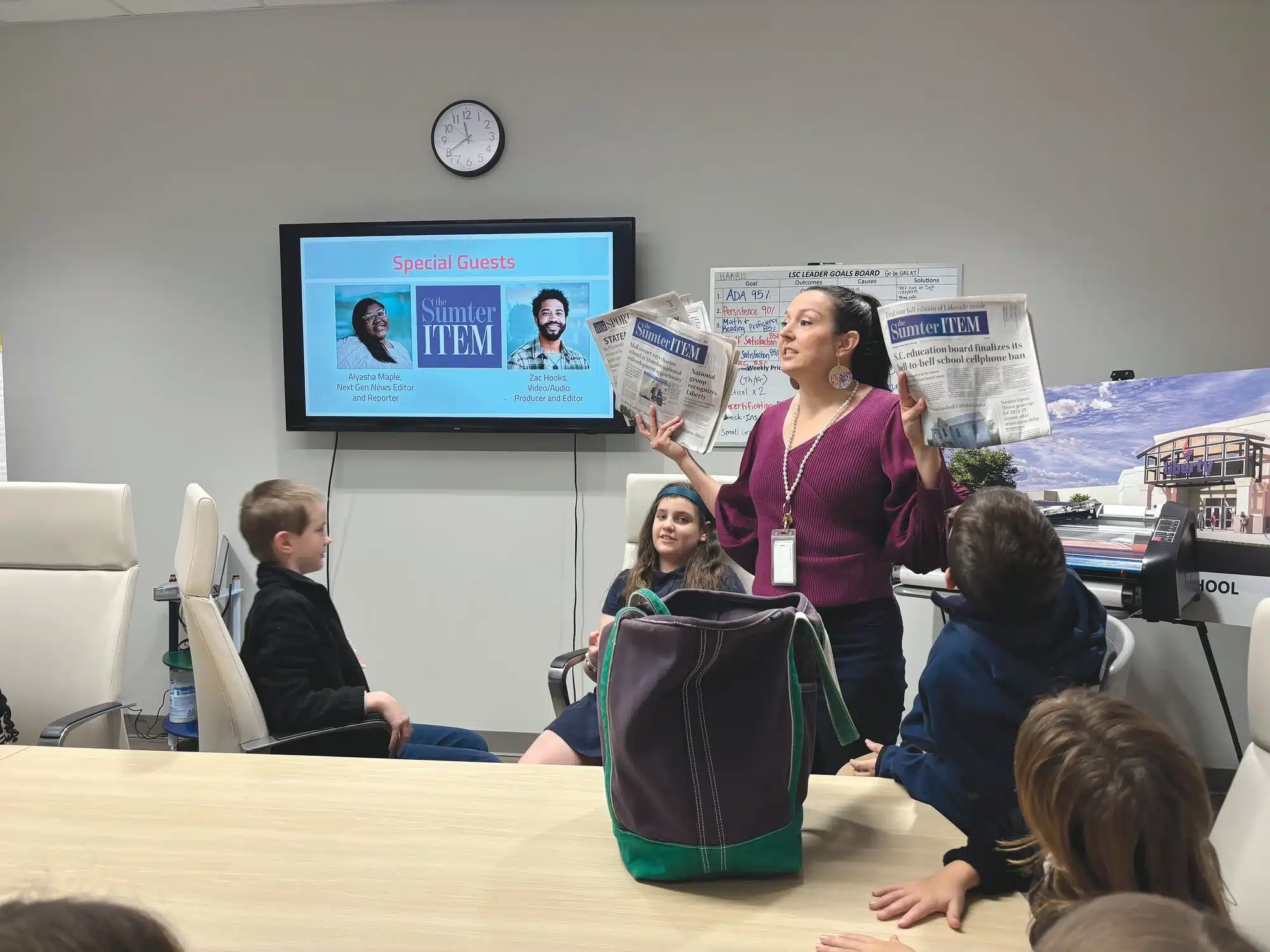
Sharing tips on how to tell a compelling story through words and visuals with Liberty STEAM Charter School. (Photo: Jane Hray with Liberty STEAM Charter School)
Next Gen is a recognition series that highlights a different young person in each edition. This series is published across The Item’s multimedia platforms, ensuring it reaches our diverse audiences: in print and on Facebook for our newspaper’s longstanding readership, online for searchability, and across various social media platforms for shareability among younger generations. While Instagram is our primary platform, we also monitor YouTube and TikTok.
Why?
Historically, sports coverage was the best way for young people to be featured in their local newspaper. That, or like many legacy newspapers — ours has been printing since 1894 — with a mug shot.
But not every high school student plays sports.
Like Matthew Steeb — he runs routes, but it’s around the kitchen as he learns culinary arts in his last year of high school. Or 15-year-old Gibb Wilder, who runs an inflatable slide rental business and offers this advice: “You have to think you’re going to succeed because if you don’t, then you’re not. You can’t let nobody bring you down.” And 23-year-old Tayvian Gass, who is often the youngest person in the room during his service as a community relations manager for South Carolina Speaker of the House Murrell Smith, a Sumter representative.
As Next Gen editor Alaysha Maple wrote, “One issue that has weighed on Gass is the perception young people have of their hometown and of themselves. In comparison to some cities and opportunities they offer, Sumter may seem small, and there is a wide world out there that is worth exploring. But Sumter is beautiful, and through its people, places and programs, there is much knowledge to gain from and much to give back — but it’s up to youth to see it and believe it for themselves. He hopes to be the catalyst for them to do so.”
How?
For us, Next Gen was born from a mission to fill a community need.
- The problem: Youth gun violence.
- The gap: Lack of youth support in and out of school, plus other institutional failures. Even young people who aren’t caught up in the problem do not feel connected to or proud of their community.
- Our pie in the sky: We started with the idea of building a four-person team to launch a Digital News Literacy Project with the goal of raising more than $200,000. That quickly became infeasible due to capacity constraints and limited resources to dedicate to the project. It also didn’t align with our organization’s realistic strategy; pitching the idea didn’t land because we hadn’t been telling our own story.
- Our shift: We realized that before we could address something as overarching as gun violence, we needed to build trust with young people and help them see themselves and their relationship with their paper positively.
Try it out
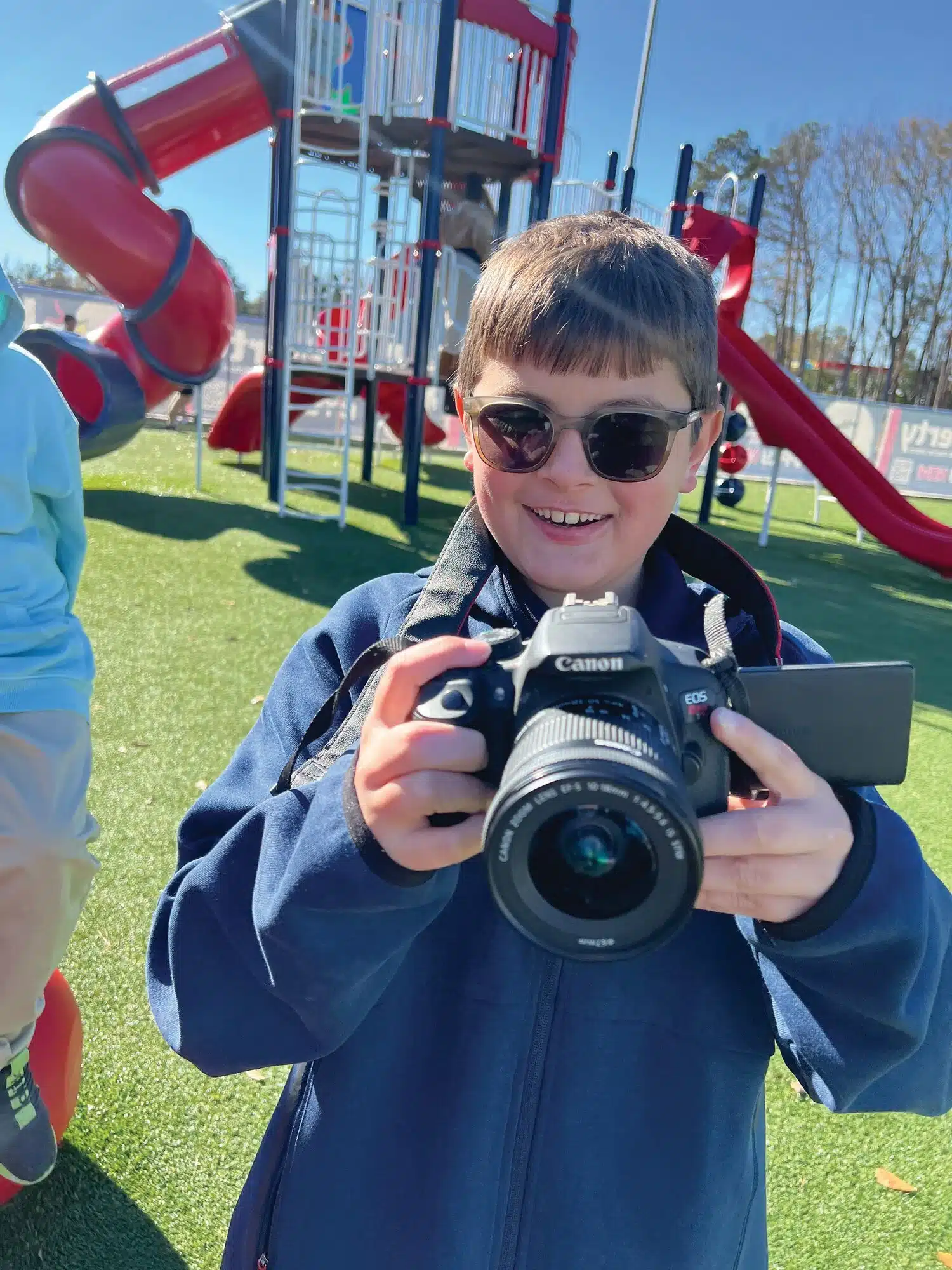
Video and audio producer Zac Hooks shows Liberty STEAM Charter School scholars how to operate a camera (Photo: Alaysha Maple/The Sumter Item)
Your community’s needs may differ, but you can replicate and scale this positive recognition content without sharing the Item’s background.
- Make it mission-driven, externally. Fill a community need that’s actually wanted. Listen, then act. I can’t stress this one enough. We all have big dreams for our own work, our news organization, our community impact. That often involves what we all call Big-J Journalism. But before assuming that was the goal, we held advisory sessions, focus groups and stakeholder conversations with student councils, teenage community activists and various adults to identify pain points, causes, solutions and where The Item may best serve. Our listening sans ego but within the confines of our own capabilities has propelled Next Gen to meaningful success.
- Make it mission-driven, internally. Don’t reinvent your organization’s goals. How can you fill the need within the confines of how you already operate? We already had the newsroom personnel needed to make this series work. Rather than put them on a long-term project that would diminish their ability to meet content production needs, Next Gen serves a community need while also providing consistent, quality output.
It’s good for business
The mission-driven aspect of Next Gen — to promote Gen Z greatness as a norm, not the exception — is a brand that companies in your community will jump to get behind. You just need to pitch the right ones, and you’ll make altruism revenue-driving. Just make sure the stories being told come from the subjects’ mouths and in a manner that’s beneficial to them.
Our Next Gen sponsors have always been brand-forward companies that want to partner with products promoting positivity or goodwill, rather than selling something specific. For example, we have had two local sponsors for this series: Central Carolina Technical College, then Sumter Economic Development, which runs an Emerging Leaders program for high school students.
Tip: Don’t be afraid to pitch a sponsorship rate that’s worth your staff’s time and effort in the context of their larger roles.
- Our Next Gen team consists of three main people: a videographer, a photographer and a writer who serves as the vertical’s editor. They all have other beats and responsibilities to fulfill.
- We charge $12,000 a year to run an episode twice a month: high-quality story in print and online; a moving-portrait interview style video produced for social media; and a multimedia photo story.
It’s good for the community
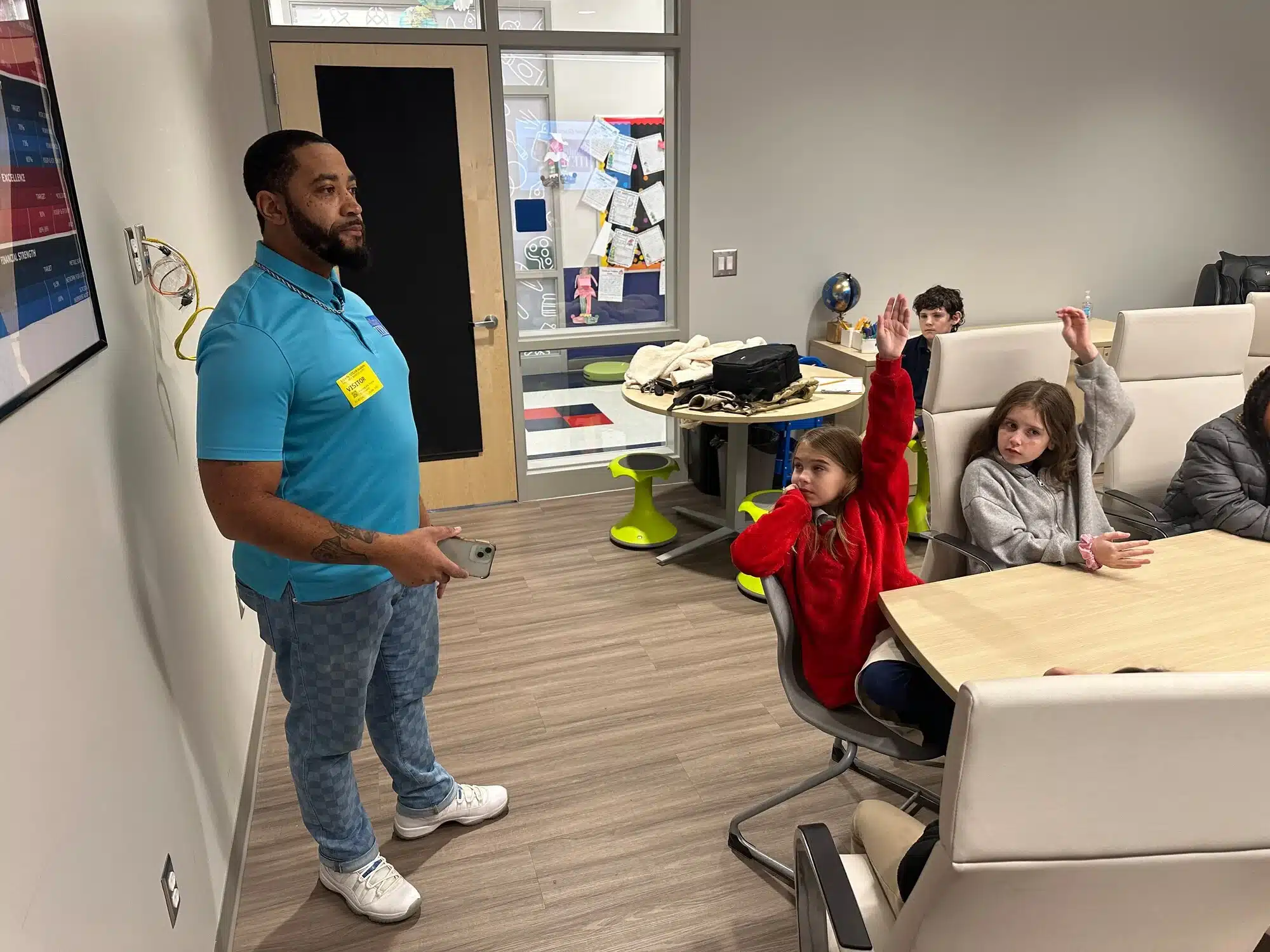
(Photo: Jane Hray with Liberty STEAM Charter School)
Other than Next Gen being sponsored upon launch, we’ve returned to the education and workforce pipeline trajectory of the Item’s general vertical blueprint by hosting newsroom field trips and visiting local classrooms. A spouse of an owner of The Item launched a journalism 101 class at our local community college. We helped with curriculum development and sat as guest lecturers. Through a local/state charitable trust grant, we had two paid interns from the college in our newsroom for their Spring 2026 semester and will welcome two more in the fall.
- Why it’s relevant: They’re supervised by our Next Gen news editor.
- Why it’s a win for capacity: The $19,500 grant allows us to expand our newsroom without straining already-strained people or budgets, as well as support staff growth without simply adding more to their plate.
- Why it’s a win for Sumter: More voices telling Sumter’s stories is beneficial internally and externally. More diversity in those voices deepens that impact.
If you’re not ready to venture into a solutions journalism-based project examining youth gun violence or community pride, start with lower-hanging fruit.
Just make sure:
- The “small” steps match your organizational mission. Small wins can stand on their own (i.e. driving revenue, building relationships, celebrating staff success) while also serving as a foundation for the big picture.
- It’s not always about the traditional “bottom line.” Target charitable giving to fund the work and the people.
- You’re open to side quests while always being able to return to your main mission. How does what you’re doing serve and engage youth? Are you doing it because you think it’s what they want, or because you’ve asked them?
Kayla Green is the executive editor for The Sumter Item, which she joined in 2017. She has worked in local news for 17 years and since 2022 has served in the same role for Gulf Coast Media, a sister company to The Item in coastal Alabama.