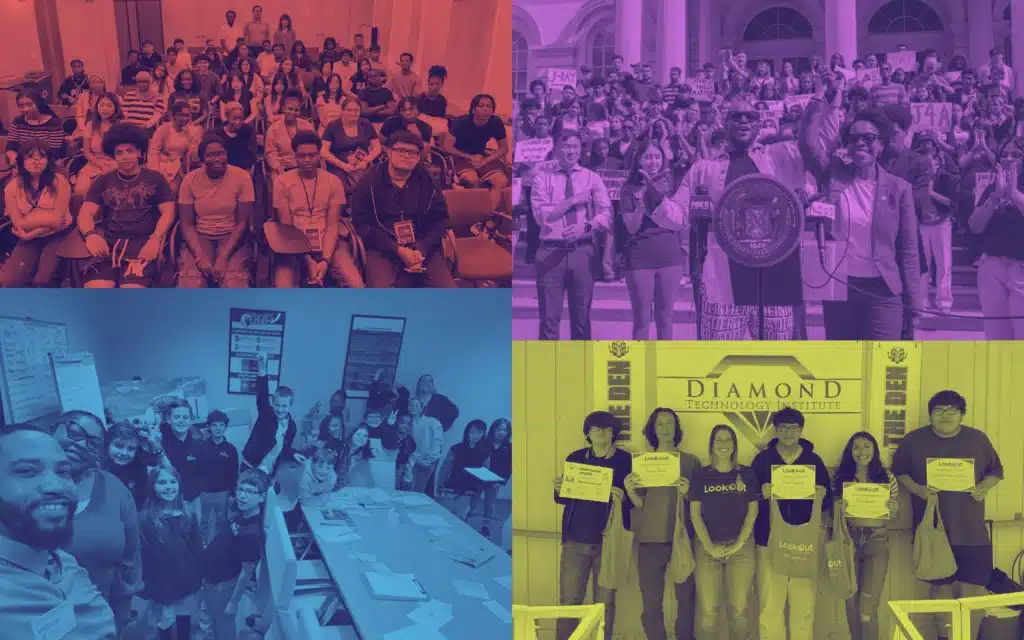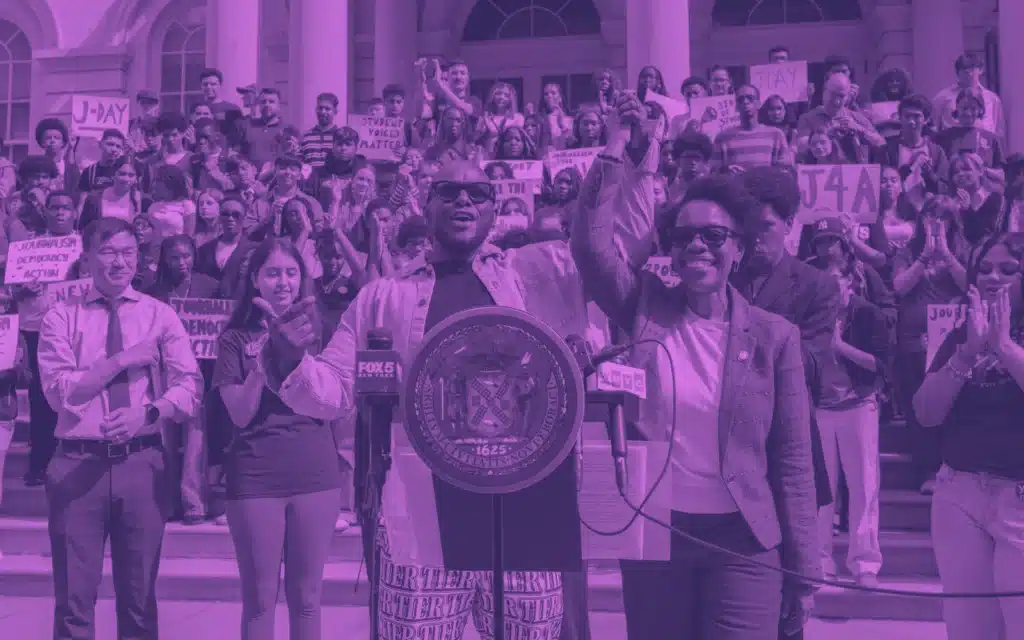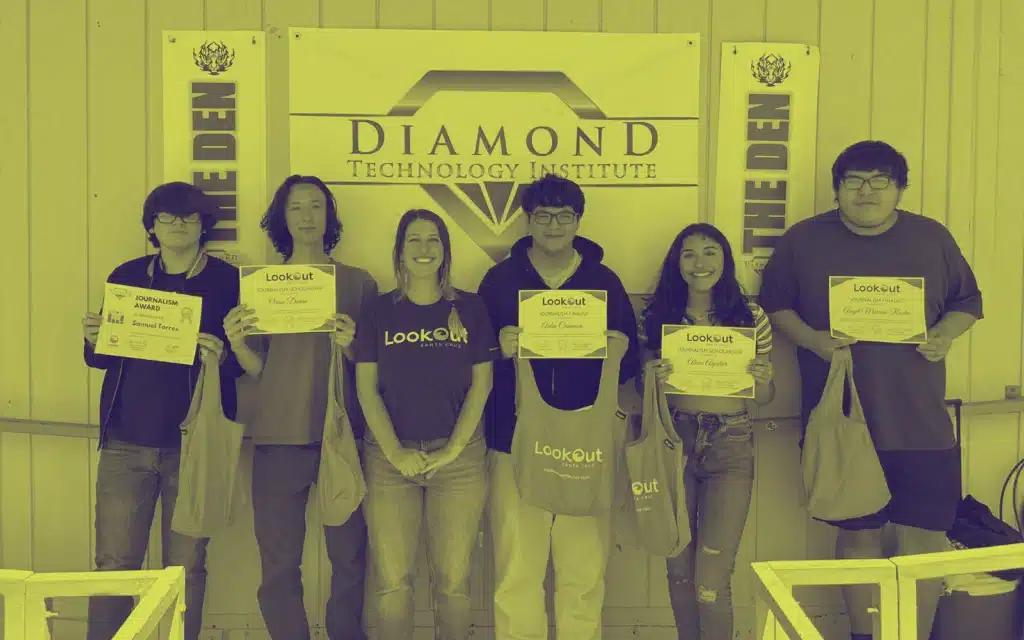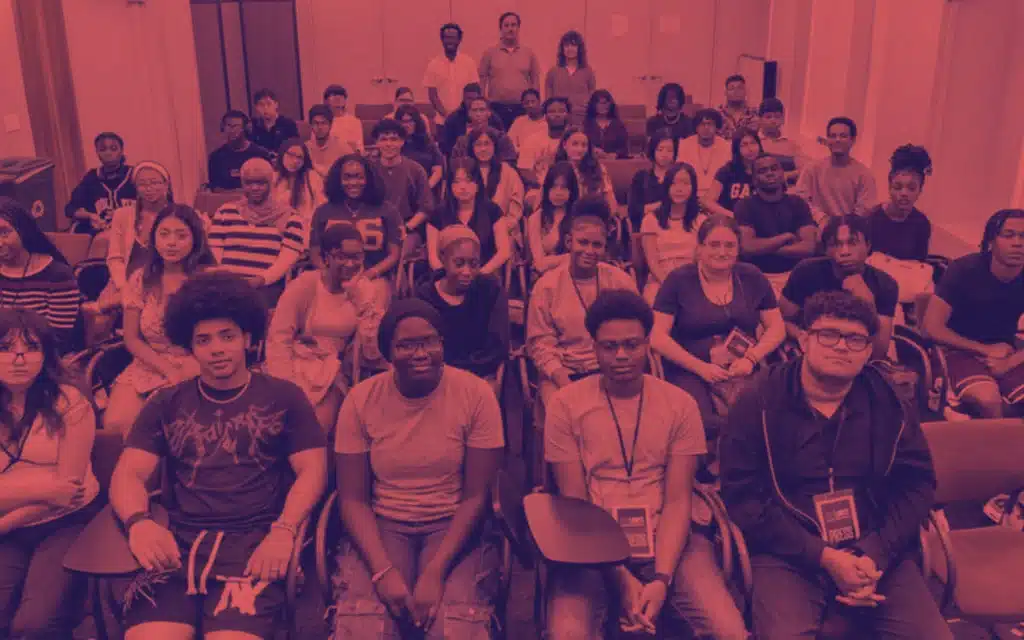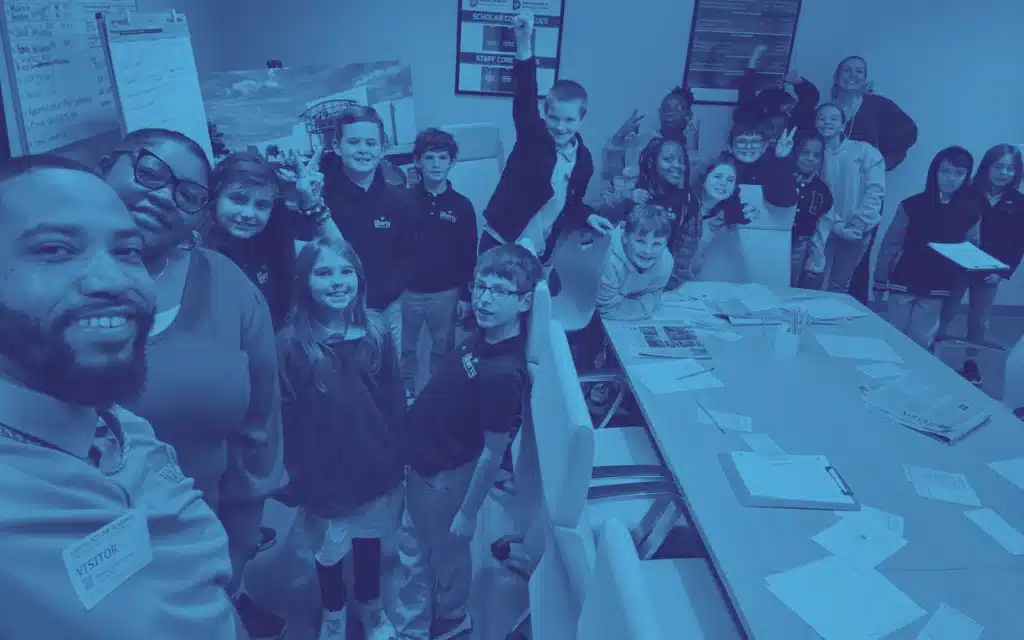
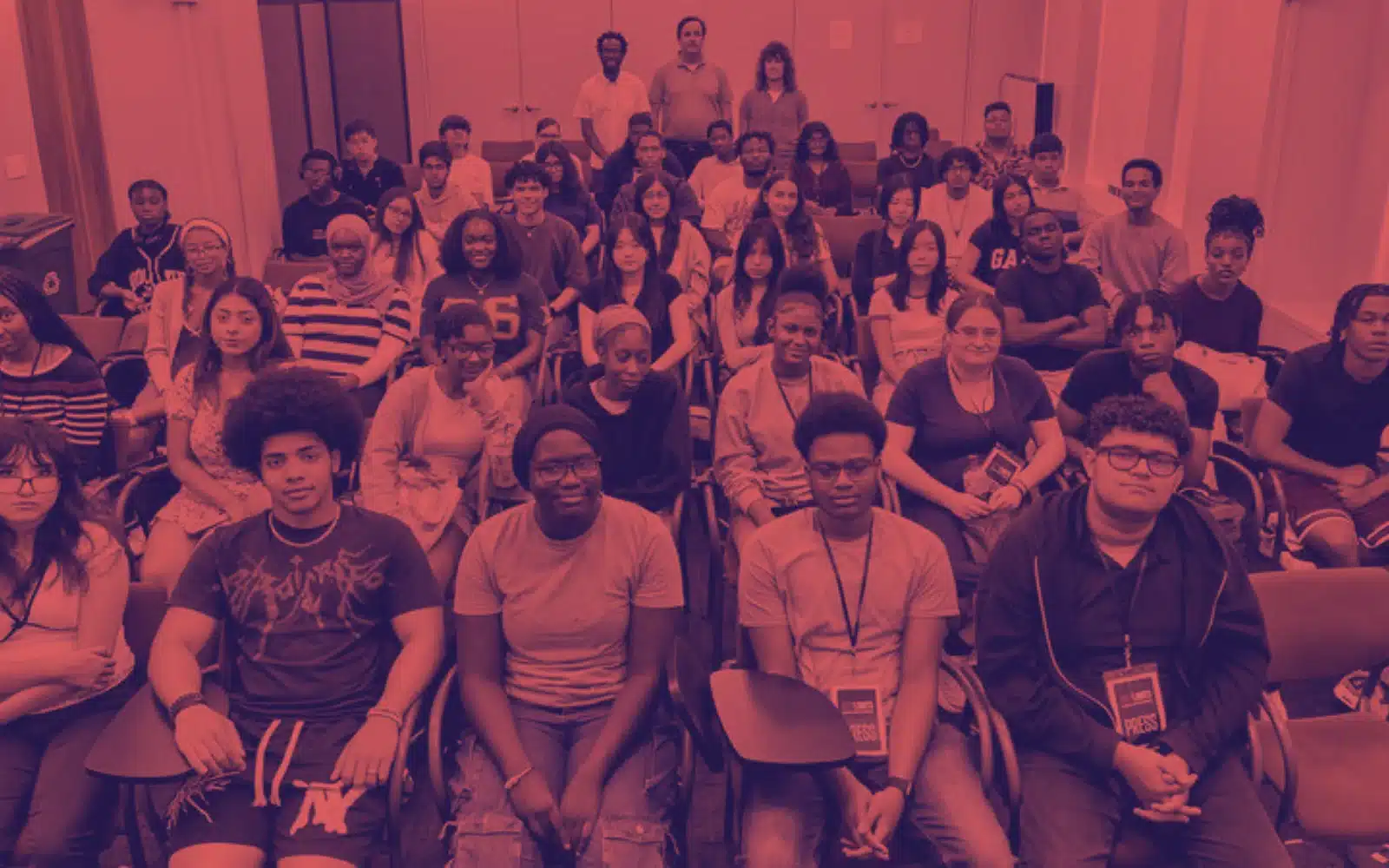
CLARIFY 2025 Summer Cohort participants at the Craig Newmark Graduate School of Journalism. (Photo by Adi Talwar)
There is a growing awareness in local journalism of the importance of engaging youth in our communities — as reporters and as the next generation of civically engaged news consumers. The newsrooms that have stepped up to meet that need are doing vital work, often with scarce resources and in fierce competition for a limited pool of journalism funding. And although interest may be growing, funding to expand youth engagement in local news is unlikely to come from the journalism sector alone.
Youth development, however, has a larger, more mature funding landscape whose stewards are taking notice of the impact journalism training can have on the trajectory of a young person’s life. Foundations and community funders in this space invest in programs that improve career readiness, civic engagement, academic outcomes, self-advocacy — outcomes that quality youth journalism training and internships often produce, even if most local newsrooms haven’t framed it that way.
Approaching these funders requires both a fluency in youth development and a genuinely enriching program, and that can be overwhelming for local newsrooms who are running on limited staff time, thin budgets and a commitment that outpaces resources. A small shift in framing, however, can help open doors to a broader pool of funding partners.
Building an effective youth development program
When I co-founded the high school journalism internship program CLARIFY at City Limits News in 2015, that framing wasn’t yet fully in focus. It evolved with continuous refinement and support from generous partners. Launched as the Bronx Investigative Internship Program, it began with seven students meeting twice a week after school. The entire budget was $5,000. It grew into a year-round program with more than 700 alumni, some of whom have gone on to be published in the New York Times, NPR, Rolling Stone, the Wall Street Journal and Politico.
One step that advanced the program significantly was rolling out a six-week summer session. When CLARIFY became more of a full-day work experience for high school students, there was a natural amplification of career development skills implicit in journalism training.
We began noticing that these students — who had never imagined themselves calling a city agency, showing up at a public hearing or doing man-on-the-street interviews — self-reported consistent growth in self-confidence, public speaking ability and their sense of agency in civic life.
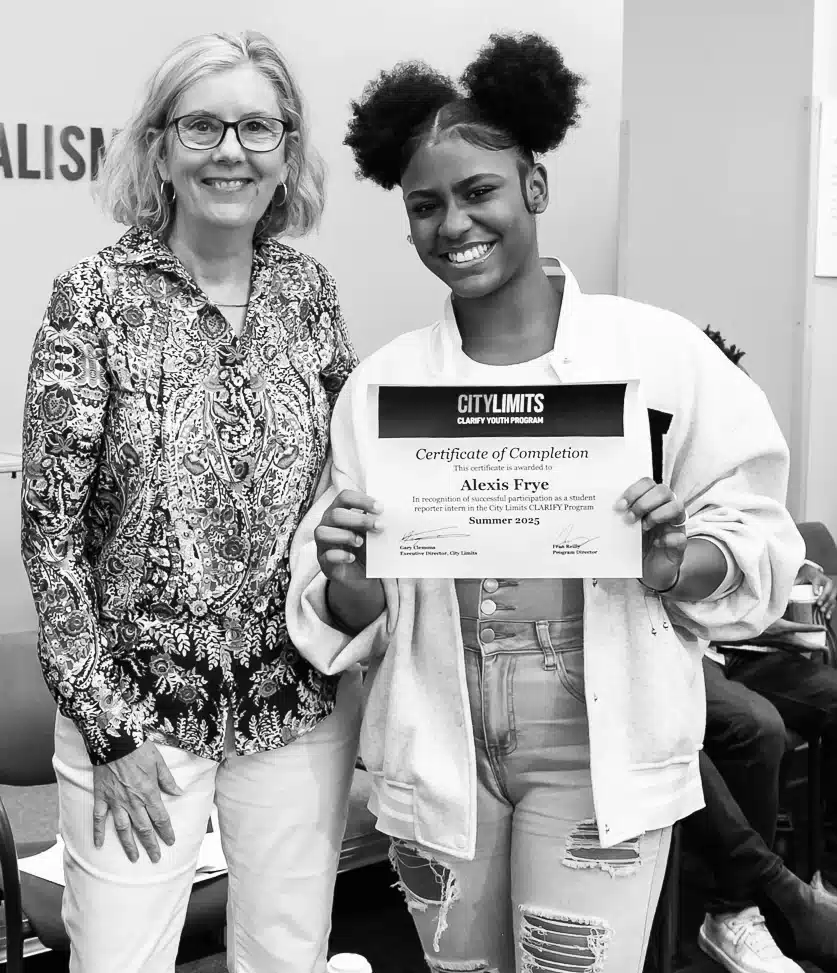
Fran Reilly with a summer cohort participant. (Photo by Adi Talwar)
That shift aligned with the mission of the Pinkerton Foundation, a place-based funder dedicated to improving the lives of young people living in low-income neighborhoods in New York City, who became CLARIFY’s first funder from the youth development sector, and an important partner in the growth and development of the program.
“Giving young people work experience, career exposure, civics — these are the sweet spots of the Pinkerton Foundation,” said Erickson Blakney of the Pinkerton Foundation. “We don’t expect every participating youth to go into journalism. We do expect them to learn skills that help them fulfill their potential.”
That shift — from a journalism training program to journalism as a lens for youth development — was key to opening new funding partnerships in the non-journalism space.
Whether your newsroom has a youth program or is just beginning to think about one, here are four areas to consider before approaching funders in the youth development sector.
Population. Who are you serving? Youth development funders start with the young person, not the program idea. Be specific about who you want to serve — not just their demographics but their lived experience. For example, at City Limits, a newsroom focused on housing equity, we prioritized recruiting youth from the communities we served, including public housing campuses, aligning the mission of the newsroom directly with the outcomes of the program.
Partnerships. Who else in your community is interested in serving the young people you are recruiting? By researching the people and organizations invested in serving them, you’ll gain ideas for collaborators and funding partners. Youth development philanthropy funds ecosystems that lift youth voices, and a local news outlet has something most youth-serving organizations don’t: a platform where young people’s work reaches an audience.
Many cities and towns have workforce development programs or city grants that can provide funding for the kind of work experience that a journalism internship and training program can provide. Providing stipends for young people ensures equity in who has access to the opportunity. CLARIFY successfully partnered with the NYC Department of Youth and Community Development’s Summer Youth Employment Program, which provides minimum wage summer jobs to NYC youth, significantly expanding the number of internships available.
Program. What gaps in youth development and the local community is your program filling? What is the arc of the young person’s experience? Many youth development funders seek programs that provide opportunities for youth to stay with the program over a number of years. Instead of a one-off internship, consider how your newsroom can build in a continuum of opportunity for interested youth, or tiers of learning experiences to provide growth over time. CLARIFY alumni, for instance, can apply to return as teaching assistants, and a paid community reporter track for advanced alumni is currently under development.
Finally, consider where mentorship fits into your program — a consistent, caring adult relationship is a signpost for a strong youth program — whether that’s a dedicated writing coach, a reporter-editor relationship, or a mentor from the community. Thinking through what will make the young person successful forces you to create better programs, and ultimately stronger outcomes for them, your newsroom and the local community.
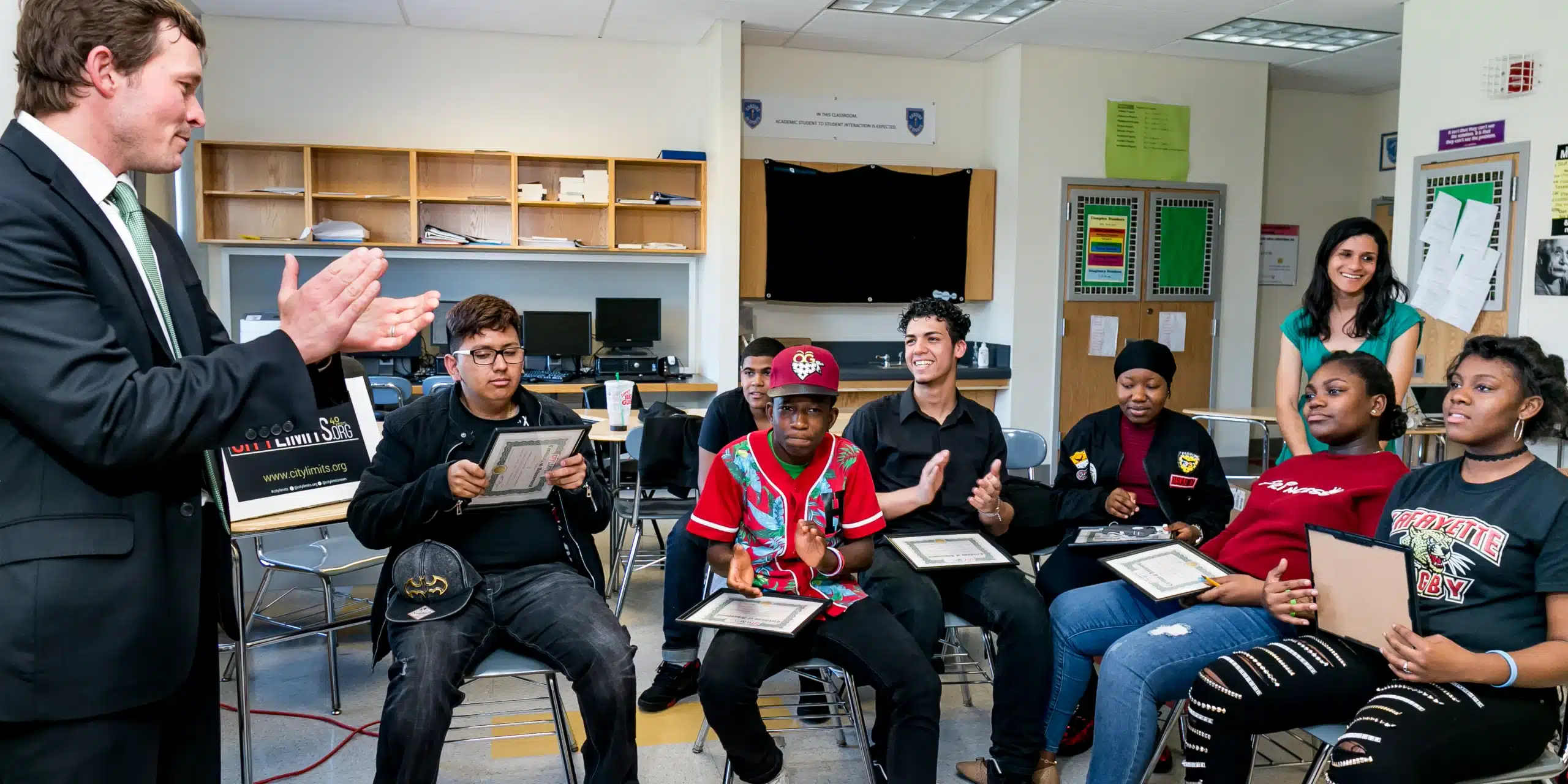
Participants in an earlier iteration of CLARIFY, The Bronx Investigative Internship Program (Photo by Adi Talwar)
Progress. What measurable outcomes can you track from the beginning? Youth development funders want evidence of impact, not just clips. Local newsrooms can start simple — tracking attendance, retention or assignment completion — but also think about how to measure the outcomes non-journalism funders care about such as improvement in writing skills, civic knowledge, critical thinking and academic improvement.
When local newsrooms reframe youth journalism as a lens for youth development, they can align with more funders, attract more partners and build programs more young people in their communities can find their way to.
Fran Reilly is Principal of Reilly Emerging Media. As Executive Director of City Limits, she built CLARIFY, a journalism internship and training program for youth from under-resourced communities in New York City.