American teens and adults hold politicians and social media primarily responsible for the spread of misinformation while largely exempting local news
The public assigns primary responsibility for misinformation to political and social media actors rather than news organizations. Two-thirds of American teens and adults (66%) say politicians bear a great deal or quite a bit of responsibility for spreading misinformation, followed by social media companies (55%) and social media users (54%). Local news (35%) and influencers (43%) receive the least blame from the public. AI users and companies, as well as national news, fall in the middle. This pattern suggests the public views misinformation as largely originating from political discourse and social media ecosystems rather than traditional local journalism.
Avid (81%) and moderate (75%) hard news consumers are more likely to blame politicians than low hard news consumers (51%). Avid and moderate hard news consumers are also more likely to assign blame across all categories except local and national news, where blame remains consistently low (around one-third) across all consumption levels.
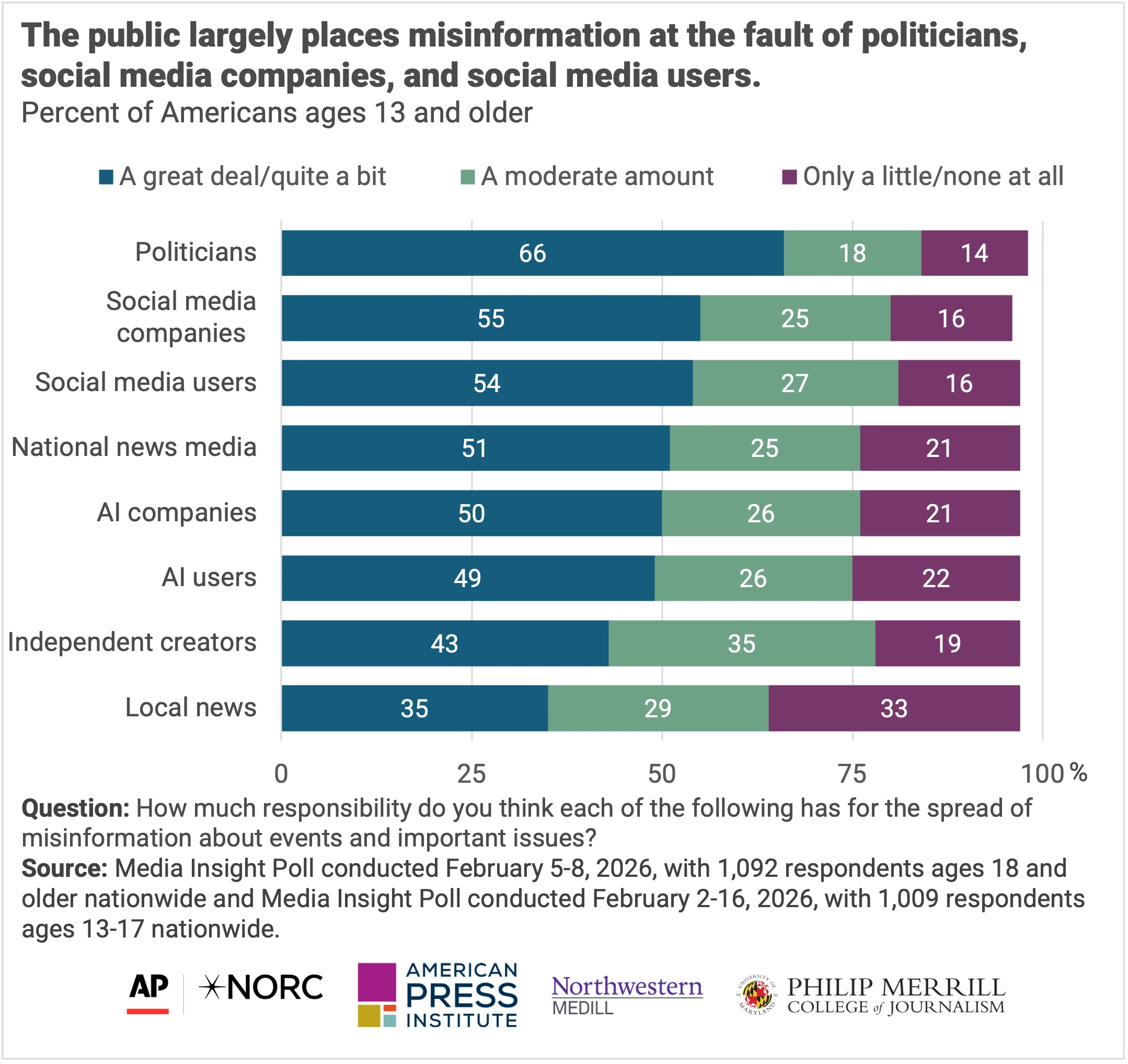
Partisan differences emerge in views of responsibility for misinformation, with Democrats more likely than Republicans to assign responsibility to politicians (75% vs 65%), social media companies (64% vs. 53%), AI companies (58% vs. 47%), AI users (56% vs. 46%), and independent creators or influencers (53% vs. 43%).
The psychological toll of news consumption drives widespread avoidance behaviors and efforts to establish digital boundaries
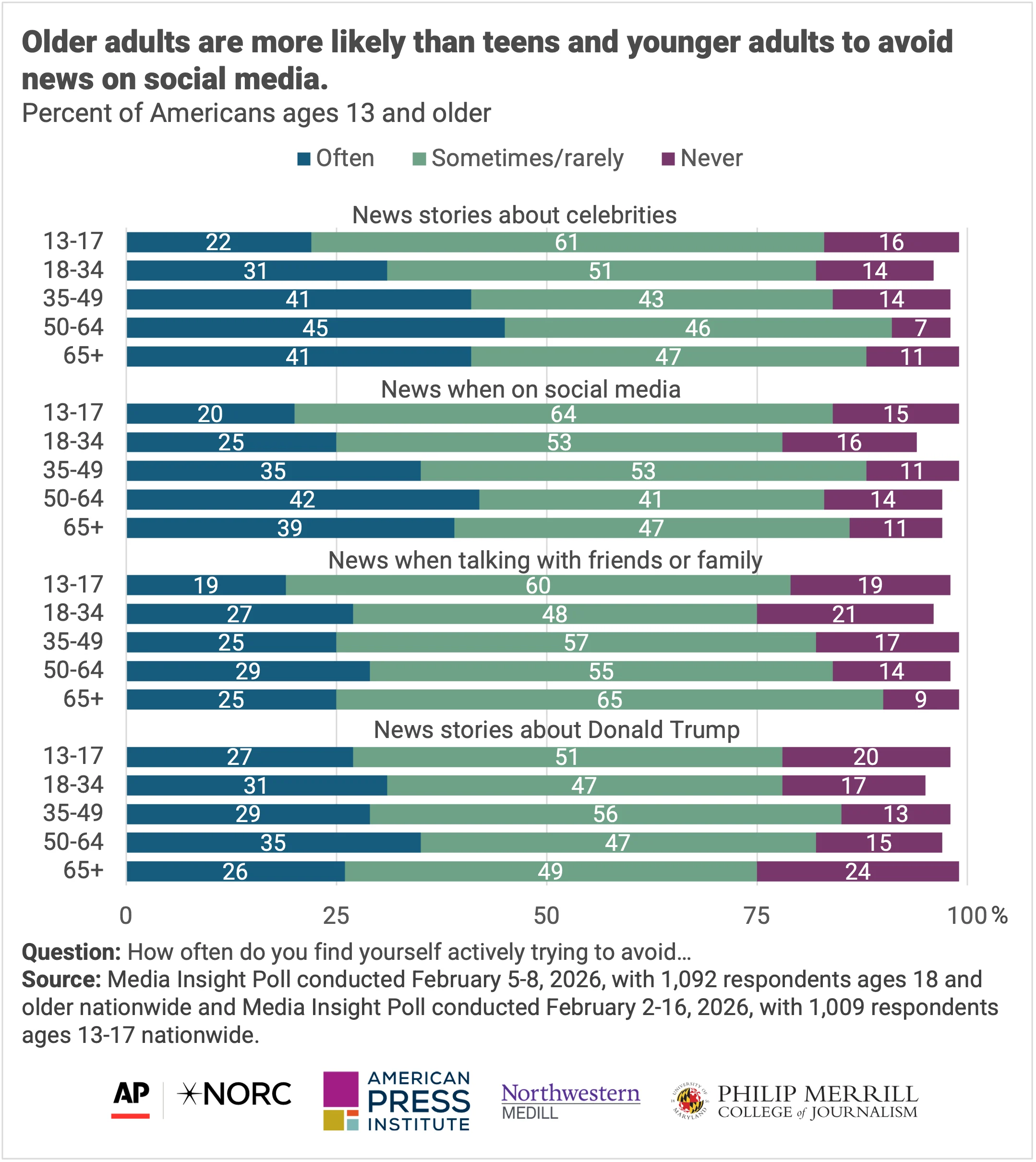
Americans ages 13 and older actively avoid certain types of news content, with celebrity news driving the most disengagement. Seven in 10 teens and adults say they often or sometimes actively try to avoid news stories about celebrities and news when on social media. Roughly 3 in 5 avoid news about Trump, national politics, news consumed via phone, and news when talking with friends or family. Democrats are more likely than Republicans to say they avoid news about Trump (68% vs. 50%). About half say they actively try to avoid news in general, indicating that avoidance is often topic- or context-specific rather than a blanket rejection of news.
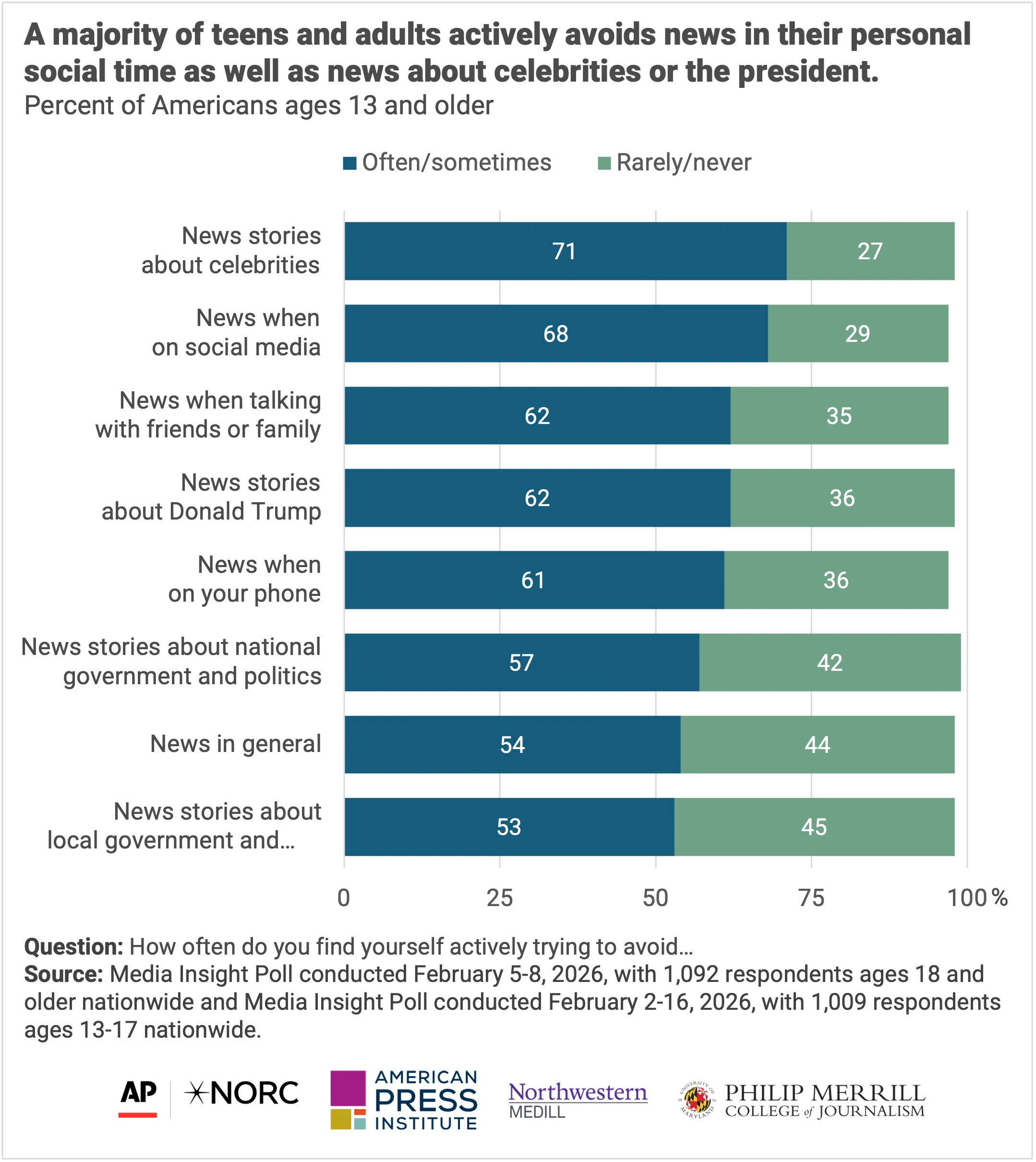
Adults ages 50-64 (42%) and those who are 65 or older (39%) are more likely than teens (20%) to often avoid news on social media.
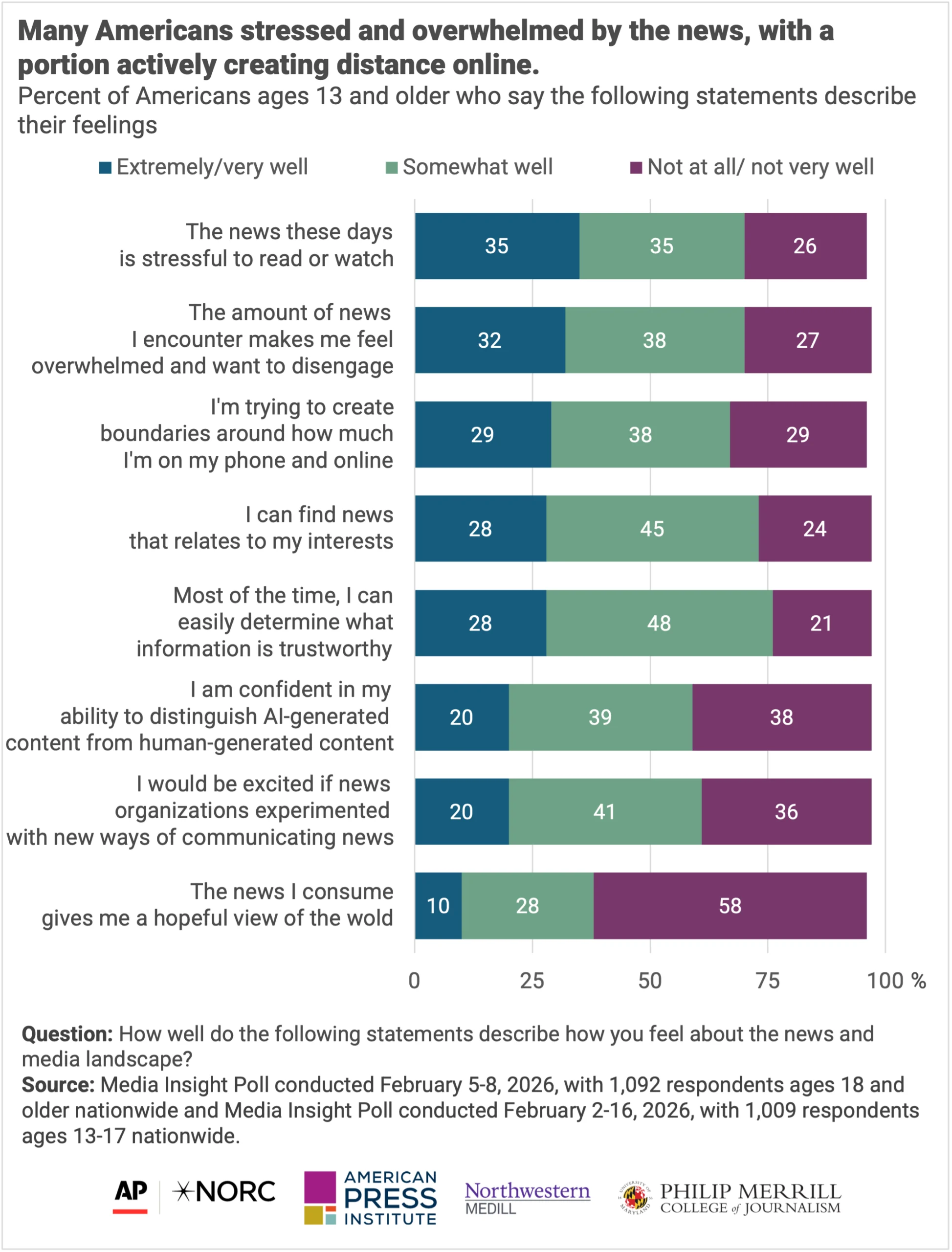
Respondents were asked how well various statements describe their feelings about the news and media landscape. While 28% feel they can navigate news — both in finding relevant content and in determining trustworthiness — many express serious concerns about news’ emotional impact. About a third say news makes them feel overwhelmed or they find it too stressful. Most strikingly, only 1 in 10 say news gives them a hopeful view of the world. In response, 29% are trying to create boundaries around their phone and online time, suggesting widespread efforts to manage news-related stress.
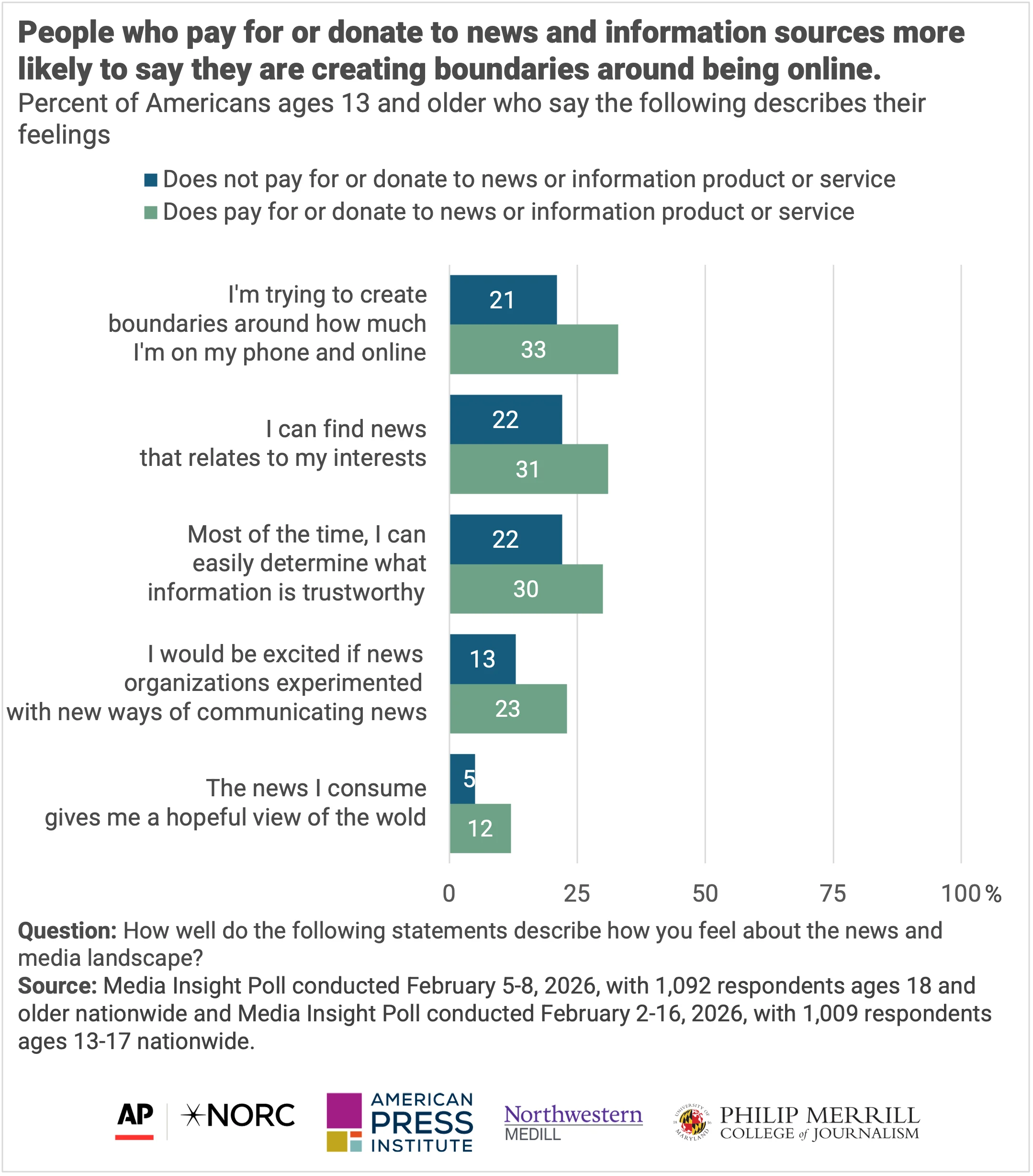
Those who pay for or donate to media or information sources express stronger intensities across key media attitudes than non-payers/non-donors. Notably, a third of payers/donors say they are trying to create boundaries around phone and online time compared with 21% of non-payers/non-donors. Additionally, payers/donors are more likely than non-payers/non-donors to feel that the news they consume gives them a hopeful view of the world (12% vs. 5%).
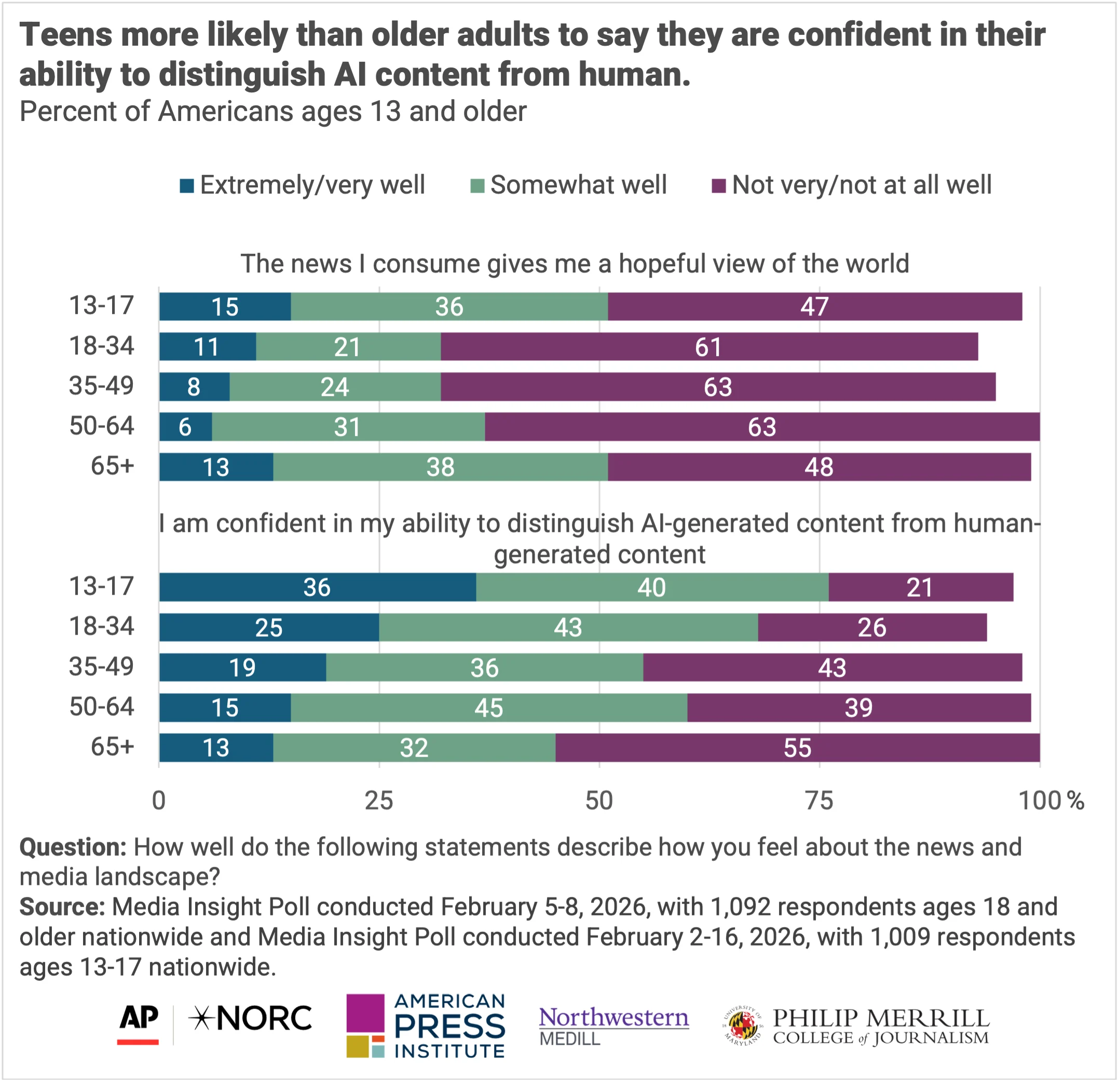
Age significantly shapes Americans’ relationship with the news, particularly regarding AI literacy and hopefulness. Teenagers 13-17 are far more confident in distinguishing AI-generated from human-generated content: 36% say they can do this extremely or very well versus just 13% of adults 65 and older. And 63% of those ages 35-64 say news does not give them a hopeful view of the world, compared with roughly half of teens 13-17 and older adults.
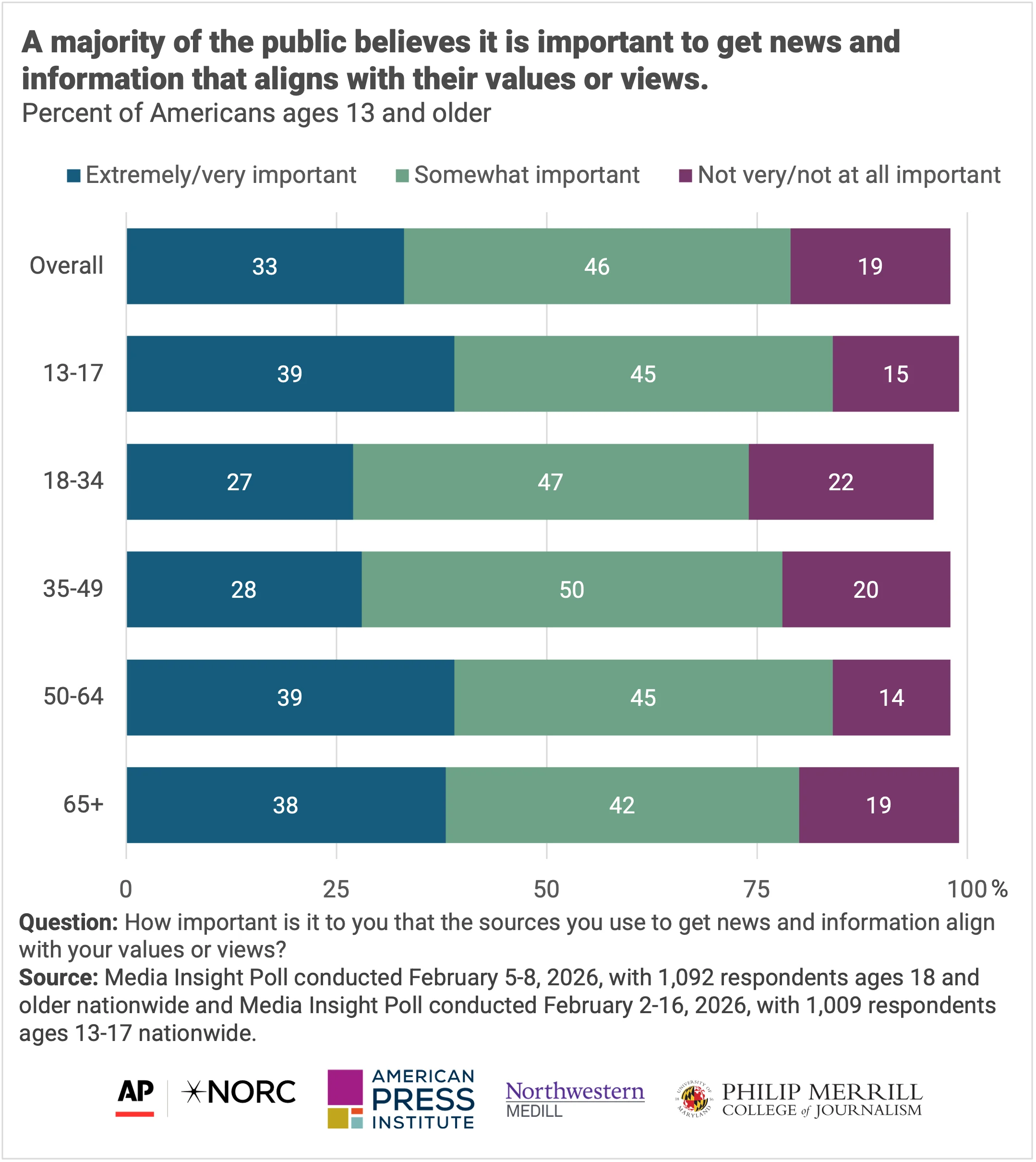
Most Americans ages 13 and older consider it important to get news and information that aligns with their values or views, with nearly 80% saying it is at least somewhat important. Adults ages 50 and older show similarly high rates as teens in the intensity of this preference, with 4 in 10 viewing it as important.