
While average confidence in news sources remains low, the public has varying degrees of trust across different types of news sources
On average, few American teens or adults have a great deal of confidence in any of the four types of news sources asked about in this study. However, there is nuance in the degree of trust for each: local news is viewed as most trustworthy, followed by national news, then influencers or independent creators, with AI chatbots ranked last.
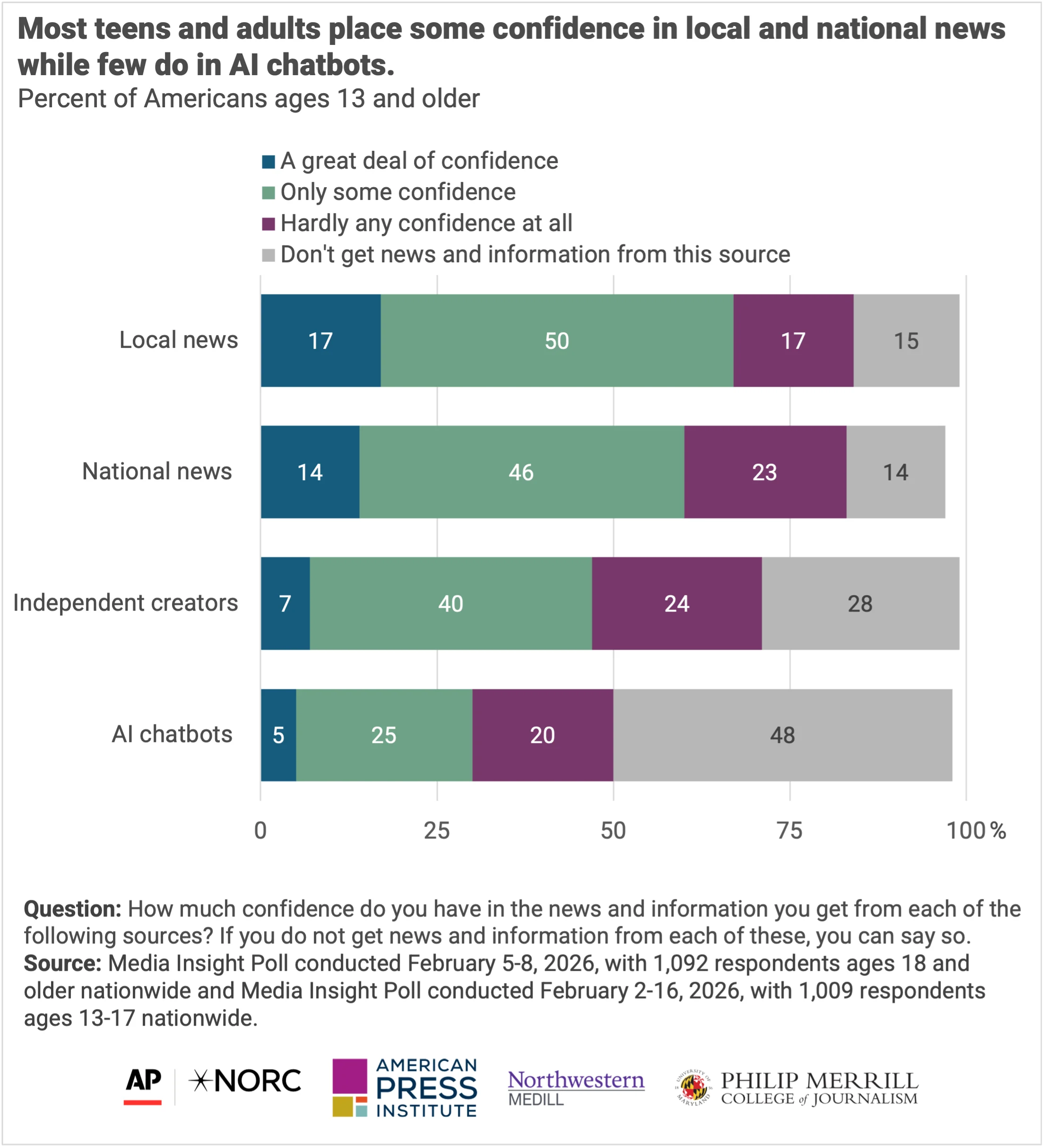
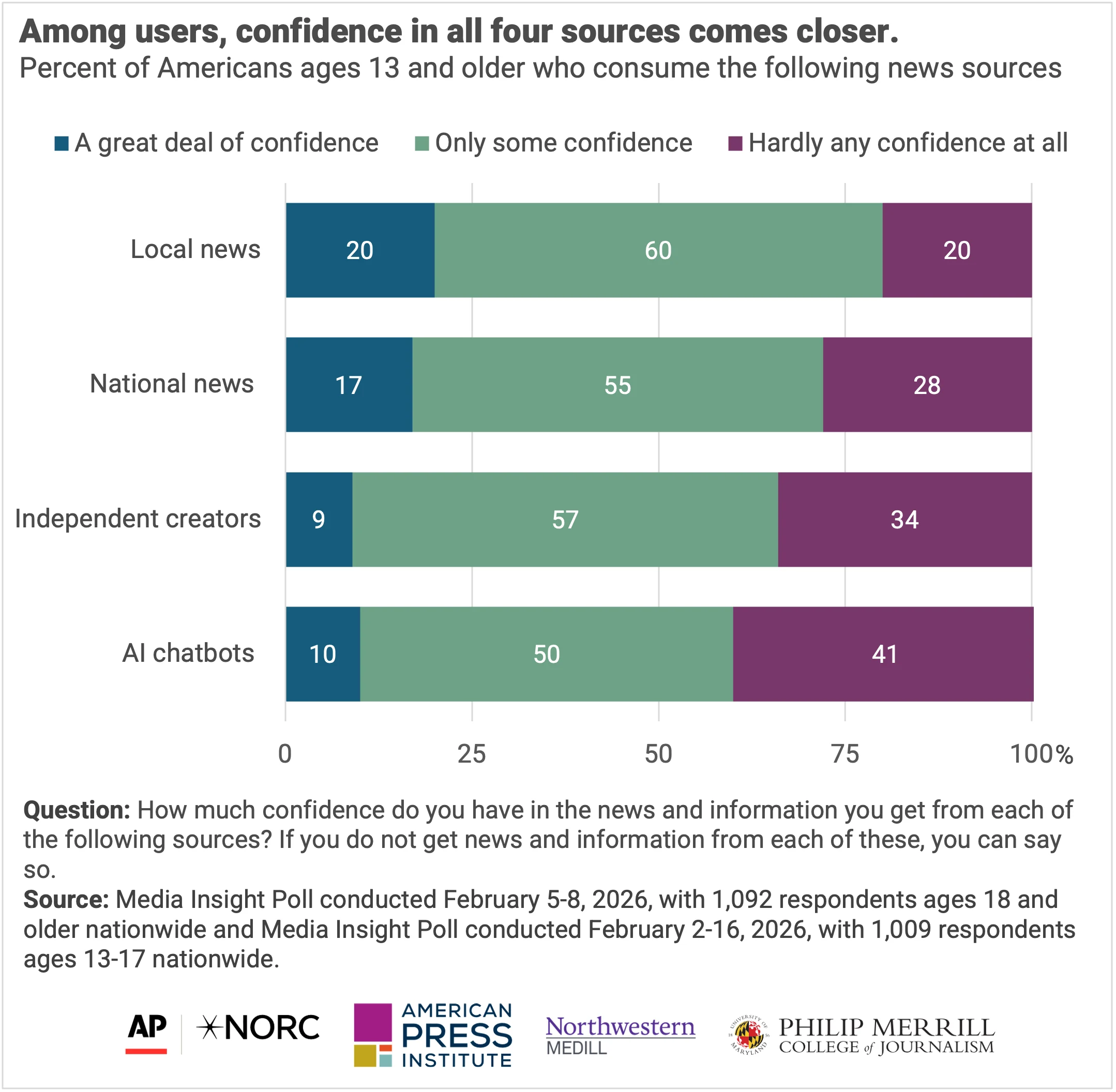
When looking at attitudes toward each of these news sources only among Americans ages 13 and older who use each of the following sources, confidence in all four comes close together. Confidence in information from influencers and AI is similar, and both lag slightly behind traditional news outlets at the local and national level.
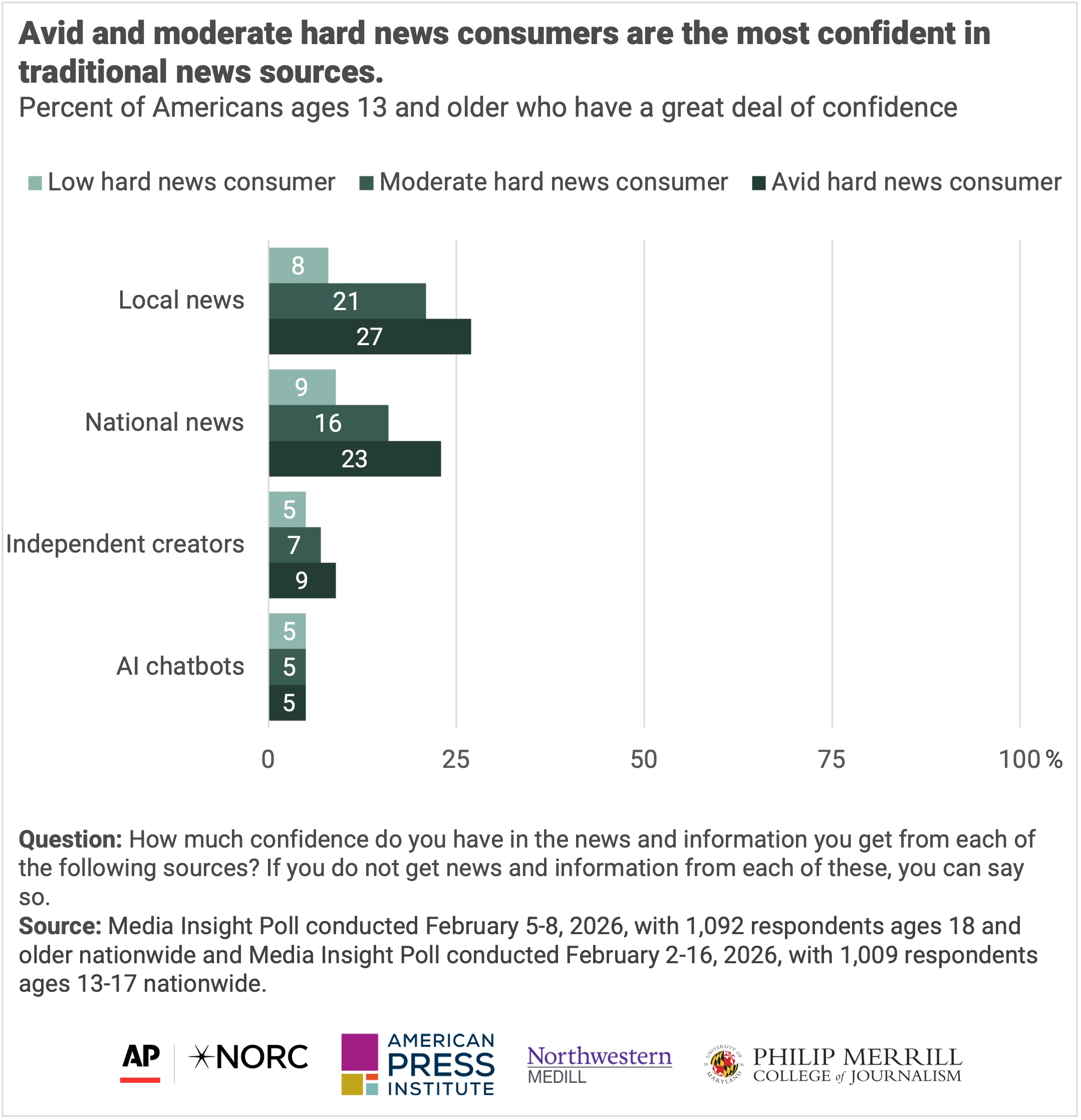
Among consumers of hard news topics[1], avid hard news consumers were more likely to place a great deal of confidence in national news compared with moderate and low hard news consumers. For local news, both avid and moderate hard news consumers were more likely than low hard news consumers to have a great deal of confidence in the information they get from local sources. Avid hard news consumers are also more likely to be older. This signals that older adults’ trust is likely reinforced by longstanding consumption habits while younger people’s lower trust may reflect lighter and more episodic engagement. Low hard news consumers generally had less confidence across all four media types. Confidence in AI chatbots was low across all consumer types, with no discernible differences.
Democrats are more likely than Republicans to report confidence in local news (25% vs. 14%) and national news (22% vs. 9%). There are no significant partisan differences in confidence when it comes to AI chatbots or influencers.
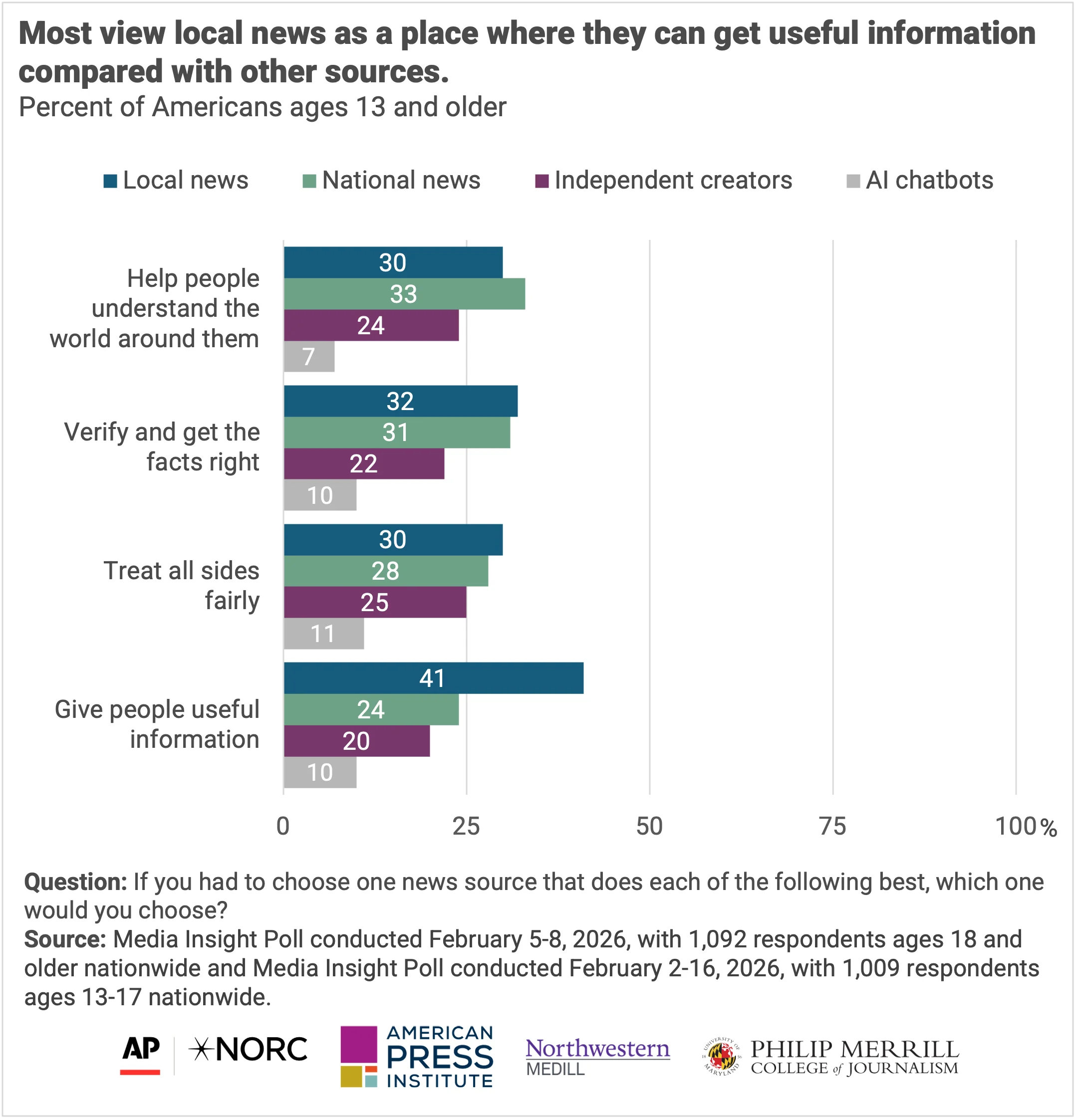
Different news sources have distinct comparative advantages: certain sources are perceived to perform better than others on specific attributes measured in this survey. Local news and national news receive the highest marks for helping people understand the world around them and for verifying facts and getting information right. Local news is rated highest for providing useful information (41%), compared with national news (24%), independent creators (20%), or AI chatbots (10%). Independent creators rank closely behind traditional outlets, with roughly 1 in 4 respondents saying they are the best at treating all sides fairly, verifying and getting the facts right, and helping people understand the world around them.
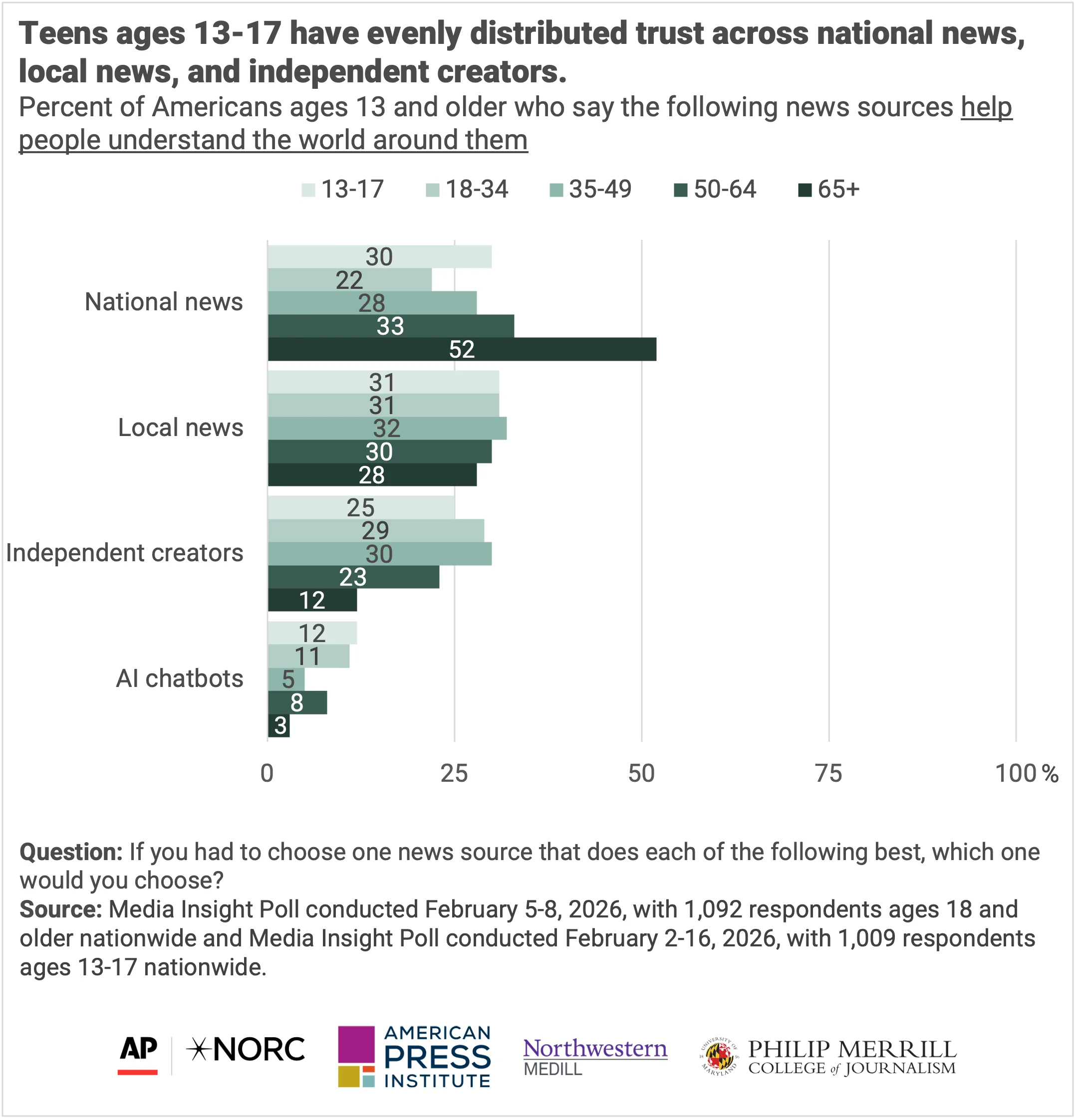
While these attitudes are generally consistent across age groups, some key differences emerge. Adults ages 65 and older are significantly more likely to rate national news as a source that helps people understand the world around them. Nearly 52% of adults ages 65 and older say this, compared with a third or less of those younger. Teens ages 13- to 17 are also somewhat more likely than adults ages 18 to 34 to rate national news as best at this (30% vs. 22%).
Additionally, 13- to 17-year-olds demonstrate relatively balanced confidence across traditional and alternative sources. They rate national news, local news, and independent creators nearly equally at helping people understand the world (30%, 31%, and 25% respectively), unlike older adults who show a stronger preference for traditional news outlets.
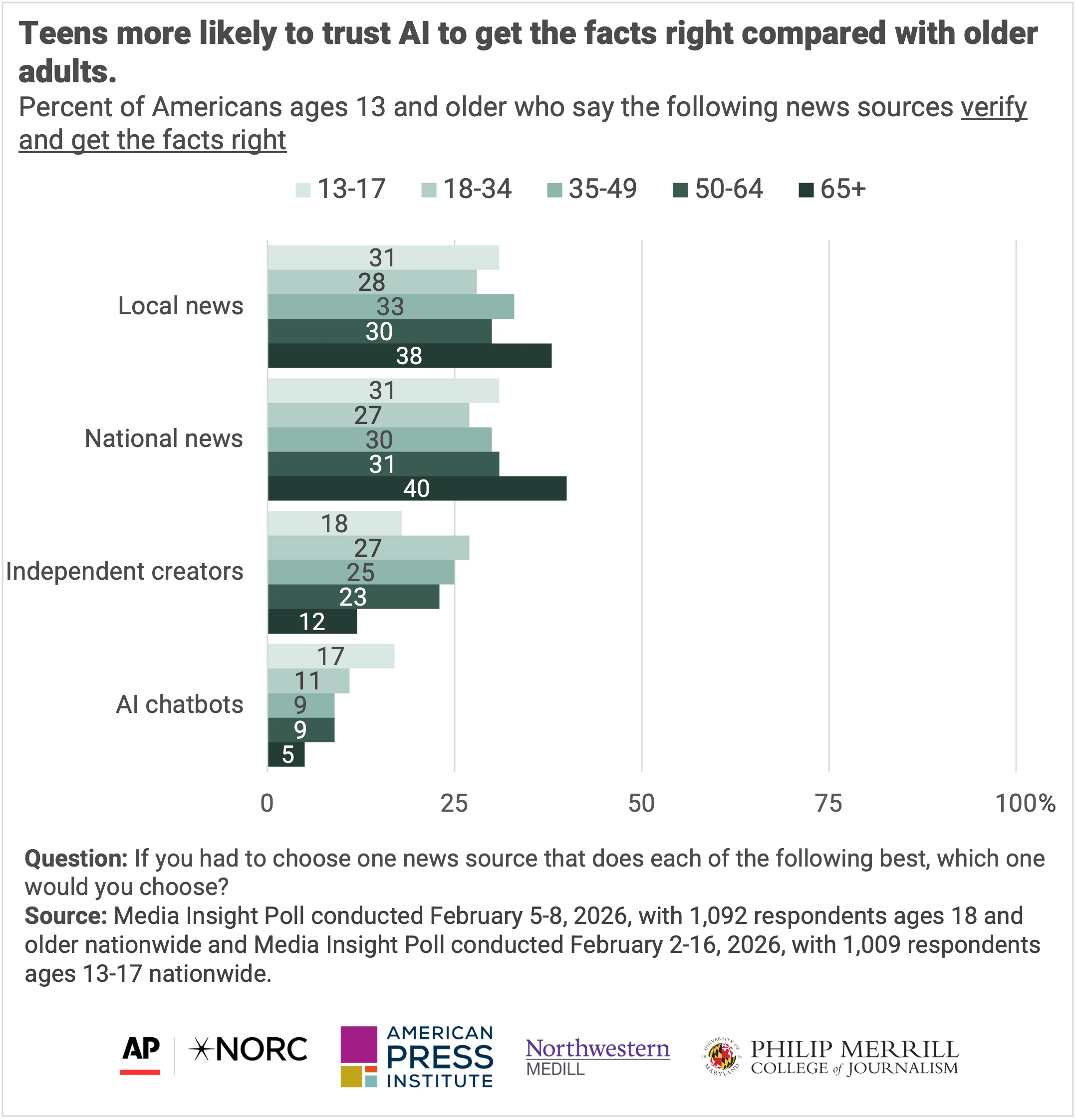
When assessing which news and information source is best at verifying and getting the facts right, most respondents across age groups mention local news or national news. American teenagers and adults have similar faith in the ability of local news, national news, and AI chatbots to get the facts right. When it comes to influencers, older adults are more skeptical. Teens ages 13-17 and adults ages 18-64 are more likely than those ages 65 and older to cite independent creators as best at this task.
There is no difference between payers/donors and non-payers/non-donors in their assessment of national news, local news, or independent creators regarding their ability to get the facts right. Confidence in AI chatbots remains minimal for both groups, at 13% and 8% respectively, though payers/donors are slightly more likely to have confidence.
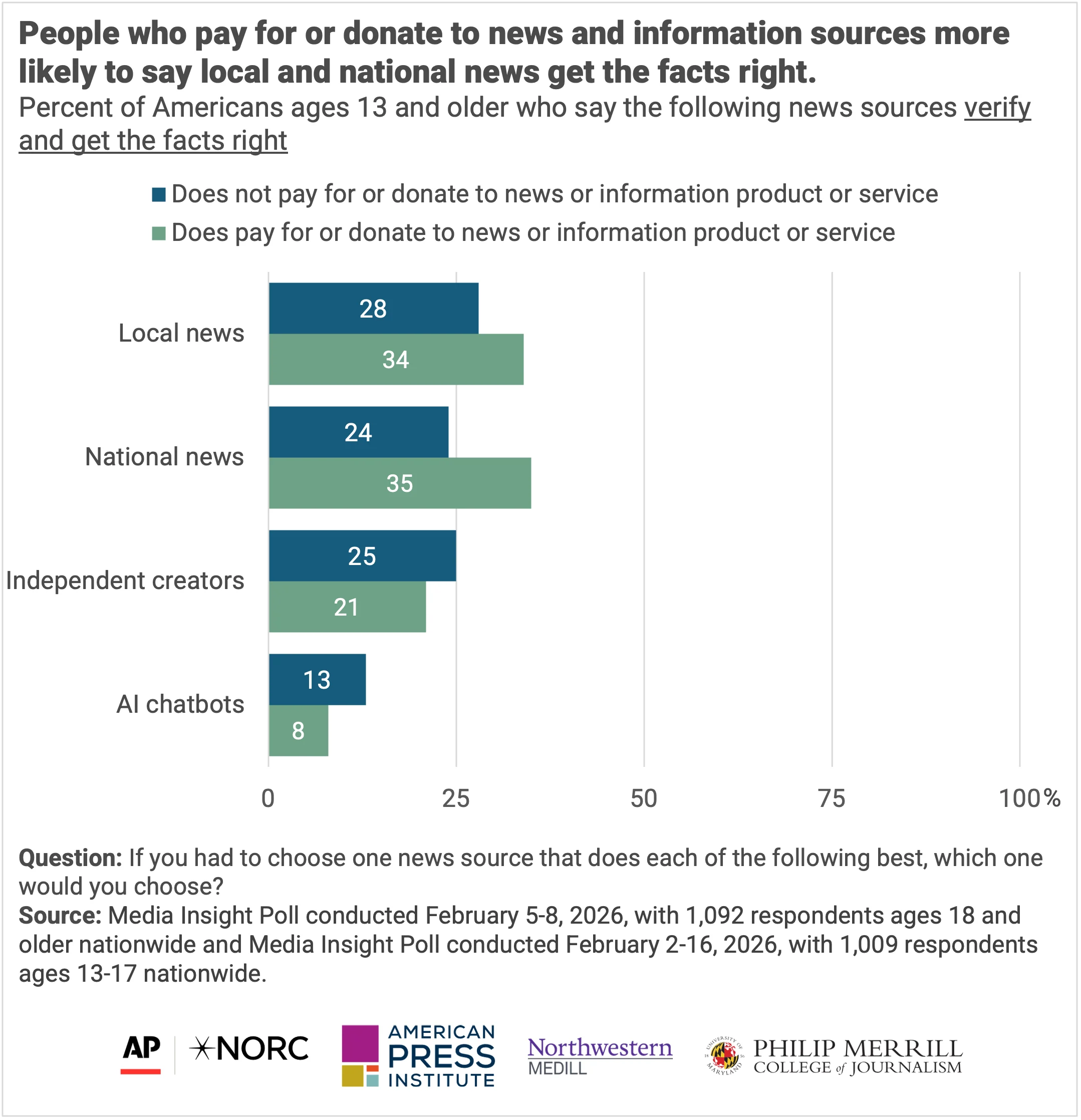
Teens and adults who pay for or donate to news and information services are more likely to view national news as helping people understand the world around them (38% vs. 22% of non-payers/non-donors) and local news as treating all sides fairly (33% vs. 22%).
[1] Hard news topics include national politics, state or local politics, social issues, schools and education, business and the economy, the environment, and crime and safety.