
When it comes to the question of how to attract younger audiences to local news, it’s like the movie Groundhog Day: We return to the question over and over, but don’t seem to have a solution.
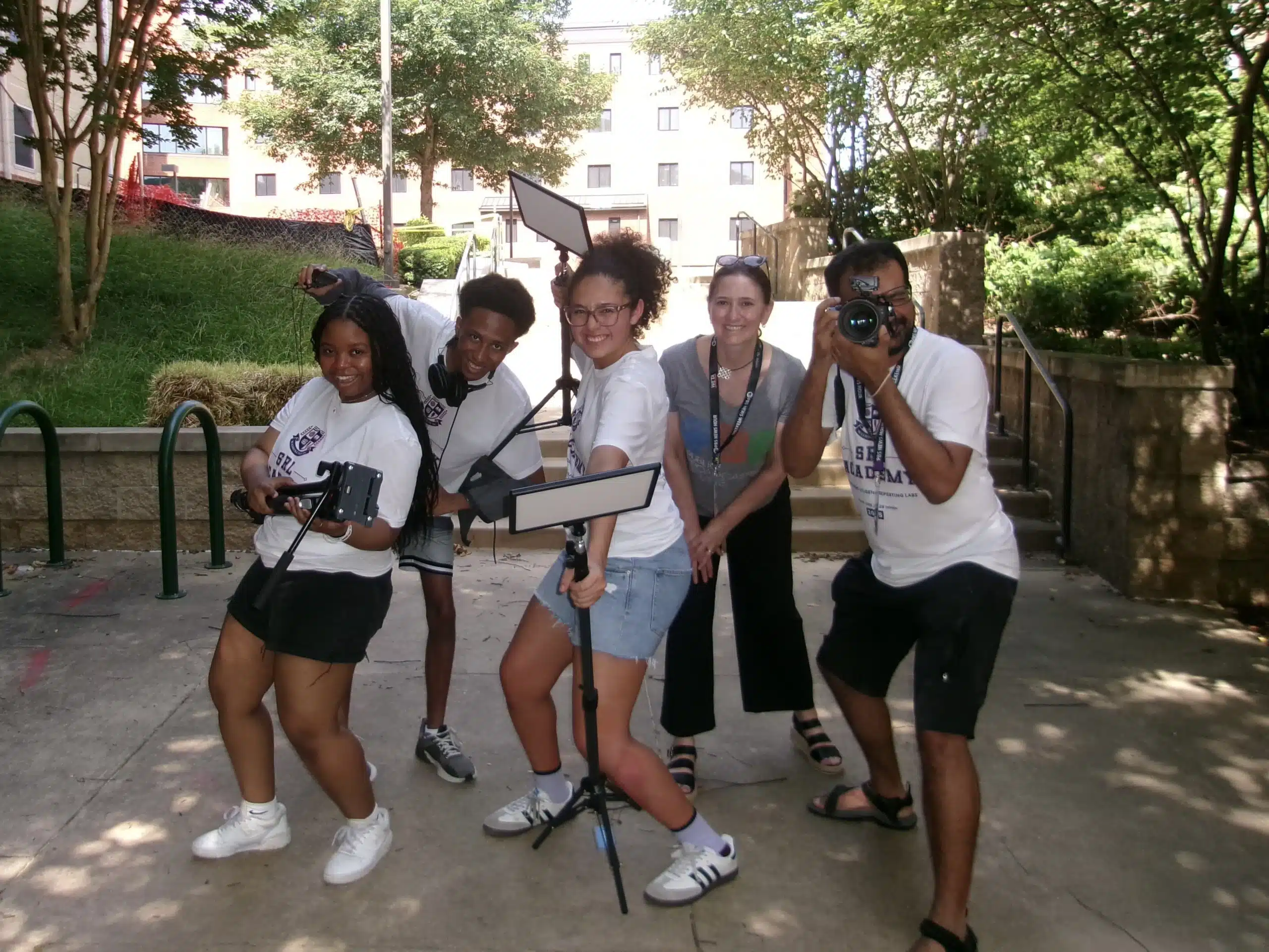
But if you want to know how to reach teens and young adults, ask young journalists and the folks who work with them. All the teens we spoke to for this article have participated in a youth journalism program: ThreeSixty Journalism and the Center for Broadcast Journalism in Minnesota, VOX ATL in Atlanta, WHYY Media Labs in Philadelphia and AAJA’s J Camp, which works with teens across the nation.
These are the people who have a vested interest in the survival of our local news ecosystems. They have lived experience with the demographic we want to build healthy, long-term relationships with. They know what we’re up against and want to help.
More on changing media habits
- The evolving news landscape: Comparing media habits and trust between teens and adults
- 4 takeaways for local news leaders from a study on news consumption by U.S. teens and adults
- Increasing paid subscriptions: 3 ways local news organizations are experimenting
- How local newsrooms can adapt to changing news habits
Where teens get their news
It’s no surprise that today’s fractured media landscape dictates who gets what types of information. But it also affects what they do with that information once they get it — and that may be especially true for teenagers.
In new research about the differences in news consumption between teens and adults by the Media Insight Project, 37% of respondents across all age groups said they got news from social media daily, with that number jumping to 57% with teens ages 13-17.
Craig Santoro, director of educational programs at WHYY in Philadelphia, says that reality — that most people get news via social media — has led to news consumers in these digital spaces playing a game of telephone. This is especially true when people get news from creators or other trusted messengers and not the news outlets that did the original reporting.
“I think there’s very few people, grownups or kids, who are doing the work to follow the breadcrumbs back to see where it came from and read the original piece,” Santoro said.
With that distance, context can be lost. Teens who get most, if not all, of their news through social media are left with fragmented information, frustration and a growing lack of trust. The Media Insights Project report noted that 81% of teens 13-17 get news from influencers at least sometimes; across all age groups, it’s 57%.
“I feel like it gets to the point where a lot of us are distancing ourselves from [the news] just because it’s overwhelming and we don’t know what we can do about it,” said Jayna Dieringer, a junior at Johnson Senior High School in St. Paul, Minn.
“It’s really hard for people to stay plugged in very deeply, because it can often feel like you’re just in an ocean of constantly crashing waves of knowledge,” said Ankita Jaikumar, a senior at Lambert High School in Forsyth County, Ga. “And that’s the issue with our 24-hour news cycle, because we can’t find time to process — like there are so many things that have happened.”
Teens also said that follower count is the least important among reasons they personally get news from creators, according to the report.
Isabella Ying, a freshman at The Lovett School in Atlanta, talked about how a creator’s on-camera demeanor and connections can affect their trustworthiness.
“You can always verify if that person is getting their information from reliable sources by seeing what sort of connections they have with reliable outlets,” Ying said.
For survey respondents ages 13-17, transparency around advertising and sponsored content, the tone of the content and being able to easily find information about the account’s mission or who runs it were the most important reasons they turn to a particular creator for news, according to the report.
What news teens seek out
Teens are most likely to follow lifestyle news — such as celebrity and entertainment news, sports, gaming, and health, wellness or self-care — more than hard news, the study found.
That tracks with what teen journalists say, too: Food and culture stories are a means of escape for people.
“Students are more likely to click on, you know, Met Gala stuff. Because the war in Gaza is horrific…So they’re more likely to be like, ‘Oh, who had the best outfit at the Met Gala?'” said Kaitlyn Ho, a senior at Strath Haven High School in Wallingford, Pa.
For those young people new to journalism, food and culture can be a good starting point. Santoro of WHYY, who has worked with teens for more than two decades, explained how those stories are comfortable entry points for young journalists.
“The reason why our kids do produce a fair amount of food stories is because it’s just real easy to go to a restaurant and share a story,” Santoro said.
Lifestyle stories also have that ability to center human experiences.
“I used to think that the news was all like politics or war and really just like kind of hard to watch. Like it kind of brings you down. And now that I do participate in journalism, I found that the most impactful stories are just people-first journalism…the ones that stick with you,” said Daphne Kleinschmit, a senior at Columbia Heights High School in Minnesota.
While lifestyle stories are appealing, these young people say the news industry shouldn’t sleep on Gen Z. They do care about what’s happening in the news — especially if it’s local.
“Don’t count Gen Z out. There are a lot of smart people in this generation, and they are interested in the news,” said Amanda Reed, a senior at the University of Minnesota.
High school senior Ho said local news “is the antidote to news fatigue.” Stories about their communities, written about people they can relate to, matter. It doesn’t have to be happy; it just needs to be real. Students talked about how the feelings of helplessness and confusion can be quelled by being provided actionable steps — solutions journalism — or hearing from young adults who are tackling societal issues.
Leah Clapman, founder and executive director of PBS News Student Reporting Labs, pointed to a PBS NewsHour piece produced by Santiago Campos, a senior at the District of Columbia International School, about his grandfather who was deported in the 1950s as a U.S. citizen. Clapman said that because Santiago framed the story around his family, it made a harder story more relatable.
“[Campos’ story] is very newsworthy. So I think that there are ways to bridge that sort of featurey, compelling story with what’s going on right now,” Clapman said.
When news organizations write stories about teens, it’s tempting to rely heavily on experts — usually adult voices — to explain policies like cellphone use in schools. But not including teens’ lived experiences erodes trust at an early age.
“You want experts, and youth are generally not experts in anything,” said Dieringer, the St. Paul teen. What they do have, though, is firsthand experience of how these issues play out in their communities.
When teens are featured in news stories, the depictions can feel two-dimensional. School policies, social media addiction or crime (especially youth of color) often dominate youth coverage. Their lives are more complex than that, and they want to see themselves more fully reflected.
“I like seeing people who are my age in the paper. And I’m not saying…every high schooler is like someone you should interview. But I feel many of them, people who are going out and helping their community, are worth hearing out,” said Ho, the Pennsylvania teen.
“Through my time at my journalism program, I met so many students who are doing so much more than I would have known. They just sit next to me in the classroom, but they are winning, like, incredible awards for community service. They are helping out their grandparents,” she said. “They’re all affected by what happens in the news.”
Media literacy matters
Like most people, young people don’t understand what journalists do and the rigor that goes into a well-reported story — only about a quarter of Americans have spoken with a journalist. Our industry has done a terrible job of being transparent about our process, which contributes to the erosion of trust in the media. Those who get to participate in the work of journalism tend to come away with a deeper understanding of their community.
“Before I did journalism freshman year, I had basically no understanding or knowledge of journalism or how it worked,” Dieringer said. “I knew that it would get me my news, but I didn’t really look into news.”
The practice of journalism allows teens like Fernando Levia, a senior at Ulysses Grant High School in Los Angeles, to have a deeper practical understanding of what it takes to get the information right.
“I would say I’m more attentive and appreciative of news content, both as a consumer and ‘producer’ of news,” Levia said in an email interview. “Understanding how rigorous and time-intensive reporting is, I’m appreciative of the work of journalists who tell interesting and relevant stories, especially in such a media-saturated environment.
“I’m also more vigilant about the information I consume, often asking myself if the speaker is trustworthy or verifying information through reputable sources,” he added.
Involvement in journalism can also strengthen civic engagement. Kleinschmit, from Columbia Heights, Minn., said that working on a story about an organization that helped Black mothers through pregnancy helped her see that journalism wasn’t just war, politics and protest.
“It showed me that journalism can create hope and community, and it builds trust within communities that are already harmed,” Kleinschmit said. “I can give them hope.”
Just like people along any division of difference, such as race, gender or religion, Gen Z wants to be heard. They want their stories told in full, and they want those stories to be told or at least informed by them.
How Gen Z consumes information, connects and communicates with others may be different from adults, but their fundamental wants and desires are the same. In an era when news organizations are doing more with less, enlisting the work of teen journalists may be the answer we’ve been looking for.
Kyndell Harkness is an award-winning newsroom executive and culture strategist with over two decades of experience driving institutional change. Most of her career was spent at the Minnesota Star Tribune before starting her own consulting business, Infinite Voices. Harkness still calls Minneapolis home with her wife and teenage son.
Advice for newsroom leaders
Here are some suggestions from teen journalists and those adults who work with them on what local news leaders can do to keep young people engaged in the news.
Lani Ngonethong, senior at St. Paul Academy, St. Paul, Minn.

Lani Ngonethong (Photo by David Pierini)
Accessibility: Having free or discounted subscriptions is crucial to building news habits.
Gen Z voices: Solicit guest opinion pieces and promote them in places where teens are. This builds credibility and trust.
Preferred story construction: All of our readers and viewers benefit from plain language but young people especially. Also, for teens, their future is front of mind. Pointing to how certain actions or policies impact their future is a good way to get them to pay attention.
Sophie Mode, program associate, NYC Journalism Youth Coalition at The Bell

Sophie Mode (Photo by Lucy Shauman and Mika Lungulov-Klotz)
Have fun with your formats: Gamify your newsletters. Build in streak-keeping to your model like Duolingo. Create daily polls. Also, school lunches. Finding a way to do reviews or call-outs for who has the best or worst lunches would raise brand awareness.
Build relationships with student publications: Bring teen journalists into the newsroom. Find avenues to republish work from student publications and organizations regularly.
Janya Dieringer, junior at Johnson Senior High School, St. Paul, Minn.

Janya Dieringer (Photo by Pechulano Ngwe Ali)
Continued listening: Establish a youth board. Put youth together with decision-makers in your newsroom. They not only give you a perspective you may be missing but also provide on-the-ground community connections you may not have.
Stories with purpose and nuance: When stories present an issue or problem, teens want to know what steps they can take to change things. They want guidance in creating their own solutions. In stories involving their voice, please be aware of intersectionality. They may all be teens but geography (urban/rural), class and ethnicity may shift responses to issues.
Kaitlyn Ho, senior at Strath Haven High School, Wallingford, Pa.

Kaitlyn Ho (Photo by Isaac Lothrop)
Antidote for news fatigue: Local, human-centered stories allow teens to connect with tangible community members and create hope.
Transparency: Behind-the-scenes content showing story creation is important in the era of AI to build trust. Also, find ways to humanize your journalists as community members.
Isabella Ying, high school sophomore in Atlanta

Isabella Ying
Brand your fact-checking: We tell audiences to come to news organizations for the facts, but that’s too nebulous. Branded fact-checking of local social stories helps teens navigate Instagram and TikTok and builds loyalty and trust.
The CNN 10 model for local news: Through social media or in partnership with schools, create news stories that cover big issues directed with facts to a teen audience. Then have a set of questions that a class can discuss. They want the data, and then they want to make their own conclusions.
Leah Clapman, executive director/founder of Student Reporting Labs PBS News

Leah Clapman (Photo by Stacy Beck)
Support journalism teachers: Invite journalism teachers into your newsroom and build a relationship with them. They get to know what it takes to be published professionally and then can upskill their students. That teacher, that program, is now a source of content for an audience you’re wanting to have.
Avoid crisis framing when covering youth stories: Show how teens are finding solutions in creative ways. They want to make the world a better place so they need actionable information.
Ankita Jaikumar, senior at Lambert High School in Forsyth County, Ga.

Ankita Jaikumar (Photo by Siddharth Suresh)
Combat AI doubt: Make sure you’re putting credit on all visuals so that viewers know they were made by people and not AI.
Be the “next door neighbor”: People instead of outlets. Be collaborative instead of clinical. Teens trust journalism more when it feels connected to their lives and their communities.
You might also be interested in:
We asked four summit participants to share more about the ways they are defining, measuring and acting on signals of impact.
Whether it’s an engaging personality breaking down complicated news on YouTube, a streamer testing their limits on an obstacle course or a short film series that meets people where they’re at, content consumption is fragmented — but also gives newsrooms an opportunity to create niche content that can succeed if paired with the right distribution strategy.
We gathered news leaders and non-news experts to discuss what it looks like to build sustainable youth engagement efforts into their coverage and fundraising. We asked four summit participants to share more about the ways they are funding experiments with youth engagement in their communities.


