Influencers or independent creators have risen as popular sources of news and information, especially among younger audiences. Americans ages 13 and older turn to these sources for a variety of topics and reasons
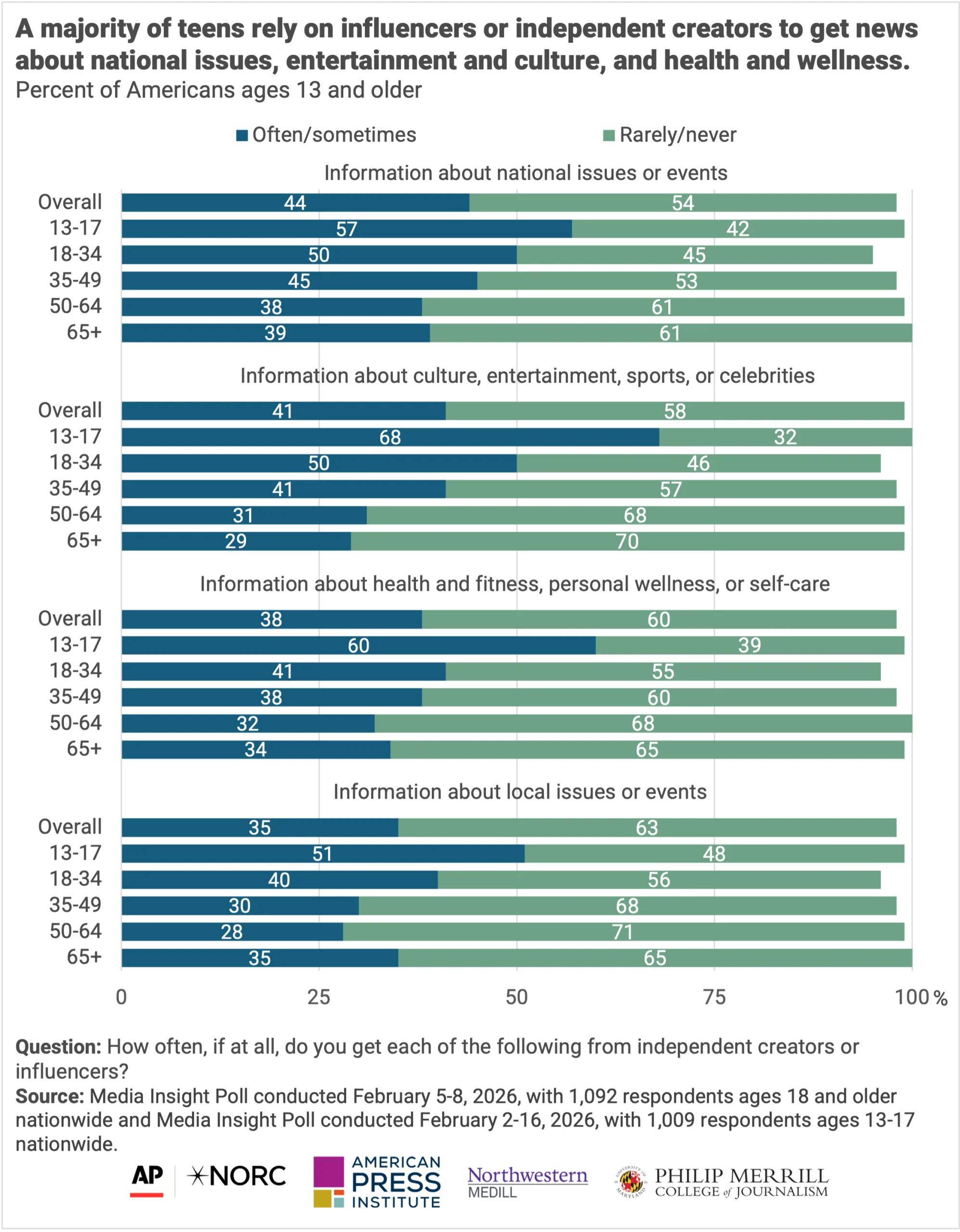
Overall, a majority of Americans — teenagers and adults alike — say they get news information at least sometimes from independent creators or influencers.[1] When asked how often they get local news, national news, pop culture or entertainment news, or health and wellness news from influencers, 57% of teens and adults said they get news about at least one of these topics often or sometimes.
Though a majority of the public rely on influencers or independent creators for news at least sometimes, engagement varies by age. Unsurprisingly, 13- to 17-year-olds are the most likely of any age group to engage with influencers for news content at least sometimes (81%) followed by young adults ages 18-34 (63%) and adults ages 35-49 (58%). About half of all adults 50 and older get news from influencers often or sometimes.
About 4 in 10 American teens and adults get news from influencers about national news (44%), pop culture, entertainment, and sports (41%), health and wellness (38%), and local news (35%).
Teens ages 13-17 are more likely than all other age groups to get news from influencers or independent creators about pop culture or health and wellness at least sometimes. They’re also more likely than all adults ages 35 and older to learn about national events and issues from influencers.
Democrats (57%) and Republicans (58%) are just as likely to get news from influencers at least often. They also follow the four news topics asked about (local news, national news, pop culture or entertainment news, and health or wellness news) at equal rates.
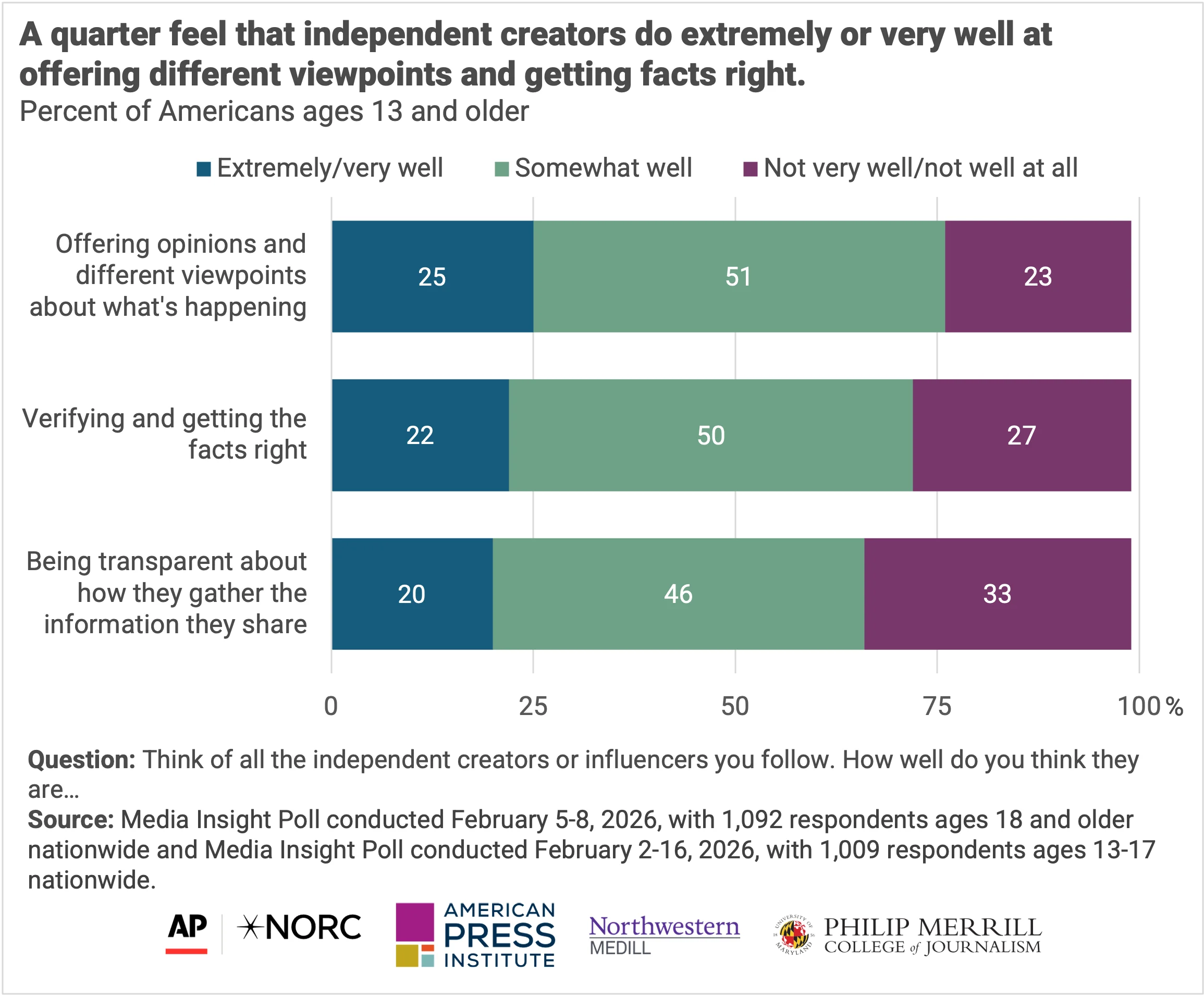
Independent creators or influencers are viewed similarly to local news sources in terms of how well they are verifying and getting the facts right, being transparent about how they gather information, or offering opinions and different viewpoints about what is happening. A majority think influencers do all these things at least somewhat well, and about 2 in 10 say they do them very or extremely well. Americans ages 13 and older trust independent creators or influencers to verify facts, be transparent, and offer different viewpoints about equally well. Democrats and Republicans also trust influencers to do these well at similar rates.
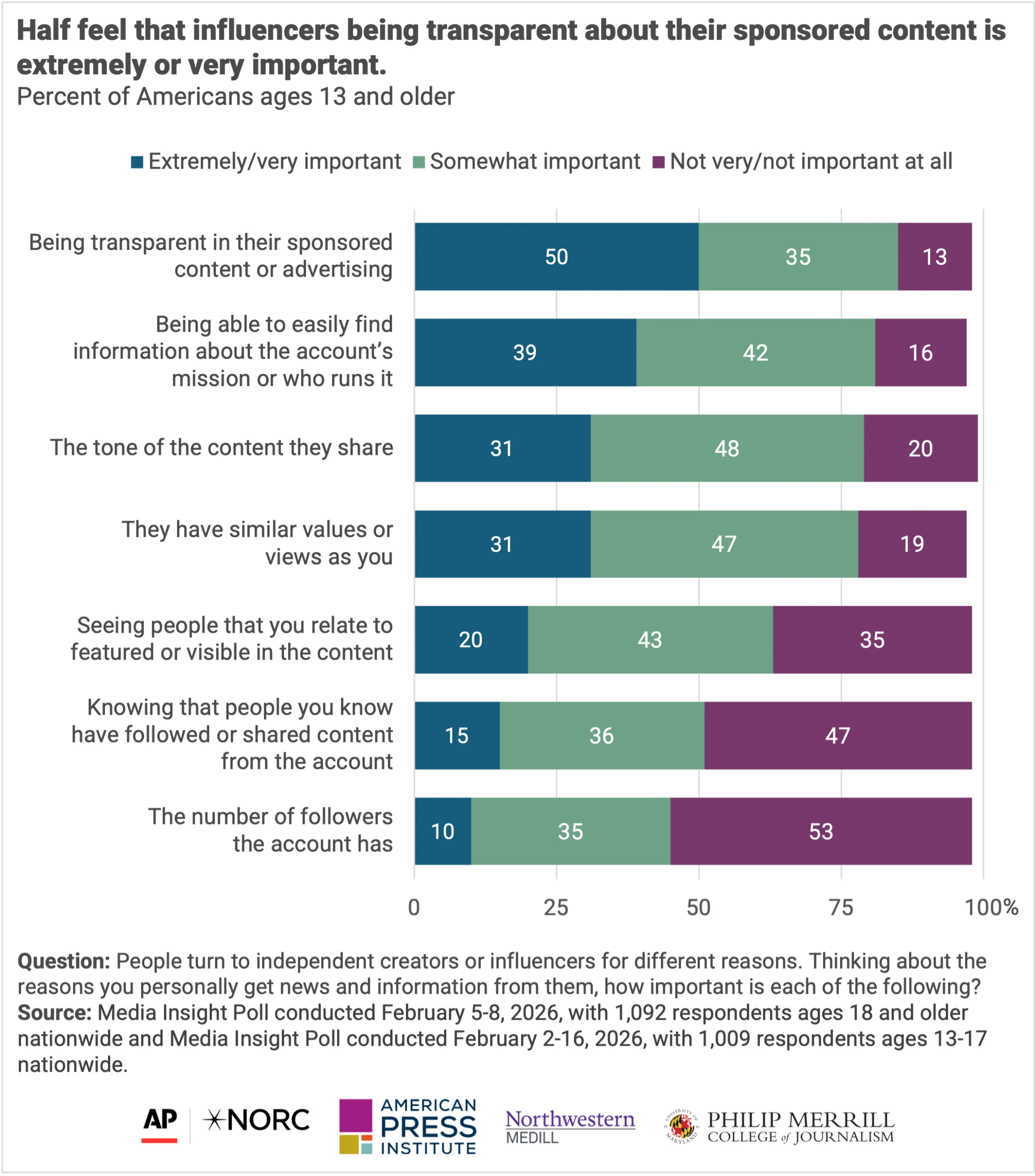
People think about a variety of criteria when they turn to influencers for news. Being transparent both about sponsored content (51%) and about the account’s mission or who is behind it (39%) stand out as the two most common factors people say are extremely or very important to them. About a third say that the tone of the content that the influencers share or whether influencers have similar values to themselves are extremely or very important reasons to get news from them. Follower count is the least important factor for American teens and adults when determining which independent creators to get news from, with about half saying that follower count is not very important or not important at all.
Adults and teens across all age groups view the following factors as important or unimportant at similar rates.
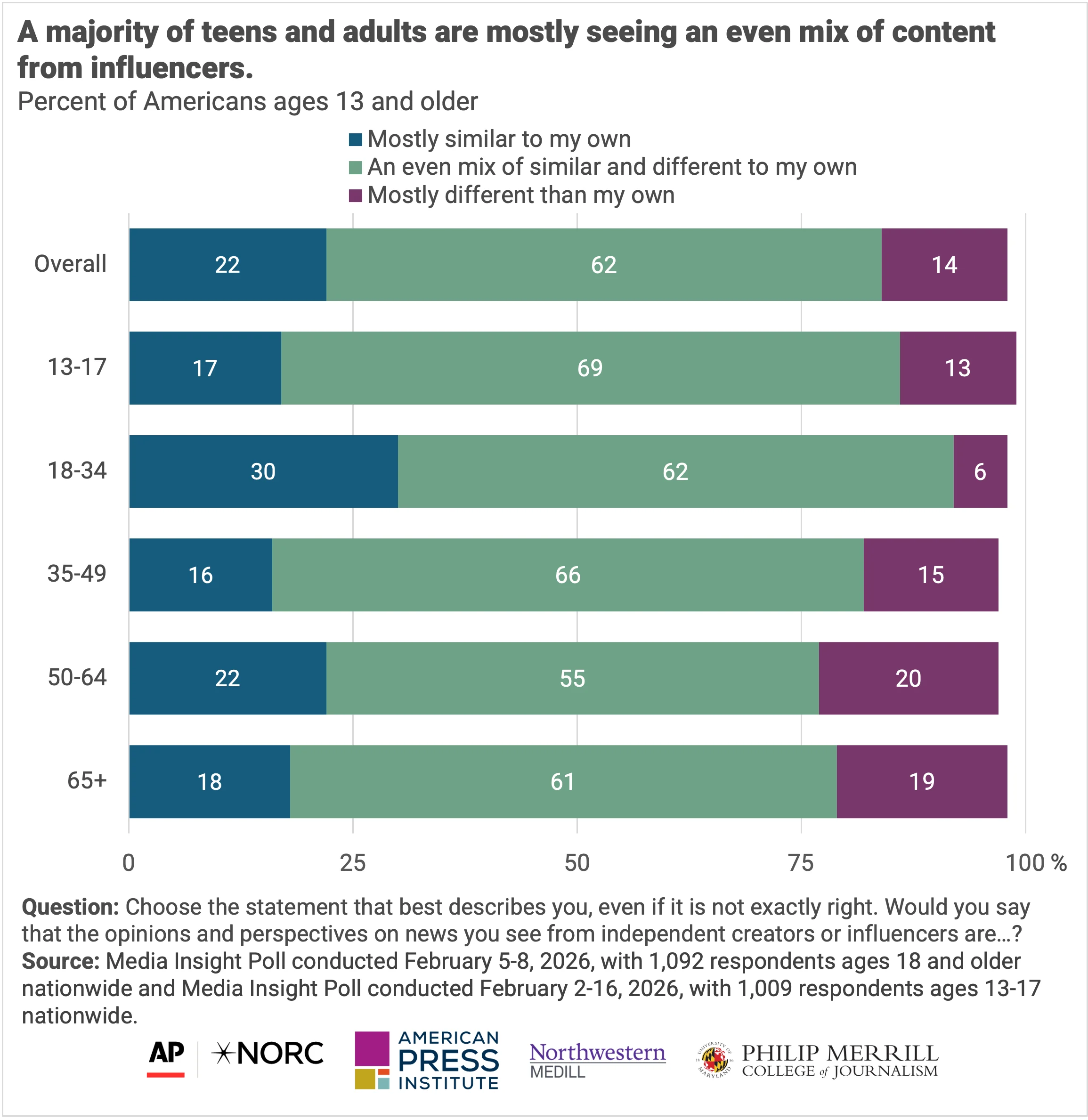
Most, 62%, say the news they see from independent creators or influencers contain an even mix of similar and different opinions and perspectives to their own, while 2 in 10 say they see views that are mostly similar to their own. Few, only 14%, are seeing content that is mostly different from their personal values or views.
Adults ages 18-34 are more likely to mostly encounter content from influencers that aligns with their views than teens, adults 35-49, or adults over 65. Adults over 50 are more likely than adults 18-34 to see content from creators that is mostly different from their own views.
Democrats and Republicans are equally likely to get news that is mostly similar, mostly different, or an even mix of similar and different to their own from influencers or creators. However, independent adults, 24%, are more likely than both Democrats and Republicans, 11% each, to feel that they mostly see opinions that are different from their own.
[1] This survey defines independent creators or influencers as people who respondents may or may not know personally who share opinions, commentaries, or updates about current events, social issues, wellness, fashion, gaming, politics, health, entertainment, or lifestyle. They may or may not be professional journalists.