Rocky Mountain Public Media is Colorado’s largest statewide, member-supported multimedia organization, home to Rocky Mountain PBS, KUVO Jazz and THE DROP. Our broadcast signal reaches nearly every region of our state. Yet reach alone doesn’t tell us whether communities feel connected to us, see themselves in our content, or whether they believe they have meaningful ways to participate.
Those questions have become increasingly important to us at a time when so much media can leave people feeling isolated, divided and afraid. We are working to create a different kind of relationship with the people we serve. Public media can be a friend, helping folks navigate tenuous times, celebrate happy ones, learn together and build community that makes us all feel less alone.
For years, we counted many of the things public media traditionally counts: members, event attendance, volunteers, donors, viewers, digital engagement and places we showed up. Those numbers told us about our activities and reach, but not much about the relationships beneath the surface.
Now we are trying to understand something harder to quantify: Are we building or strengthening trust? Are we hearing from underrepresented people or underrepresented places? Are community members helping us understand what matters where they live? And does participation deepen their relationship with public media, their communities and one another?
That shift in thinking led us to Ambassador64, a growing statewide network of people and partner organizations who serve as connectors, listeners and guides in the places they call home. The 64 represents Colorado’s 64 counties and our aspiration to build relationships in every one of them.
Our ambassadors aren’t reporters, marketers or spokespeople for RMPM. We aren’t asking them to distribute our messages into their communities. We are asking them to help us create a relationship between their communities and us.
That distinction matters. We don’t simply want more ways to push information out. We want more ways for information, experiences, questions, ideas and stories to travel in both directions. And increasingly, we want to understand if those relationships are strong enough for people to tell us when we’re getting something right, when we’re missing something or when we need to show up differently.
Measuring signals of belonging
Ambassador64 is part of a larger experiment at RMPM around what it means to measure belonging. Our emerging Friendship Business Model identifies five aspects of belonging: feeling welcome, known, included, supported and connected. We are beginning to ask how those same ideas might help us understand the depth of our relationships with people across Colorado.
That changes what counts as a meaningful data point.
A volunteer signing up to be an ambassador matters. But it’s what happens next that demonstrates impact. Do they respond when we ask what they’re hearing in their community? Do they introduce us to someone whose perspective we’re missing? Do they participate in a conversation, bring someone with them, contribute a story, help us understand an issue differently or ask to lead a gathering with our content and engage their community with it? Do they see something they shared reflected in our journalism, programming, events or organizational decisions?
We are building systems to capture both qualitative and quantitative signals like these. We can track participation, geography, touchpoints, referrals, responses to questions and movement into deeper opportunities for engagement. We’re also learning to document the stories behind those numbers: the introduction that opened a door, the community concern we hadn’t heard before, volunteers who were recruited, the relationship that grew from one interaction into many or the cause that changed policy or laws.
Perhaps most importantly, we’re paying attention to whether we close the loops. Listening without response can become extractive and break trust. If someone takes the time to tell us what matters, our responsibility doesn’t end when we’ve collected that information. We need ways to bring what we’re learning into the organization and back to the people who shared it.
Ambassador64 is still growing, and so is the way we measure its impact. That is part of the experiment.
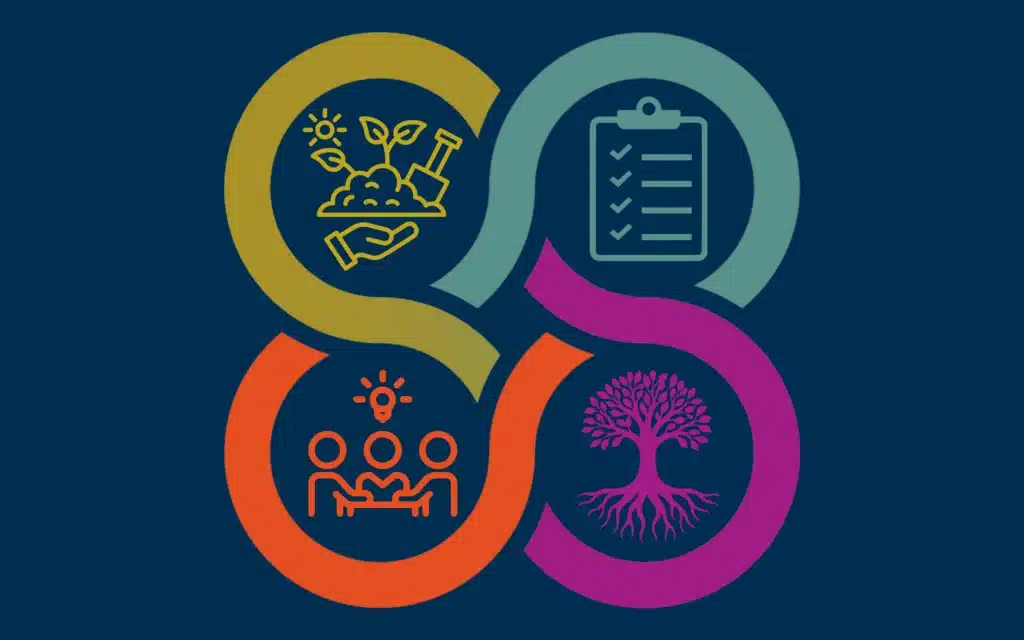
Across all of our civic engagement programming, we use a standard survey and dashboard organized around five measures:
- People engaged: How many Coloradans participated in civic engagement opportunities?
- Communities reached: How geographically diverse and representative was our work?
- Relationships built: How many ambassadors, partners and community leaders became active collaborators?
- Voices elevated: How were community stories, experiences and priorities surfaced and shared?
- Organizational impact: How did civic engagement strengthen content, programming, partnerships, funding opportunities and public trust?
Those measures give us a consistent way to understand our work across programs and over time. But as referenced throughout this essay, we’re also learning that some of the most meaningful evidence of impact can look small on a spreadsheet.
One person introduces us to a community we haven’t had a relationship with before. An ambassador brings a neighbor to a gathering. Someone identifies a local issue that helps shape a community conversation. A person encounters us at an event, later volunteers, shares their own story or helps us hear from others.
And sometimes the relationship grows even further. An ambassador hosts a screening of a film available on our app, facilitates a conversation afterward and brings what she heard back to us. Another ambassador leads a Juneteenth video project, interviewing people in the community and then bringing some of those same voices into our studio for conversations that become a feature on our website and social media.
These aren’t simply examples of participation. They show people moving from audience members to collaborators, connectors, storytellers, facilitators and trusted partners. They also show information moving in both directions: public media reaching into communities, and community knowledge, relationships and stories traveling back into public media.
We’re beginning to see those movements themselves as signals of impact.
We are still learning our way through this work, so these aren’t instructions for building the perfect community network. They are questions and practices that help us think differently about what meaningful public participation can look like.
- Start with relationship, not recruitment. Before asking how many people you may want in your network, ask what kind of relationship you want to have with them. What will they be able to expect from you, and what meaningful role will they have in your organization?
- Don’t confuse reach with representation. A statewide signal, a large email list or thousands of social followers can tell you where your content travels. They can’t tell you whose experiences and perspectives are helping shape it. Look intentionally for the people and places you aren’t hearing from.
- Give information somewhere to go. If you ask people what matters to them, decide how what you learn will travel through your organization. Who sees it? Who responds to it? Can it inform journalism, programming, events, partnerships or other decisions?
- Close the loop. One of the simplest ways to demonstrate that someone’s participation mattered is to tell them what happened because of it. “You told us. We heard you. Here’s what happened next” can be as important as asking the question in the first place.
- Count the things that are hard to count. Trust, belonging, connection and reciprocity don’t fit neatly into traditional metrics, but that doesn’t mean they can’t be observed. An introduction, a return visit, an honest piece of feedback or someone bringing another person into the relationship can all be signals that something meaningful is growing.
Public media has always had “public” in its name. Our challenge, especially now, is to keep finding ways to put more public into how it listens, learns, makes decisions and understands its own impact.
Amber Coté is the senior director of statewide civic engagement at Rocky Mountain Public Media, where she leads efforts to create opportunities for Coloradans to participate in public media, connect across communities, and help shape a stronger statewide civic fabric.